


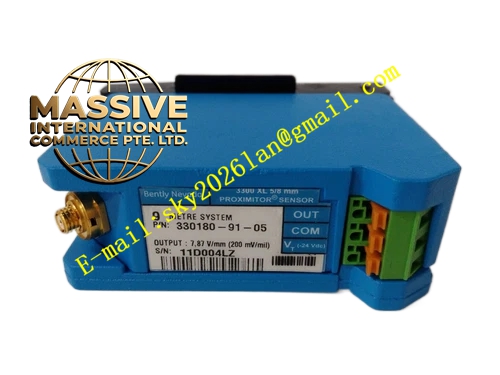
Description
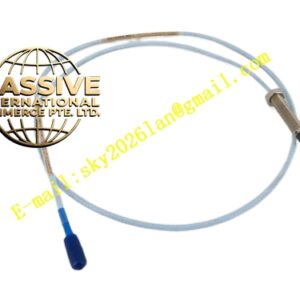
Bently 330800‑16‑15‑067‑01‑02
Technical Specifications:
- Sensing Principle: Eddy‑current non‑contact inductive sensing
- Thread Specification: 3/8‑24 UNF
- Unthreaded Tip Length: 1.6 inch
- Probe Overall Case Length: 1.5 inch
- Integral Probe Cable Length: 0.67 meter
- Connector Type: ClickLoc gold‑plated coaxial connector
- Nominal Sensitivity: 7.87 V/mm (200 mV/mil), tolerance ±5%
- Linear Measurement Range: 0‑2 mm
- Frequency Response: 0 Hz to 10 kHz (-3 dB)
- Maximum Probe Tip Operating Temperature: ‑55 °C ~ +232 °C
- Storage Temperature: ‑60 °C ~ +245 °C
- Insulation Resistance: ≥500 MΩ at 500 VDC
- Shock Resistance: 1000 g peak half‑sine pulse
- Continuous Vibration Rating: 30 g peak, 55 Hz‑2000 Hz
- Ingress Protection Rating: Full hermetic laser‑welded sealing, IP68 Functional Features:
- Special high‑temperature coil, ceramic core and sealing‑material formulation, sustains long‑time operation under extreme probe‑tip temperature condition.
- Hermetic laser‑welded sealing construction blocks ingress of high‑temperature steam and process oil vapor into internal coil assembly.
- Gold‑plated ClickLoc coaxial connector achieves finger‑tight anti‑loosening connection under thermal cycling and sustained mechanical vibration.
- Short integral probe cable requires matched 3300 XL extension‑cable to achieve full‑system calibrated electrical length for field installation.
- Fully compatible with standard 3300 XL proximitor hardware platform, consistent sensitivity and linearity performance.
- Excellent thermal‑shock resistance, maintains stable measurement performance through repeated large‑magnitude temperature rise‑fall cycles.
- Optimized for high‑temperature turbomachinery application scenarios, delivers reliable vibration‑monitoring data for gas‑turbine and high‑temperature steam‑turbine protection systems. Application Scenarios: Radial‑vibration and thrust‑position monitoring for heavy‑duty gas turbines and high‑temperature steam turbines; measurement points located inside high‑temperature bearing housings; key‑phasor speed‑signal pickup under high‑temperature ambient environment; power‑plant gas‑turbine combined‑cycle unit protection monitoring points. Performance Parameters: Linear error ≤ ±0.75% full‑scale; low signal noise output; phase deviation ≤8° within working‑frequency band; stable sensitivity output under repeated thermal‑shock cycles. Material Composition: High‑temperature AISI 316 stainless‑steel probe housing and threaded sleeve; high‑temperature‑grade precision‑wound sensing coil; high‑temperature‑resistant ceramic insulating core; high‑temperature FEP‑modified fluoropolymer cable; gold‑plated coaxial contact components; special high‑temperature metallic sealing gaskets; laser‑welded metal hermetic‑seal joints. Structural Characteristics: High‑temperature‑resistant cylindrical probe tip; external 3/8‑24 UNF mounting thread; rear short potted integral probe cable; cable‑end ClickLoc gold‑plated coaxial plug; model number and unique serial number laser‑etched on probe metal housing surface. Working Principle: Matched 3300 XL proximitor provides high‑frequency alternating excitation signal for probe internal sensing coil. Alternating magnetic field radiates from probe tip and induces eddy‑current loops on surface of conductive rotating‑shaft target. Physical gap‑distance fluctuation between probe tip and shaft surface changes eddy‑current intensity and coil impedance. Proximitor circuit converts impedance variation into DC gap‑voltage plus superimposed dynamic AC vibration signal. DC gap‑voltage maintains linear proportional relation with tip‑to‑target clearance. Installation Requirements:
- Clean mounting threaded hole completely, remove burrs, rust and residual sealant to guarantee full‑thread engagement.
- Apply manufacturer‑specified torque value to fasten probe; over‑torque creates permanent damage to high‑temperature internal coil assembly.
- Adjust static gap between probe tip and shaft target to middle zone of probe linear working‑range.
- Select matched 3300‑XL‑standard extension‑cable to achieve complete calibrated total electrical‑length of transducer system.
- Maintain minimum separation distance between multiple probe tips to avoid electromagnetic cross‑talk interference.
- Probe cable minimum bending radius must exceed ten times cable outer diameter; sharp bending and heavy squeezing are strictly forbidden.
- Route probe and extension‑cable away from high‑current power and inverter‑drive cables to minimize electromagnetic noise coupling.
- Operate ClickLoc connector with finger‑tight force only, over‑torque damages gold‑plated internal contact elements. Usage Notes:
- Probe housing cannot be disassembled; breaking laser‑welded hermetic seal will destroy high‑temperature resistance and invalidate factory calibration.
- Do not cut or modify probe integral short cable or matched extension‑cable assembly; altered electrical‑length ruins system linearity and sensitivity.
- Avoid impact and scratch damage on high‑temperature ceramic probe‑tip surface; surface defect degrades measurement accuracy.
- Ensure cable section outside high‑temperature zone stays within cable rated‑temperature limit, prevent accelerated thermal aging.
- Check probe mounting tightness, connector locking condition and cable integrity during each unit overhaul cycle.