


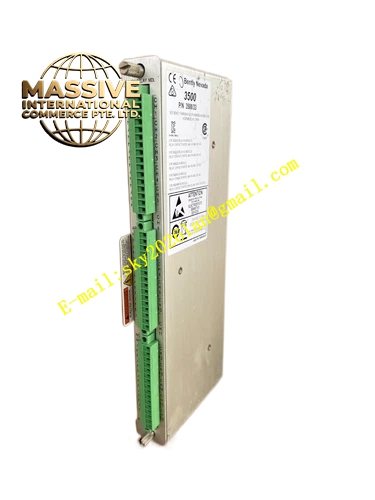
Description
Bently 330851‑02‑000‑056‑90‑00‑05
- Key Features: Self‑powered moving‑coil operating principle; no external power supply required; robust sealed metal housing; wide operating frequency coverage; built‑in over‑travel mechanical stop structure; anti‑corrosion surface treatment; compatible with 3500 series velocity monitor modules; FluidLoc cable option prevents oil migration along cable inner layers.
- Technical Specifications & Performance Parameters
- Nominal sensitivity: 200 mV/mm/s
- Frequency response: 4.5 Hz ~ 1000 Hz
- Operating temperature range: ‑45 ℃ ~ +120 ℃
- Storage temperature: ‑55 ℃ ~ +130 ℃
- Mounting thread: 1/4‑28 UNF
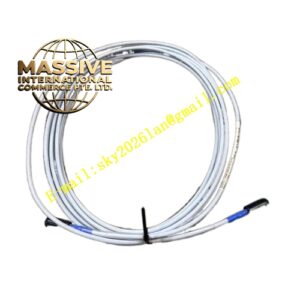
- Cable length: 5.6 m
- Weight: 0.71 kg
- Maximum peak vibration: 50 mm/s
- Material Composition: AISI 316 stainless‑steel sensor housing; high‑strength permanent magnetic core; high‑purity copper moving‑coil assembly; high‑damping spring suspension system; FEP insulated signal cable; nickel‑plated brass connector assembly; high‑temperature polyurethane potting compound.
- Structural Features: Cylindrical fully‑sealed metal sensor housing; internal spring‑suspended moving‑coil magnetic assembly; built‑in mechanical over‑travel limit stop; bottom‑mount 1/4‑28 UNF mounting thread; rear‑exit integrated signal cable; internal potting isolation for shock resistance.
- Working Principle: Permanent magnet creates stable internal magnetic field. When machine casing vibrates, sensor housing vibrates together with equipment. Spring‑suspended moving‑coil keeps relative static status under inertia effect. Relative motion between coil and magnetic field induces proportional voltage output. Output voltage amplitude directly corresponds to casing vibration velocity.
- Application Scenarios: Centrifugal pump casing absolute vibration monitoring; fan and blower housing vibration measurement; gearbox condition monitoring; steam turbine casing vibration supervision; petrochemical plant rotating‑machinery TSI system; sites without available external sensor power supply.
- Installation Requirements: Fasten sensor firmly onto flat machined equipment casing surface with stud mounting; maintain sensor vertical installation orientation; avoid strong external magnetic field interference nearby; route signal cable separated from high‑power power cables; secure cable strain‑relief structure; avoid cable tensile stress transmitting to sensor housing.
- Usage Notes: Strictly forbid mechanical impact and drop for velocity sensor internal moving‑coil assembly; do not apply excessive torque on mounting thread; maintain minimum bending radius for signal cable; avoid long‑term exposure to direct high‑temperature radiation; inspect mounting tightness and cable integrity during overhaul cycle.