


Description
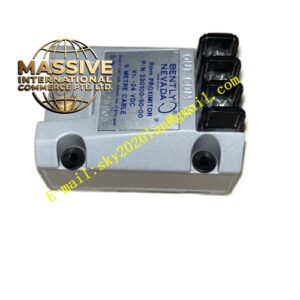
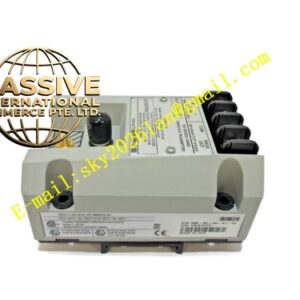
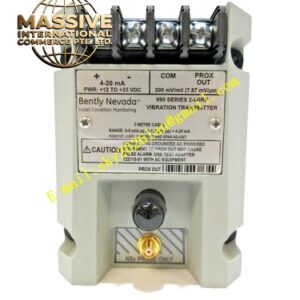
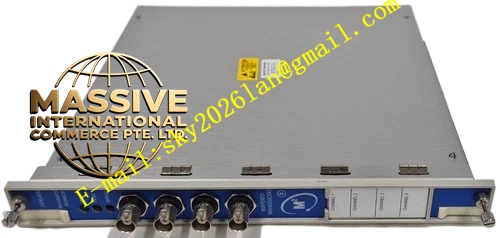
Bently 330910-00-05-10-02-00
Technical Specifications
| Parameter | Specification |
|---|---|
| Probe Thread | M10 x 1 metric |
| Unthreaded Length | 0 mm |
| Overall Case Length | 50 mm |
| Total Probe Length | 1.0 meter |
| Connector Type | Miniature coaxial ClickLoc |
| Agency Approval | Not required |
| Probe Tip Diameter | 8 mm |
| Linear Range | 1.5 mm |
| Recommended Gap Setting | 1.0 mm |
| Incremental Scale Factor | 7.87 V/mm |
| Frequency Response | 0 to 10 kHz |
| Minimum Target Diameter | 8.9 mm |
| Probe Tip Material | Polyphenylene sulfide |
| Probe Case Material | AISI 304 stainless steel |
| Probe Cable | 75 Ω coaxial with FEP insulation |
| Operating Temperature | -52°C to +177°C |
| Storage Temperature | -52°C to +177°C |
| Probe DC Resistance | 4.2 ± 0.5 ohms |
| Minimum Bend Radius | 25.4 mm |
Functional Features The probe generates a high-frequency radio frequency field at its tip. When a conductive target approaches, eddy currents are induced in the target surface, causing a change in the probe’s RF energy loss. This change is converted into a voltage signal proportional to the gap distance between the probe tip and the target surface. The ClickLoc connector ensures secure, vibration-resistant connection to the extension cable. The stainless steel armor provides mechanical protection against abrasion and crushing in harsh industrial environments.
Application Scenarios This probe is deployed on fluid-film bearing machines with small shafts or restricted side-view clearance. Typical installations include centrifugal air compressors, refrigeration compressors, process gas compressors, industrial pumps, gas turbines, steam turbines, and gearboxes. It measures radial vibration on shafts smaller than 51 mm diameter and axial position on flat targets smaller than 15 mm.
Material Composition The probe tip is molded from polyphenylene sulfide, a high-performance thermoplastic with excellent chemical resistance and dimensional stability. The probe case is constructed from AISI 304 stainless steel, providing corrosion resistance in aggressive environments. The integral cable features fluorinated ethylene propylene insulation with a braided shield for electromagnetic interference rejection.
Structural Characteristics The probe incorporates TipLoc molding technology, creating a robust bond between the probe tip and the probe body that prevents loosening under severe vibration. The side-exit cable design facilitates installation in confined spaces. The M10 x 1 thread allows direct mounting into standard threaded holes without additional adapters.
Working Principle The probe operates on the eddy-current principle. An RF oscillator within the Proximitor sensor drives the probe coil, creating an electromagnetic field. The field penetrates the surface of a conductive target, inducing circulating eddy currents that draw energy from the field. As the gap between probe and target changes, the energy loss varies, producing a modulated signal that the Proximitor converts to a proportional DC voltage output.
Installation Requirements Mount the probe using the M10 x 1 thread with a maximum torque of 11.3 N·m. Ensure the probe tip is perpendicular to the target surface within ±2 degrees. Maintain a minimum target area of 8.9 mm diameter, with 13 mm recommended for optimal linearity. The probe case must be electrically isolated from machine ground to prevent ground loop interference. Use the factory-recommended gap setting of 1.0 mm during initial installation.
Usage Precautions Do not expose the probe to temperatures below -34°C for extended periods, as this can compromise the pressure seal integrity. Avoid kinking the cable below the minimum bend radius of 25.4 mm. Do not route the probe cable in the same conduit as high-voltage power cables. Inspect connector protectors regularly and replace if damaged. Verify electrical isolation between the probe case and machine housing before energizing the system.