


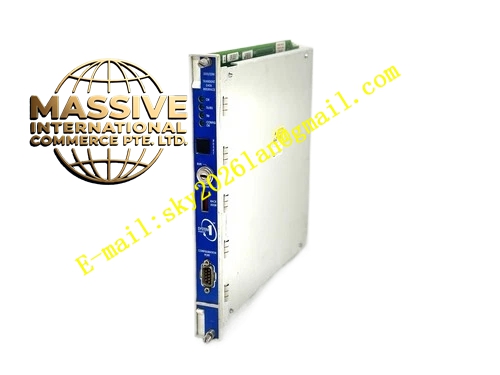
Description
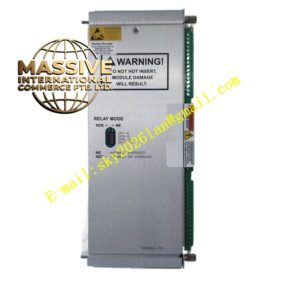
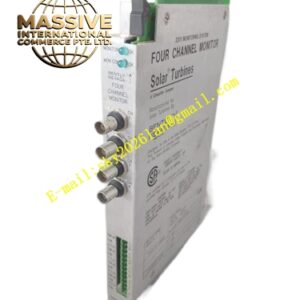
Bently 3500 22-01-01-00 146031-0
Technical Specifications
- Model: 3500/22-01-01-00 (146031-0)
- Communication Interfaces: Ethernet, RS-232, RS-485
- System Compatibility: 3500 Series Machinery Protection System
Functional Features
- High-Speed Data Throughput: Supports massive volumes of steady-state and transient waveform data upload.
- Independent Communication Processing: Does not participate in protection trip logic, ensuring communication failures do not compromise machinery safety.
- Multi-Protocol Support: Compatible with Modbus RTU/TCP and Bently Nevada System 1 proprietary protocols.
Application Scenarios
Deployed in all 3500 system control cabinets as the communication bridge between the rack and plant-level control networks (DCS, SIS) and condition monitoring software.
Performance Parameters
- Data Transfer Rate: 10/100 Mbps adaptive Ethernet
- Operating Temperature: -30°C to +65°C
Material Composition
Robust metal and flame-retardant plastic composite enclosure providing excellent electromagnetic interference (EMI) shielding.
Structural Characteristics
Standard 3500 module size with rich network status and communication activity indicator LEDs on the front panel, and multiple communication interface ports on the rear.
Working Principle
Polls data from all monitoring modules via the backplane bus in real-time, encapsulates and packages the protocols, and transmits them to host systems via Ethernet or serial links.
Installation Requirements
Must be installed in Slot 1 of the 3500 rack. Communication cables must use standard shielded twisted pairs, with proper single-point grounding.
Precautions for Use
Configure IP addresses and communication parameters to strictly match the upper-level network plan. Avoid routing communication cables parallel to high-voltage power cables.