


Description
Bently 3500/65‑01‑00 (172103‑01)
- Key Features: Sixteen independent temperature‑measurement input channels; supports 2‑wire, 3‑wire, 4‑wire RTD and isolated‑tip thermocouple inputs; internal termination design without separate external I/O module; per‑channel configurable Alert and Danger temperature alarm setpoints; transducer open‑circuit and short‑circuit fault self‑diagnosis; hot‑swap maintainability; front‑panel multi‑color LED status indicators; supports channel bypass function for on‑site maintenance work.
- Technical Specifications & Performance Parameters
- Input channel quantity: 16 temperature measurement channels
- Typical power consumption: 5.8 W
- Operating temperature: 0 ℃ ~ +60 ℃
- Storage temperature: ‑40 ℃ ~ +85 ℃
- RTD excitation current: 913 μA ±7 μA per channel
- Weight: 0.82 kg
- Material Composition: FR‑4 high‑precision analog‑signal multilayer printed‑circuit board; high‑resolution analog‑digital conversion chips; precision constant‑current source circuit components for RTD excitation; cold‑junction compensation circuit for thermocouple measurement; gold‑plated back‑plane edge connector; metal front‑panel fitted with multi‑color LED indicators; reinforced plastic mechanical locking latch.
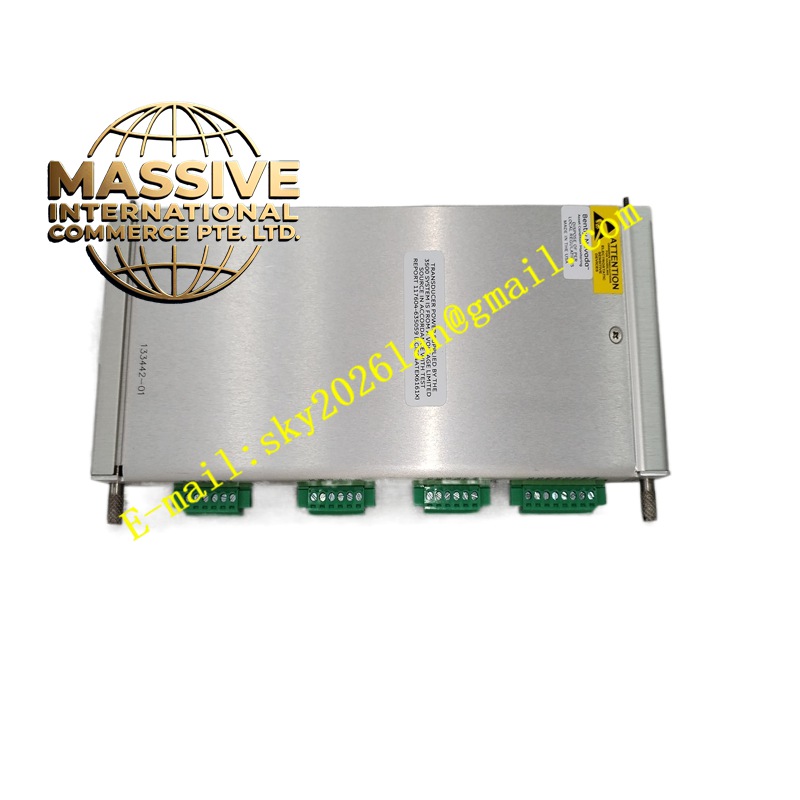
- Structural Features: Full‑height plug‑in rack‑module mechanical construction; front‑panel OK, TX/RX and Bypass LED indicators; rear‑side gold‑plated edge connector mates with 3500 rack back‑plane bus; field temperature‑sensor wiring connects directly to internal integrated termination terminals on module rear section; mechanical latch secures module position inside rack slot.
- Working Principle: Module provides constant‑current excitation for RTD sensors or completes cold‑junction compensation for thermocouple sensors. Transducer analog temperature‑proportional signal enters high‑precision analog‑to‑digital converter. Internal firmware converts sampled raw electrical value into real‑engineering‑unit temperature reading. Measured temperature value compares with user‑programmed alarm thresholds. Temperature data and alarm‑status flags broadcast onto rack back‑plane bus for relay‑output and upper‑level communication gateway transmission. Module continuously monitors transducer wire open‑circuit and short‑circuit fault conditions and generates diagnostic fault flags when wiring abnormality occursBaker Hugh….
- Application Scenarios: Bearing‑metal temperature monitoring for steam‑turbine, gas‑turbine and centrifugal‑compressor units; lubricating‑oil and casing surface temperature measurement; generator stator and bearing temperature monitoring; petrochemical and power‑plant 3500 TSI racks for multi‑point equipment temperature protection.
- Installation Requirements: Insert full‑height temperature‑monitor module into designated rack slot; fully engage mechanical locking latch; connect field RTD or thermocouple sensor cables directly to module internal termination terminals; configure sensor type, sensor parameters and temperature alarm thresholds in 3500 rack configuration software; perform temperature‑simulation test to verify channel measurement accuracy.
- Usage Notes: Wear ESD anti‑static wrist strap during module installation and replacement; strictly follow official maintenance workflow for hot‑swap operation; strictly match configured sensor type with actual physical field‑installed transducer; inspect front‑panel LED diagnostic indicators during daily equipment inspection rounds; preserve full rack‑configuration backup file after completing temperature‑parameter modification.