


Description
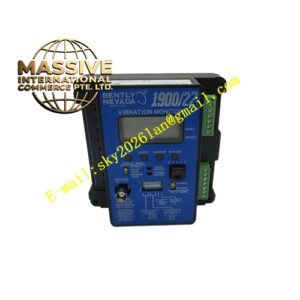
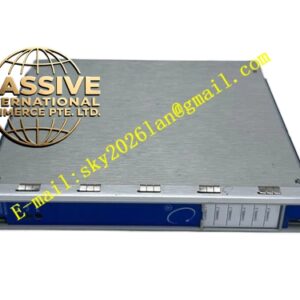
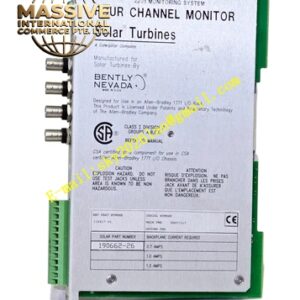
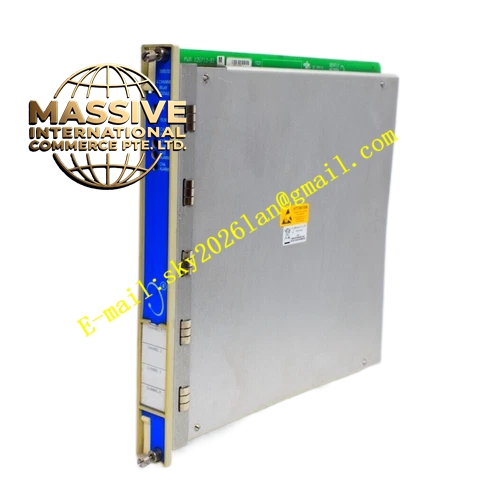
Bently Nevada 3300/48
Technical Specifications
| Parameter | Specification |
|---|---|
| Channels | Two independent case expansion channels |
| Input | DC LVDT transducers |
| Measurement Range | 0 to 25 mm (typical configuration) |
| Input Voltage | 18–36 VDC |
| Output Signal | 4–20 mA |
| Display | Vertical bargraph LCD, 63 segments per channel, 83 mm height |
| Display Resolution | ±1.6% of full-scale |
| Operating Temperature | -20°C to +65°C |
| Storage Temperature | -40°C to +85°C |
| Dimensions | Standard 3300 rack module format |
| Weight | Standard module weight |
| Origin | USA |
Functional Features
- Measures casing thermal growth relative to foundation using LVDTs
- Provides two independent channels for multi-point monitoring
- Features high-resolution LCD display for expansion reading
- Offers 4–20 mA recorder output for trending systems
- Includes programmable alarm setpoints for over-expansion conditions
- Provides LED status indicators for OK, Alert, and Danger conditions
- Performs continuous transducer OK checking
- Supports rack-mount installation in standard 3300 chassis
Structural Characteristics The case expansion monitor is housed in a standard 3300 series module enclosure with a front panel containing a vertical bargraph LCD display, LED indicators, and programming switches. The unit accepts input from DC LVDTs mounted between the machine casing and a fixed foundation reference. The internal circuitry includes LVDT excitation, signal demodulation, filtering, and microprocessor-based measurement and alarm logic.
Working Principle DC LVDTs are mounted with one end attached to the machine casing and the other end anchored to a fixed foundation point. As the machine heats during operation, the casing expands, causing relative movement between the LVDT core and coil. The LVDT converts this mechanical displacement into a proportional electrical signal. The monitor excites the LVDT, demodulates the return signal, filters noise, and converts the result into a linear displacement reading. When casing expansion exceeds programmed limits, the monitor activates alarm relays to warn operators of potential binding or clearance issues.
Installation Requirements
- Mount LVDTs between machine casing and rigid foundation reference
- Ensure LVDT mounting brackets are thermally stable and rigid
- Use shielded cable for LVDT signal connections
- Route cables away from high-energy power conductors
- Program full-scale range to match expected casing growth
- Set alarm thresholds based on manufacturer casing expansion limits
- Verify measurement accuracy during thermal transient conditions
- Ensure proper LVDT core-to-coil alignment for linear operation
Application Scenarios
- Steam turbine case expansion monitoring
- Generator stator thermal growth measurement
- Large compressor casing expansion supervision
- Reciprocating engine frame expansion monitoring
- Refinery heat exchanger thermal growth assessment
- Power plant foundation movement detection
- Industrial boiler and vessel expansion monitoring