


Description
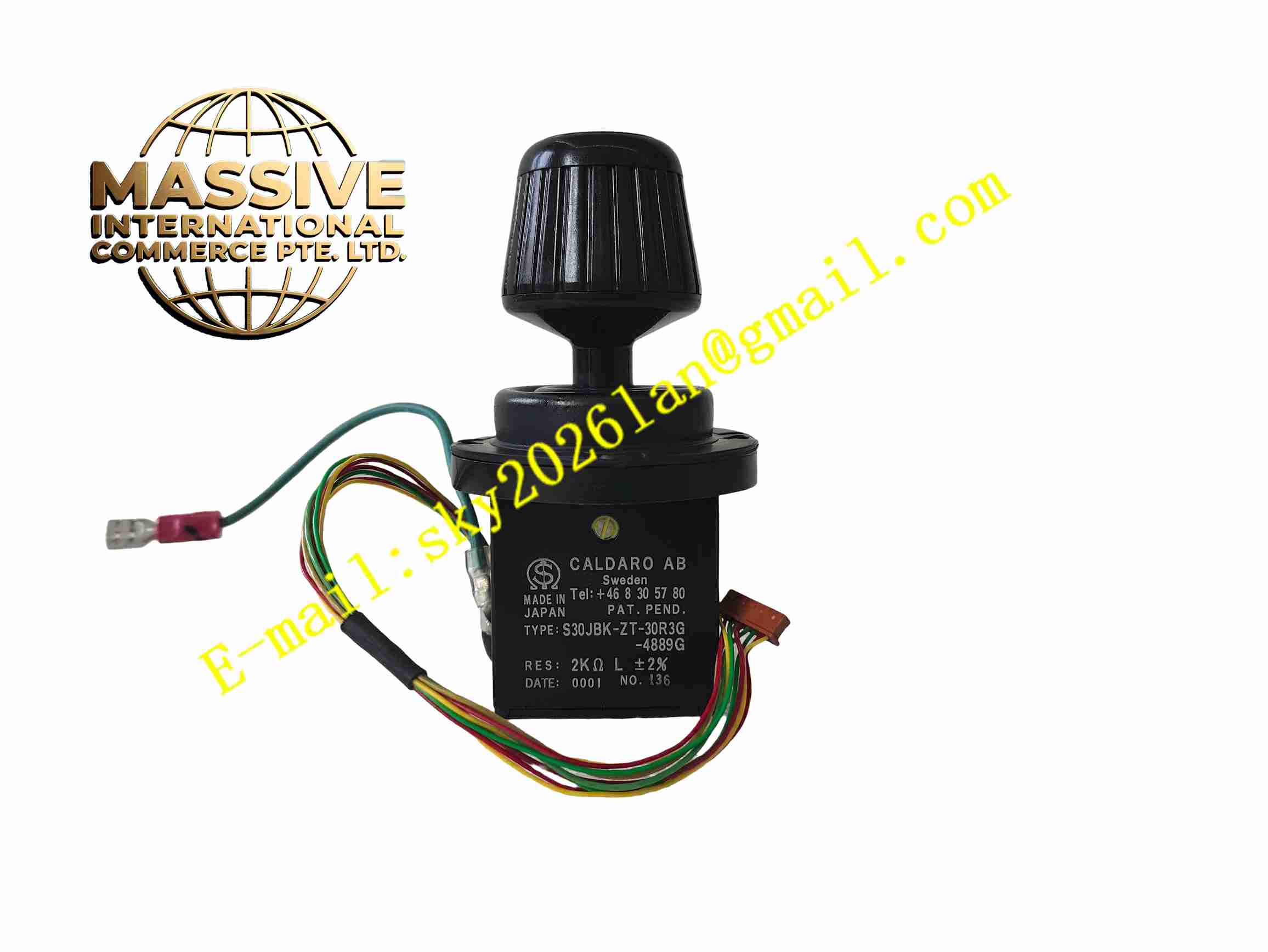
Caldaro AB S30JBK-ZT-30R3G-4889G
Technical Specifications Brand: Caldaro AB Model: S30JBK-ZT-30R3G-4889G Sensor Type: Wirewound potentiometer Resistance Value: 2 kOhm, tolerance ±2% Axis Quantity: Multi-axis control Operating Force: 2 N nominal operating force, 4.5 N detent holding force Mechanical Life: 1,000,000 operating cycles for detent mechanism Protection Grade: IP40 Operating Temperature: -25°C to +70°C Output Signal: Variable resistance proportional to handle deflection Mounting Style: Panel cutout mounting Connection: Multi-core internal wiring harness
Functional Features Proportional analog resistance output for continuous speed and position control. Built-in mechanical detent positions for centering and predefined step positions. Hard stop mechanical limiters restrict maximum handle deflection angle. Robust internal potentiometer assembly maintains stable resistance output after millions of movements. Flexible rubber boot prevents dust and particle ingress into internal moving parts. Multiple axes operate independently without signal cross interference. Compatible with industrial controller analog input channels.
Application Scenarios Robot teach pendant manual operation, mobile hydraulic crane remote control, construction machinery operator handles, offshore vessel deck machinery control, material handling vehicle proportional speed regulation.
Performance Parameters Linear output characteristic within full operating stroke. Consistent resistance output under continuous vibration load. Low mechanical backlash for precise proportional manipulation. Long service life without rapid resistance drift. Stable performance in high dust industrial workshops.
Material Composition Handle Grip: Reinforced PA66 glass-filled nylon. Rubber Boot: Flexible chloroprene rubber with anti-aging additive. Potentiometer Core: Wirewound resistive element, precious metal wiper contact. Base Housing: Black flame retardant ABS plastic. Fasteners: Zinc plated carbon steel screws. Internal Wiring: Multi-strand shielded PVC insulated wire.
Structural Features Panel embedded base structure with circular flange for mounting. Rubber bellows boot seals the moving shaft passage. Internal spring return mechanism automatically resets handle to center position when released. Separate potentiometer elements for each control axis. Mechanical hard limit pins restrict overtravel of each axis. Rear wiring harness exits from the bottom of base housing.
Working Principle Handle deflection drives the wiper of internal wirewound potentiometer. The wiper slides along resistive winding and changes the output resistance value proportionally to handle displacement. The connected controller reads resistance variation and converts the value into speed or position command for hydraulic valves or servo drives. Centering springs pull handle back to neutral position when operator releases grip, returning resistance output to zero command state.
Installation Requirements Cut panel mounting hole matching flange dimension, fix joystick base with mounting screws. Route multi-core signal cable separately from high power motor cables. Tighten mounting screws to specified torque to prevent loosening under vibration. Verify wiring pin assignment before connecting to controller analog input terminals. Perform full stroke test of each axis after installation to confirm linear signal output.
Usage Notes Avoid heavy impact and overload force on handle, which deforms internal potentiometer shaft. Prevent oil, cutting fluid and corrosive liquid from entering through rubber boot. Inspect rubber boot periodically for cracks or aging. Do not disassemble internal potentiometer assembly, which breaks factory calibration. Check terminal screw tightness regularly in vibration intensive machinery.