


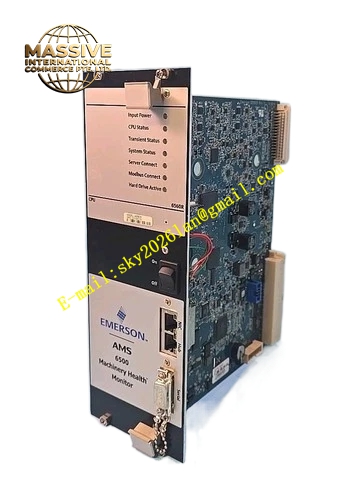
Description
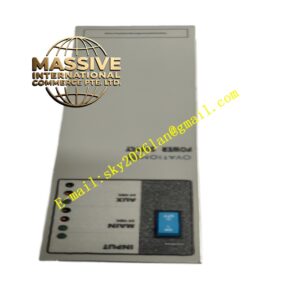
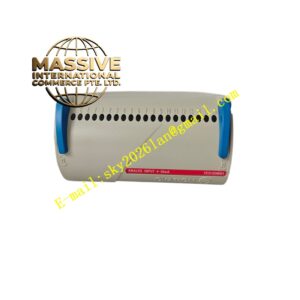
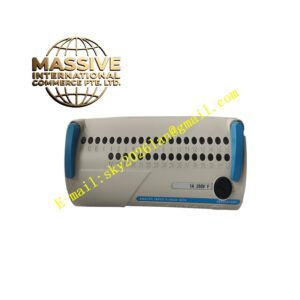
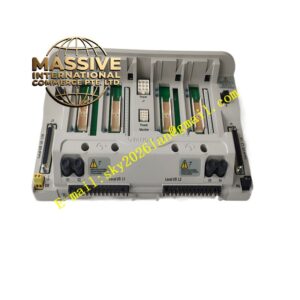
Emerson A6500-RC
Technical Specifications:
- Brand: Emerson
- Model Number: A6500-RC
- Product Type: System Relay Card / 16-Channel Output Relay Module
- Catalog: CSI 6500
- Digital Inputs: 66 channels
- Logic Low Level: 0 V to 3 V (not active)
- Logic High Level: 13 V to 32 V (active)
- Open Input Detection: Detected as not active
- Rated Input Current: 1 mA
- Rated Input Power: 24 mW
- Relay Outputs: 16 channels, SPDT type
- Maximum Voltage Capacity: 32 VDC / 48 VAC
- Output Load Ratings: AC1: 48 V / 2 A; DC1: 32 V / 2 A; DC-13: 24 V / 1 A; AC-15: 24 V / 2 A
- Turn-on/Turn-off Time: 10 ms (NO contact), 13 ms (NC contact), without logic processing time
- Rated Output Current: 2 A
- Rated Output Power: 96 W
- Protection Class: IP20 (IEC 60529)
- Conformal Coating: HumiSeal per IPC-CG-830B and IPC-A-610
- Airborne Contaminant Resistance: ISA-S71.04-1985 Class G3
- Operating Temperature: –20°C to +70°C (with forced cooling); –20°C to +55°C (without forced cooling)
- Storage Temperature: –40°C to +85°C
- Relative Humidity: 5% to 95% (non-condensing)
- Dimensions: 3U height, 12TE width (approximately 60 × 128.4 × 160 mm), 2-slot module
- Weight: Approximately 0.8 kg
- Compliance: API 670, SIL 2
- Communication Protocols: Modbus TCP/IP, Modbus RTU (serial), OPC UA
Functional Features:
- 66 Digital Inputs: Receives clear, alert, and alarm signals from all monitoring channels
- 16 SPDT Relay Outputs: Drives solenoids, contactors, or DCS/ESD systems for alarm or trip actions
- Programmable Boolean Logic: Supports AND, OR, NOT, RS latch, edge detection, M-out-of-N voting, and up to 20 logic types with up to 30 logic expressions
- Configurable Time Delays: Each logic expression supports 0–30 second delays to prevent nuisance trips
- Graphical Configuration Software: AMS Machine Studio provides intuitive graphical logic display
- Hot-Swappable: Conforms to API 670 standard for hot-swap capability
- Space-Saving Design: 3U, 2-slot form factor reduces cabinet space by half compared to traditional 6U cards
- Password Protection: Configuration version management prevents unauthorized modifications
Application Scenarios:
- Steam Turbines: Vibration, temperature, and speed protection interlocks
- Gas Turbines: Machinery health monitoring and emergency shutdown
- Compressors: Bearing temperature and vibration alarm/trip logic
- Hydro Turbines: Protective relay logic for water turbine machinery
Material Composition:
- Industrial-grade relay components
- High-quality multi-layer PCB with conformal coating (HumiSeal)
- Robust mechanical housing
Structural Features:
- 3U height, 12TE width modular form factor
- 2-slot insertable module for A6500-SR rack
- Front-panel relay output terminals
- Status indicator LEDs
- Hot-swap capable mechanical design
Working Principle:
The A6500-RC receives digital status signals (clear, alert, alarm) from the AMS 6500 monitoring system’s various measurement cards (vibration, displacement, temperature). These signals are processed through user-configured Boolean logic expressions with optional time delays. When a logic condition is satisfied, the corresponding SPDT relay output activates, driving external protection devices such as emergency shutdown valves or circuit breakers.
Installation Requirements:
- Install in an A6500-SR rack
- Connect digital input signals from monitoring cards
- Wire relay outputs to protection devices
- Configure logic using AMS Machine Studio software
Usage Precautions:
- Verify relay load ratings do not exceed specifications
- Ensure proper conformal coating integrity in corrosive environments
- Perform regular relay function testing
- Maintain configuration backups