


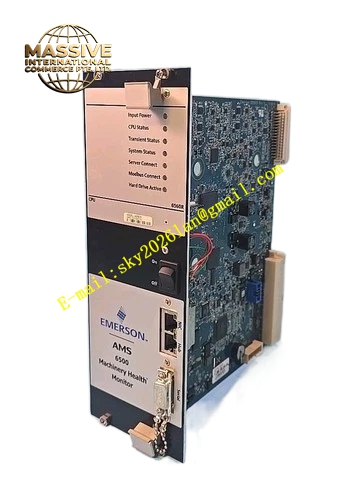
Description
Emerson A6500‑RR
Technical Specifications: Module power‑supply: 24 VDC supplied by AMS6500 rack backplane Input‑signal: multi‑channel dry‑contact alarm and trip‑signal from redundant monitor modules Output‑contact type: isolated dry‑contact relay output Rated contact load: resistive load maximum 250 VAC, 3 A Working logic: configurable two‑out‑of‑two or one‑out‑of‑two voting‑logic Operating temperature: 0 ℃‑60 ℃ Storage temperature: ‑40 ℃‑85 ℃ Relative humidity: 5%‑95% non‑condensing
Functional Features: Hardware‑based relay‑voting logic without software‑participation, conforming to machinery‑protection safety‑requirement. Configurable output‑voting‑logic mode adapts different redundant‑system‑design schemes. LED indicator lights display input‑signal status of every‑way redundant monitor module and final‑output‑relay status. Built‑in relay‑contact diagnostic function monitors relay working‑state. Hot‑swap module supports online replacement. Dry‑contact input‑circuit has surge‑suppression‑protection.
Application Scenarios: Dual‑redundant AMS6500 machinery‑protection‑system trip‑output‑voting unit for steam‑turbine, gas‑turbine and large‑size compressor in power‑generation and petrochemical‑industry, completing hardware‑voting for redundant protection‑trip‑signal.
Performance Parameters: Relay‑contact mechanical life: millions‑level operation times Vibration resistance: 10 Hz‑150 Hz, 0.5 g Shock resistance: 10 g peak acceleration, 11 ms duration MTBF value: 228000 hours
Material Composition: Module outer housing: UL94‑V0 flame‑retardant thermoplastic material. Internal printed‑circuit board: FR‑4 glass‑fiber epoxy substrate. Backplane connector: gold‑plated copper‑alloy multi‑pin connector. Output‑relay components adopt high‑reliability industrial‑grade sealed‑package relays. Side‑locking latches use reinforced high‑strength engineering‑plastic.
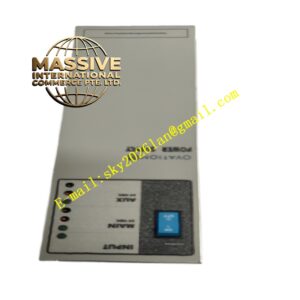
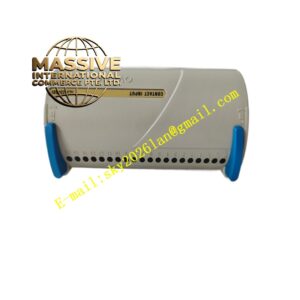
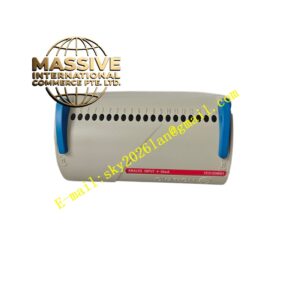
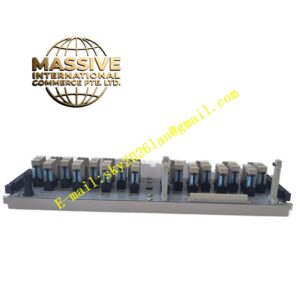
Structural Features: 3U Euro‑card single‑slot plug‑in module for AMS6500 rack installation. Two‑side mechanical‑locking buckles fix module on rack backplane. Front‑panel is equipped with group of LED indicator‑lights for input‑signal and output‑relay‑status observation. Rear‑side multi‑pin gold‑plated connector connects rack power‑supply‑bus and signal‑wiring backplane. Upper‑shell surface has ventilation‑slots for passive heat‑dissipation.
Working Principle: Alarm and trip dry‑contact‑signals output by two‑sets redundant monitor modules access input‑circuit of A6500‑RR module. Internal hardware‑relay‑logic‑circuit executes configured voting‑logic judgment for multi‑way input‑signals. Final‑voting‑result drives output‑relay‑action. Output dry‑contact connects to external machinery‑interlock‑circuit. LED indicators reflect every‑channel input‑signal status and final‑output‑relay‑actuation‑status. Module obtains working power‑supply from rack backplane.
Installation Requirements: Insert A6500‑RR module into designated redundancy‑relay slot inside AMS6500 rack. Fasten two‑side locking‑latches completely. Input‑signal wiring and output‑trip‑signal wiring use shielded control‑cable. Separate control‑signal‑cables and high‑voltage‑power‑cables. Cut off rack power‑supply and external interlock‑circuit power‑supply before wiring‑operation.
Precautions for Use: Do not exceed rated voltage‑current‑load of output‑relay‑contact. Wear anti‑static wrist‑band in maintenance‑work. Regularly inspect contact‑wiring‑tightness of input‑and‑output‑terminals. Keep ventilation‑slots free from dust‑accumulation. Stop module‑application immediately if relay‑contact adhesion‑fault occurs.