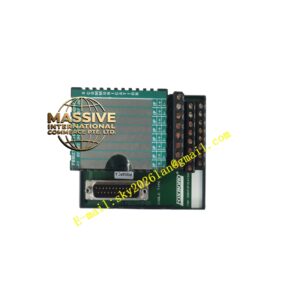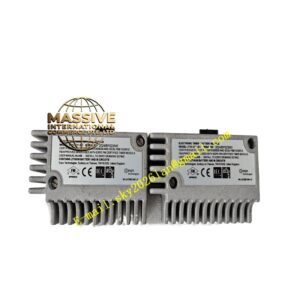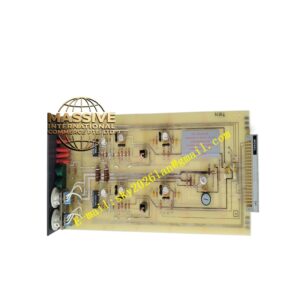




Description
Foxboro CM902WL
Technical Specifications
- Interface Type: High-speed serial/Ethernet communication interface.
- Protocol Support: Native Foxboro protocols and standard industrial protocols (e.g., Modbus, TCP/IP).
- Data Buffering: Large-capacity FIFO buffer to handle peak network traffic.
- Isolation: Optoelectronic isolation on communication ports.
Functional Features
- Protocol Translation: Bridges proprietary DCS networks with standard enterprise networks.
- High Throughput: Supports high-bandwidth data transfer for dense I/O systems.
- Link Redundancy: Supports dual-path communication for failover resilience.
- Real-Time Diagnostics: Monitors link status, error rates, and packet loss.
Application Scenarios
Used for plant-wide information integration, connecting remote skids, and interfacing with Safety Instrumented Systems (SIS) or Manufacturing Execution Systems (MES).
Performance Parameters
- Latency: Millisecond-level response time.
- Error Rate: < 10^-9 under normal operating conditions.
- Operating Temperature: -20°C to +70°C.
Material Composition
Industrial-grade flame-retardant enclosure with internal multi-layer PCBs featuring gold-plated contacts and conformal coating.
Structural Characteristics
- Form Factor: Standard rack-mount module.
- Connectors: RJ45, DB9, or fiber optic ports depending on configuration.
- Indicators: Link, Activity, and Fault LEDs.
Working Principle
The module encapsulates DCS data into standard network packets, routes them through the appropriate physical interface, and manages the handshaking and error-checking protocols to ensure data integrity across the network.
Installation Requirements
- Use shielded twisted-pair or fiber optic cables as specified.
- Ensure proper grounding of communication shields to prevent ground loops.
- Avoid routing communication cables parallel to high-voltage power lines.
Precautions for Use
- Verify IP addresses and subnet masks before connecting to the network.
- Do not exceed the maximum cable length specifications.
- Monitor diagnostic counters periodically to detect degrading network health.