


Description
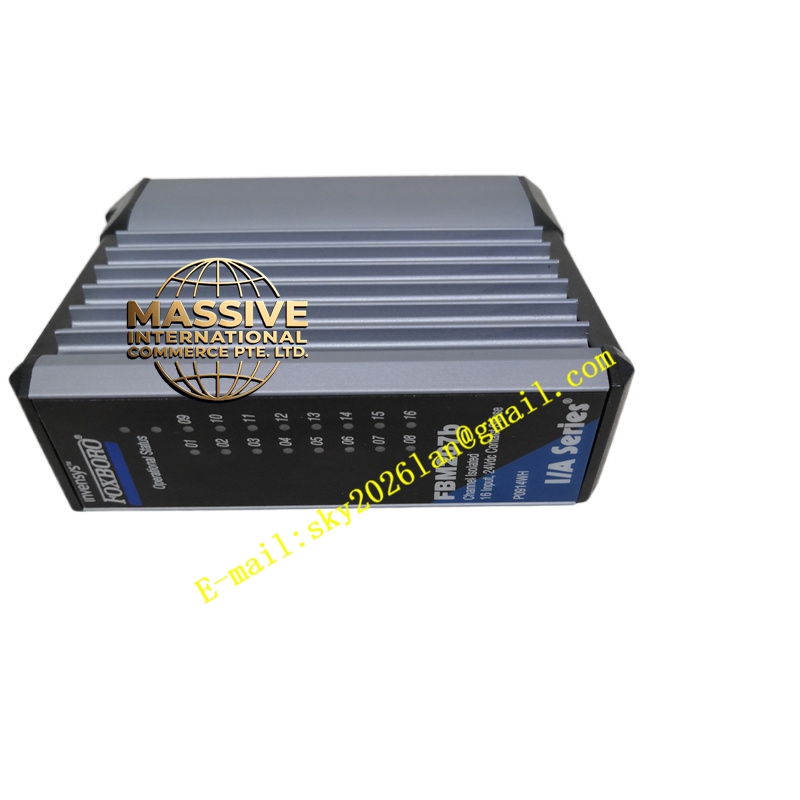
Foxboro FBM207B
- Technical Specifications:
- Channels: 16 isolated inputs
- Input Voltage: 24 V DC contact sense
- Isolation: Channel-to-channel and channel-to-ground isolation; opto-isolation
- Input Types: Supports discrete inputs (dry or wet) from field devices
- Communication: 2 Mbps module fieldbus to FCM/FCP
- Power: 24 V DC; low power dissipation (approximately 2 W)
- Environment: Operating temperature -20 °C to +60 °C; supports harsh environments
- Dimensions: Approx. 10.4 cm × 4.5 cm × 11.4 cm; weight ~0.284 kg
- Mounting: DIN-rail or baseplate mounting
- Functional Features:
- Channel isolation enhances immunity to ground loops and noise
- Configurable input filters (debounce times) to ensure signal stability
- Real-time status reporting and diagnostics for each channel
- Supports event sequencing and high-speed digital input sensing
- Application Scenarios:
- Monitoring discrete field devices such as limit switches, valve limit contacts, and status indicators
- Digital inputs for motor starters, pump status, and interlock monitoring
- Process control applications requiring robust digital input acquisition
- Performance Parameters:
- Fast response to signal changes suitable for high-speed control and safety interlocks
- Reliable operation under G3-class environmental conditions
- Material and Structural Characteristics:
- Housing: Robust industrial enclosure designed for G3 environments
- Terminals: Pluggable terminal block for ease of wiring and maintenance
- Connectors: Industrial connectors for backplane and fieldbus
- Working Principle:
- Each channel senses the presence or absence of the 24 V DC signal at the input terminal. Optical isolators couple the field signal to the module logic, which then transmits the state to the controller over the fieldbus.
- Installation Requirements:
- Mount on a DIN-rail or baseboard compatible with 200 series FBM modules
- Connect field devices to the terminal block; ensure correct polarity and voltage
- Configure debounce times and diagnostic options via engineering tools
- Usage Notes:
- Use appropriately rated field switches and contacts for 24 V DC sensing
- Verify input wiring to avoid short circuits or backfeeding
- Periodically inspect terminal connections and module status