



Description
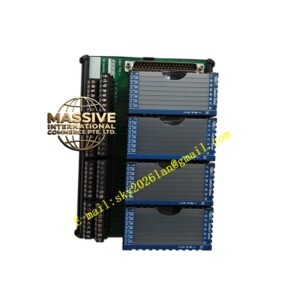
Foxboro CP30
Technical Specifications
- Processor: Industrial-grade microprocessor
- Memory: Dedicated Program and Data Memory
- Communication: Redundant Module Fieldbus and Ethernet integration
- I/O Capacity: Supports standard Series 200 FBM modules
Key Features
- Reliable Local Control: Executes regulation, logic, timing, and sequence control locally to minimize network latency.
- Redundant Architecture: Supports hot-standby redundancy and power redundancy for maximum system availability.
- Data Integrity: Utilizes matching technology to verify data consistency and prevent erroneous information propagation.
- Scalable Architecture: Supports extensive I/O module expansion for large-scale industrial applications.
Application Scenarios
Deployed in critical process automation environments, including refining, petrochemicals, and power generation, as the central “brain” for localized process control and data acquisition.
Performance Parameters
- Operating Temperature: 0°C to 60°C
- Storage Temperature: -40°C to 85°C
- Power Supply: 24 VDC, supports redundant power
- Protection Rating: IP20
Material Composition
Housed in a die-cast aluminum enclosure designed to withstand harsh industrial environments, including high dust and strong electromagnetic interference.
Structural Characteristics
Compact form factor with comprehensive front-panel status LEDs and integrated communication ports.
Operating Principle
The processor continuously polls connected FBMs for field data, executes control logic at high speed, and transmits processed data over the redundant Ethernet network. In redundant configurations, it uses matching to ensure seamless failover.
Installation Requirements
Must be installed on a compatible Foxboro baseplate. Ensure adequate cabinet ventilation and maintain a low-impedance protective earth ground for enhanced noise immunity.
Usage Precautions
When configuring redundancy, ensure primary and backup modules have identical firmware versions. Always follow standard ESD procedures during handling, and verify that redundant switching logic is correctly configured.