


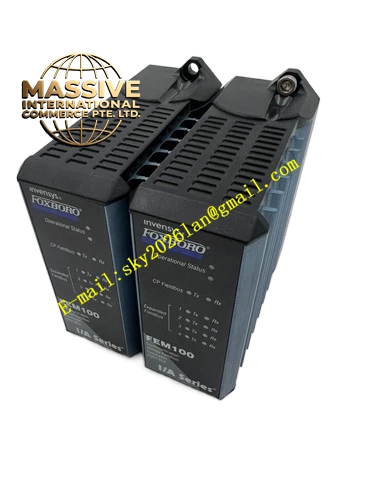
Description
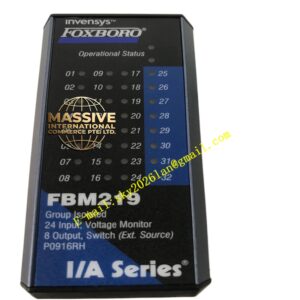
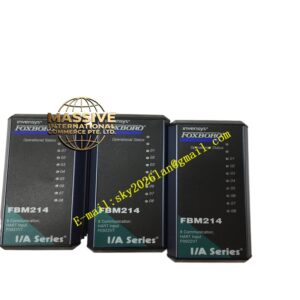
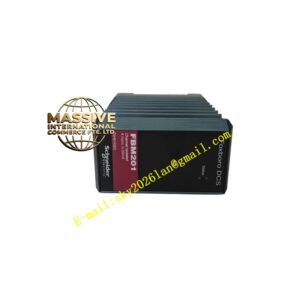
Foxboro FBM25 P0900NX
Technical Specifications
- Module Type: Combination Digital I/O Module
- Input Capacity: 8 channels of contact/DC voltage inputs
- Output Capacity: 8 channels of contact outputs
- Bus Interface: Foxboro Module Fieldbus
Functional Features
- Space-Saving Design: Integrates 8 DI and 8 DO channels in a single module footprint.
- Relay Output Flexibility: Supports switching of various DC and AC loads via isolated relay contacts.
- Hot-Swappable Maintenance: Enables online replacement without disrupting the control node.
- Comprehensive Diagnostics: Provides channel-level status reporting for inputs and outputs.
Application Scenarios
Used in packaging machinery, material handling systems, water/wastewater treatment, and general manufacturing for discrete control and monitoring.
Performance Parameters
- Operating Temperature: 0℃ to 60℃
- Ingress Protection: IP20
- Power Requirements: Backplane powered, 24 VDC nominal via 200 Series baseplate
Material Composition
Constructed with flame-retardant plastics and conformal-coated PCBs for long-term reliability in industrial environments.
Structural Characteristics
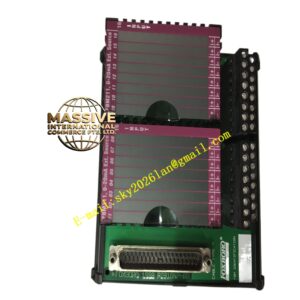
Standard 200 Series FBM form factor. Connects to field devices via a dedicated Terminal Assembly with clearly labeled I/O sections.
Working Principle
Input signals are optically isolated and digitized, while output commands energize relay coils. The module communicates bidirectionally with the controller over the Module Fieldbus.
Installation Requirements
Install on a compatible 200 Series baseplate. Ensure proper cabinet grounding and ventilation.
Usage Precautions
Do not exceed the relay contact rating. Ensure correct wiring polarity for DC inputs. Verify module configuration in the control software before commissioning.