



Description
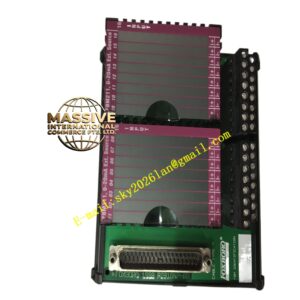
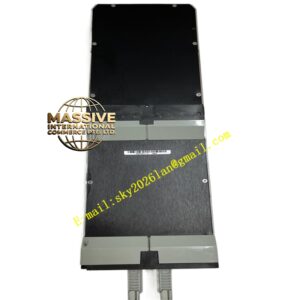
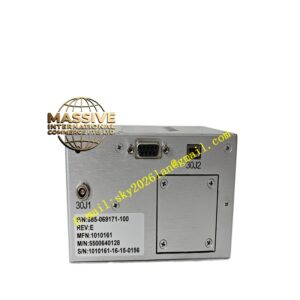
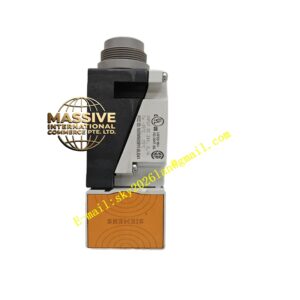
Foxboro P9016DC
Technical Specifications
- Product Type: Field Control Processor.
- Processor: 32-bit Industrial RISC.
- Memory: 8 MB Program / 4 MB Data.
- Communication: 100 Mbps Fiber Optic Ethernet, RS-232.
- I/O Capacity: Supports up to 32 Series 200 FBMs.
Functional Features
- Fault-Tolerant Architecture: Supports 1:1 hot-standby redundancy with bit-by-bit data matching for zero-bump failover.
- High-Speed Execution: Executes up to 10,000 control blocks per second.
- Real-Time Data Acquisition: Continuously collects process variables with integrated alarm management.
- Broad Protocol Support: Compatible with Modbus TCP/IP, ControlNet, and Ethernet/IP.
Application Scenarios
Deployed in refining, chemical processing, and utility sectors for continuous process control and safety-critical monitoring.
Performance Parameters
- Power Consumption: 10 W typical.
- Operating Temperature: 0°C to 60°C.
- Dimensions: 140 mm x 165 mm x 45 mm.
- Weight: 0.6 kg.
Material Composition
High-grade die-cast aluminum chassis for EMI shielding and thermal management. Internal PCBs are conformal-coated.
Structural Characteristics
Compact modular design with front-panel status LEDs. Integrates fiber optic and Ethernet ports for seamless network connectivity.
Working Principle
Continuously polls connected FBMs, executes control logic in a deterministic cycle, and writes outputs back to the field. In redundant mode, synchronizes memory with the backup processor for seamless failover.
Installation Requirements
Install in a properly grounded cabinet. Connect 100 Mbps fiber optic networks correctly. Ensure adequate ventilation.
Usage Precautions
Verify redundancy synchronization before maintenance. Never remove a processor without disabling it in software first. Keep firmware and software versions compatible.