


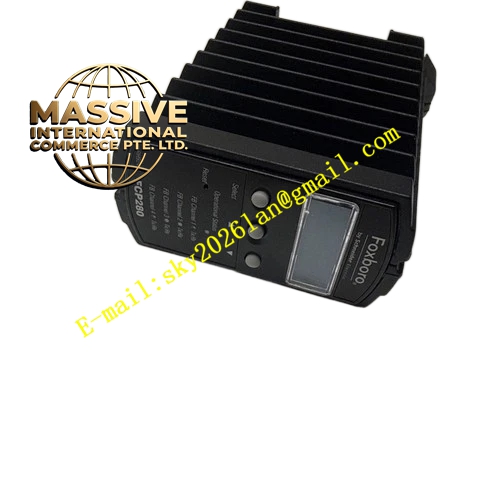
Description
Foxboro RH924YA
Technical Specifications
- Product Type: FCP Baseplate / Carrier.
- Compatibility: Foxboro FCP270 / FCP280 series controllers.
- Network Interfaces: Dual 100 Mbps Fiber Optic Ethernet ports.
- Power Input: 24 VDC redundant.
Functional Features
- Controller Interface: Provides the physical and electrical interface for the FCP module, including fiber optic transceivers and fieldbus connections.
- Redundant Power & Network: Supports dual power feeds and dual fiber paths for maximum controller availability.
- Status Indication: Features LEDs for power, communication, and fault status visible on the front panel.
Application Scenarios
Used in every I/A Series control node to mount the FCP. Essential for both new installations and as a spare part for controller replacement.
Performance Parameters
- Operating Temperature: 0°C to 60°C.
- Protection Rating: IP20.
Material Composition
Rugged industrial enclosure with integrated fiber optic connectors and high-current power terminals.
Structural Characteristics
Designed to accept the FCP module via a high-density backplane connector. Includes mounting holes for DIN rail or panel mounting.
Working Principle
Routes 24 VDC power to the FCP and provides the physical layer for fiber optic Ethernet communication and fieldbus connectivity. Acts as the mechanical anchor and electrical interface for the processor.
Installation Requirements
Mount securely on DIN rail or panel. Connect fiber optic cables to the correct TX/RX ports. Ensure redundant power supplies are connected.
Usage Precautions
Handle fiber optic cables with care; avoid bending beyond the minimum radius. Verify power polarity before connecting. Do not remove the FCP while the baseplate is energized unless the system supports hot-swap.