


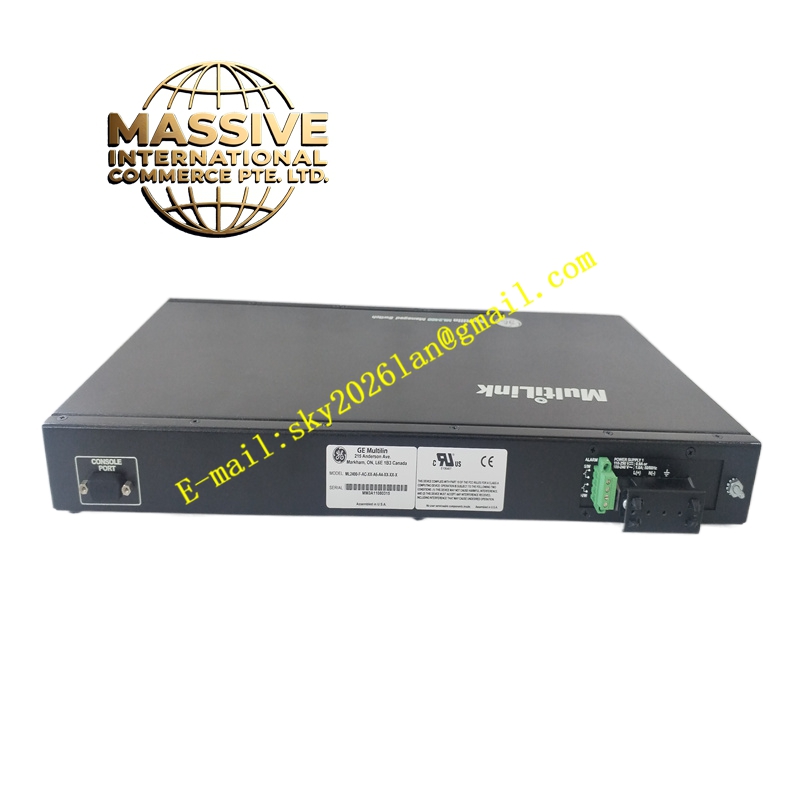
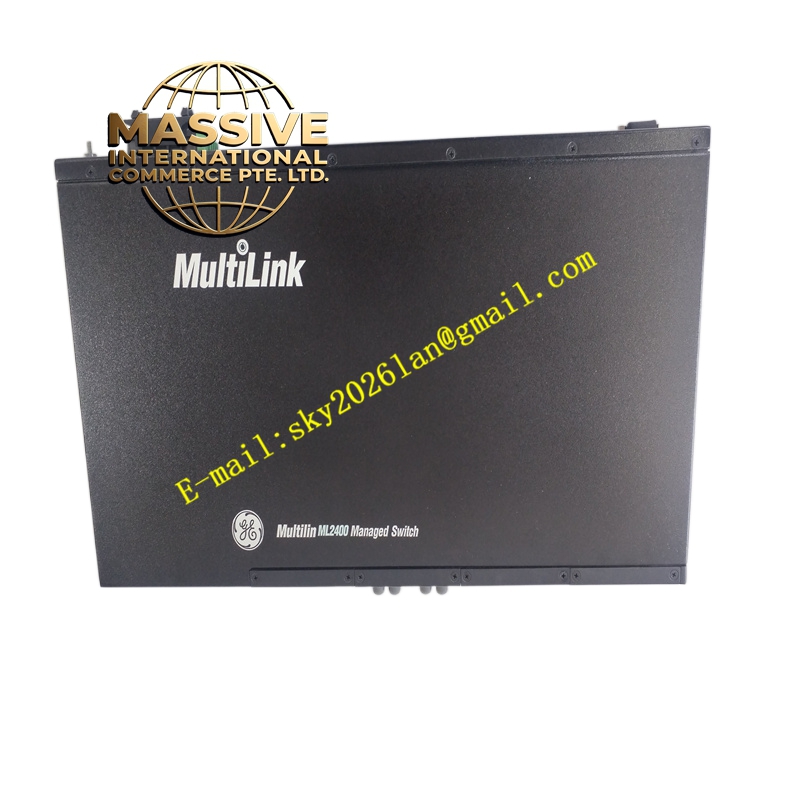
Description
GE ML2400-F-AC-XX-A6-A4-XX-XX-X Technical Specifications:
- System Architecture: Industrial Managed Ethernet Switch.
- Power Supply: AC-powered (typically 85-264 VAC or 125/250 VDC via internal conversion), ensuring compatibility with standard substation auxiliary power.
- Port Configuration: Features an A6-A4 hybrid port layout, commonly providing a combination of 10/100/1000Base-T copper ports and 100/1000Base-X fiber optic ports.
- Communication Protocols: Fully supports IEC 61850, Modbus TCP/IP, DNP3.0, and standard TCP/IP/UDP/IP.
- Redundancy: Supports advanced ring redundancy protocols (e.g., RSTP, MRST) with ultra-fast recovery times.
Functional Features:
- Substation Automation Ready: Engineered to handle GOOSE and SV messaging for IEC 61850 compliant substation automation systems.
- Advanced Traffic Management: Supports Quality of Service (QoS), VLAN tagging, IGMP snooping, and port mirroring for precise network traffic control.
- Cybersecurity: Includes MAC address filtering, port security, and 802.1X authentication to protect critical infrastructure from unauthorized access.
- Comprehensive Diagnostics: Features real-time network monitoring, event logging, and SNMP v1/v2c/v3 support for remote management and troubleshooting.
Application Scenarios:
- 110kV and higher voltage substation automation and protection networks.
- Distributed control systems (DCS) in power plants and petrochemical facilities.
- Railway signaling and transportation control networks.
- Heavy industrial manufacturing and water/wastewater treatment plants.
Performance Parameters:
- Switching Capacity: Non-blocking switching architecture ensuring zero packet loss under full load.
- Latency: Microsecond-level switching latency for deterministic real-time control.
- MTBF: Exceptionally high Mean Time Between Failures, designed for continuous 24/7/365 operation.
- Environmental Tolerance: Rated for extreme operating temperatures, high humidity, and severe electromagnetic interference (EMI).
Material Composition & Structural Characteristics:
- Enclosure: Ruggedized, corrosion-resistant metal chassis with IP40 or higher protection rating.
- Cooling: Fanless, convection-cooled design to eliminate moving parts and prevent dust accumulation.
- Mounting: Standard 19-inch rack-mountable form factor with included mounting brackets.
- Connectors: Industrial-grade RJ45 ports with shielded housings and LC/SC duplex fiber optic transceiver slots.
Working Principle: The ML2400 switch operates at Layer 2 and Layer 3 of the OSI model, utilizing high-speed Application-Specific Integrated Circuits (ASICs) to forward data frames based on MAC addresses and IP routing tables. When deployed in a ring topology, it actively monitors the health of the network links. If a link fails, the switch instantly reconfigures the network path to maintain uninterrupted communication. The AC power input is internally converted to low-voltage DC to power the switching matrix, processors, and optical transceivers.
Installation Requirements:
- Grounding: Strictly connect the chassis grounding terminal to a dedicated, clean earth ground to ensure EMI immunity.
- Fiber Handling: When terminating A6/A4 fiber ports, ensure strict adherence to bend radius specifications and maintain cleanliness of LC/SC connectors.
- Power Wiring: Use appropriately gauged AC power cables with proper strain relief and circuit breaker protection.
- Software Configuration: Pre-configure VLANs, QoS priorities, and redundancy protocols via the CLI or web-based management interface before deployment.