


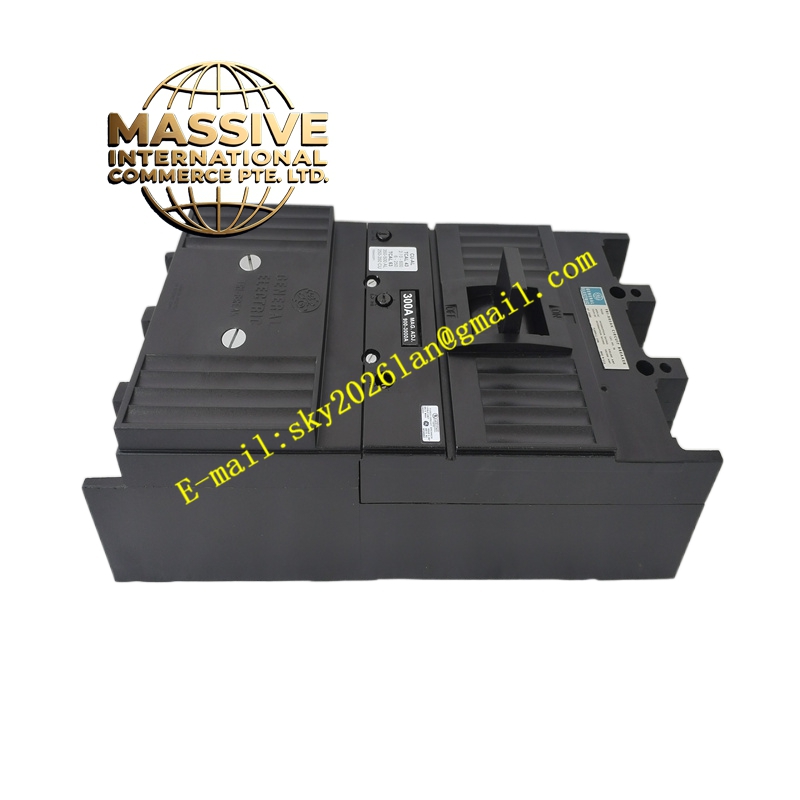
Description
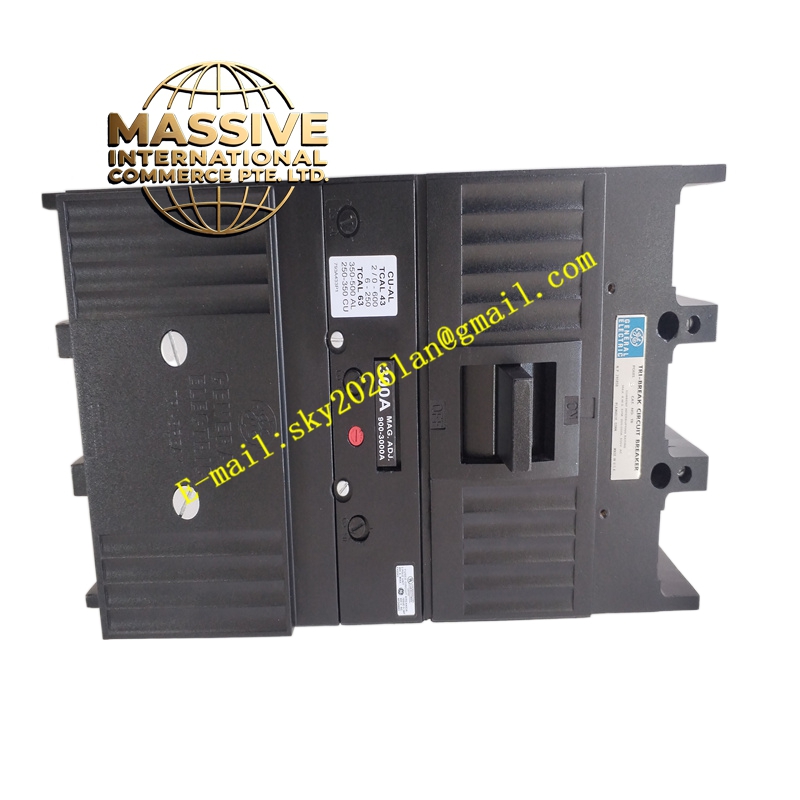
GE TB43300AF14 Technical Specifications:
- Poles: 3-Pole.
- Frame Size: 300 A Frame.
- Continuous Current Rating: 300 A.
- Voltage Rating: 600 VAC Max.
- Terminal Type: AF14 specific terminal configuration.
Functional Features:
- High-Capacity Protection: Handles continuous loads up to 300 A with proper derating.
- Adjustable Trip (Optional): Depending on the specific trip unit, may offer adjustable long-time and instantaneous settings.
- Safety Design: Finger-safe terminal shields to prevent accidental contact.
- Durable Mechanism: Stored-energy toggle mechanism for fast, decisive contact operation.
Application Scenarios:
- Main breaker for large commercial buildings.
- Feeder protection for heavy industrial machinery.
- Sub-feed protection in switchgear assemblies.
Performance Parameters:
- Thermal Capacity: Designed to withstand high inrush currents without nuisance tripping.
- Short-Circuit Withstand: High interrupting rating ensures system safety during severe faults.
- Temperature Compensation: Trip unit is compensated for ambient temperature variations.
Material Composition & Structural Characteristics:
- Enclosure: Glass-polyester reinforced housing for superior mechanical strength.
- Conductors: High-conductivity copper buswork with tin plating.
- Mechanism: Precision-machined steel linkages and springs.
Working Principle: Operates identically to the 225 A model but with scaled internal components to handle 300 A. The thermal element responds to prolonged overcurrents, while the magnetic element reacts to instantaneous short circuits. The stored-energy mechanism ensures the contacts open at a consistent speed regardless of the operator’s handle speed.
Installation Requirements:
- Conductor Sizing: Use appropriately sized copper or aluminum conductors for 300 A service.
- Torque Specifications: Strictly adhere to terminal torque specs to prevent hot spots.
- Ventilation: Ensure adequate airflow around the breaker for heat dissipation.
Usage Precautions:
- Load Monitoring: Monitor load currents to ensure they do not exceed the breaker’s continuous rating.
- Inspection: Inspect for signs of overheating, such as discolored terminals or melted insulation.
- Testing: Perform primary injection testing to verify trip unit calibration.