


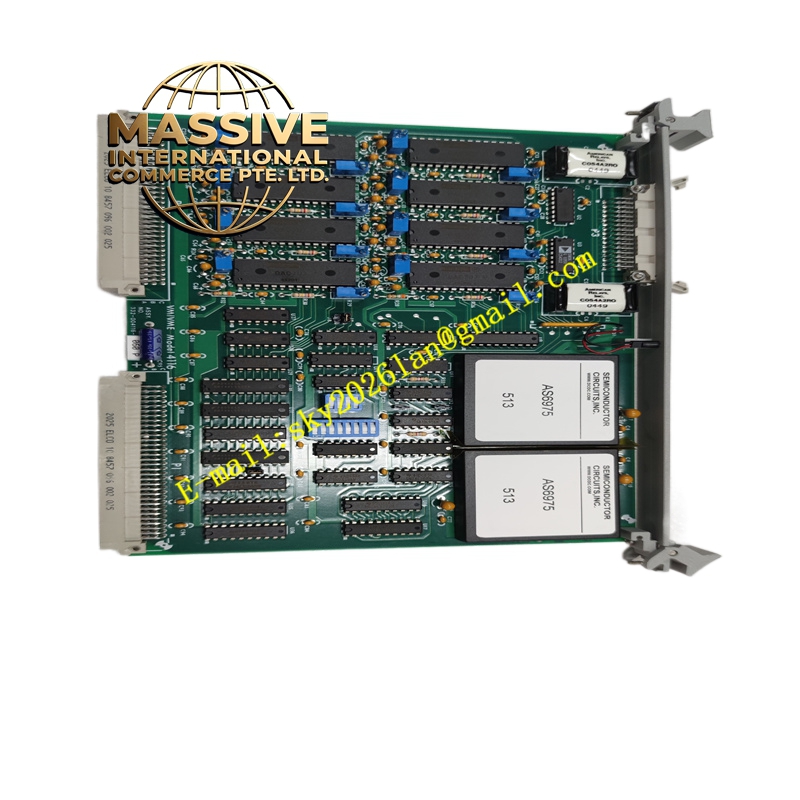
Description
GE VMIVME-4116
- Technical Specifications (typical VMIC 55xx/4116 series):
- Memory size: Commonly 64 MB to 256 MB reflective memory per node (check variant)
- Interface: VMEbus (A32/D32, master/slave)
- Fiber ports: 1 or 2 multimode fiber optic ports (LC/SC); data rate up to 2.12/2.5 Gb/s
- Latency: Sub-microsecond node-to-node propagation (depends on fiber length and load)
- Distance: Up to several kilometers with appropriate fiber
- Software support: Drivers for VxWorks, Linux, Windows
- Functional Features:
- Deterministic, low-latency memory replication without OS involvement
- DMA and interrupt capabilities for integration into host applications
- Error detection and recovery mechanisms on the fiber link
- Application Scenarios:
- HIL simulation and real-time test systems
- Multi-computing control clusters requiring shared state (power plant control, turbine simulators)
- High-performance data acquisition and distribution
- Performance Parameters:
- Throughput near line rate; latency scales with fiber length and traffic load
- Material and Structural Characteristics:
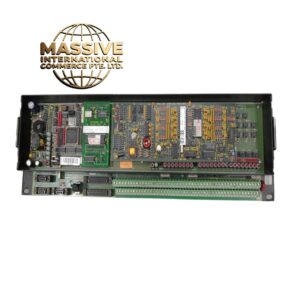
- 6U VME board with front-panel fiber transceivers and status LEDs; robust enclosure for industrial use
- Working Principle: The card maps a block of local memory that is mirrored across the network; any write to that memory is sent out on fiber and written to the corresponding address on all other nodes; reads access local copy only.
- Installation Requirements:
- Install in a 6U VME chassis and connect to the reflective memory hub or other nodes via fiber
- Configure node IDs or address offsets as per system design
- Ensure fiber cleanliness and correct connector types
- Usage Notes:
- Use identical or compatible memory sizes on all nodes
- Avoid mixing multimode/single-mode fiber in the same network segment unless supported
- Monitor link status LEDs for network integrity