


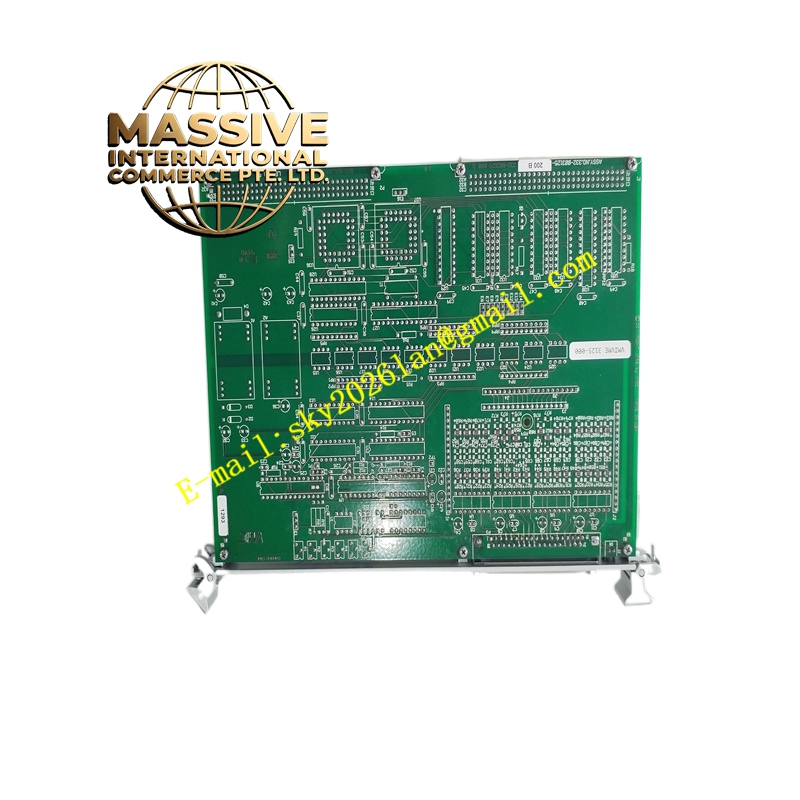
Description
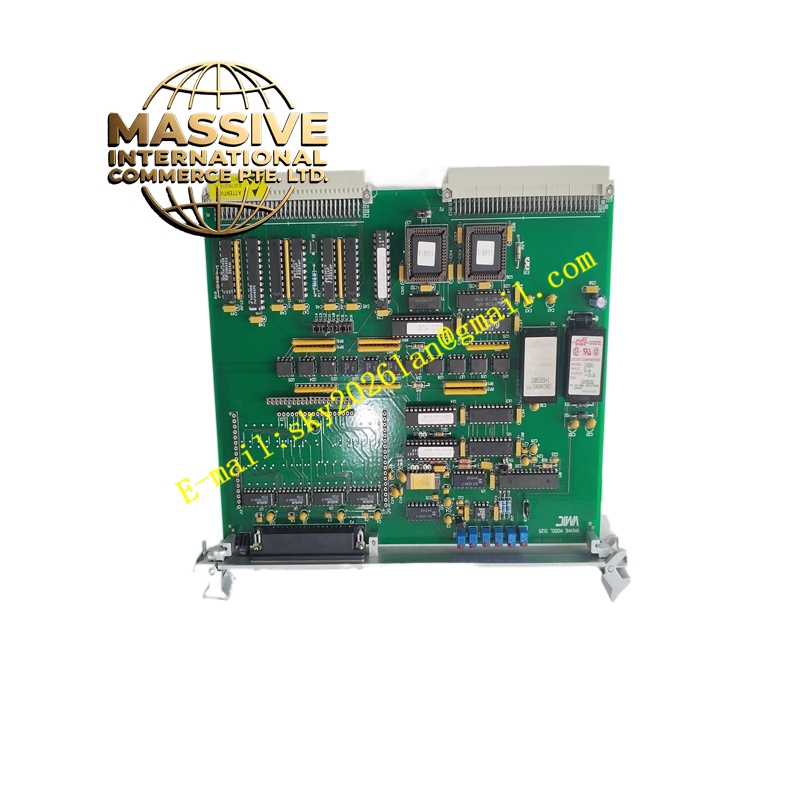
GE VMVIVME-3125 Technical Specifications:
- Bus Interface: Standard VMEbus P1/P2 backplane connectivity.
- Channel Capacity: Supports multiple discrete and analog I/O channels depending on the specific configuration.
- Data Transfer: High-speed block transfer protocols for efficient data handling.
- Signal Types: Configurable for various industrial signal standards.
Functional Features:
- Protocol Translation: Converts VMEbus data packets into formats compatible with external field devices.
- Signal Isolation: Provides galvanic isolation to protect the VME backplane from field voltage transients.
- Diagnostic Feedback: Real-time reporting of link status, channel faults, and communication errors.
- Hot-Swap Capability: Designed to support live replacement in redundant system architectures.
Application Scenarios:
- Interfacing legacy controllers with modern distributed I/O networks.
- Signal conditioning and routing in power generation and petrochemical plants.
- Expansion of VME system I/O capacity without adding main CPU slots.
Performance Parameters:
- Latency: Microsecond-level deterministic response for real-time control loops.
- Throughput: Optimized for high-density data acquisition and output control.
- Reliability: Industrial-grade components rated for continuous 24/7 operation.
Material Composition & Structural Characteristics:
- Enclosure: Standard 6U or 3U Eurocard form factor.
- PCB: Multi-layer board with conformal coating for environmental protection.
- Connectors: High-reliability VME edge connectors and front-panel terminal blocks.
Working Principle: The module monitors the VMEbus for read/write commands directed to its assigned memory map. Upon receiving a command, the onboard processor translates the request, applies necessary signal conditioning or protocol conversion, and routes the data to the appropriate external I/O channel. Incoming field signals are processed in reverse, converting them into VME-compatible data formats for the host CPU.
Installation Requirements:
- Address Configuration: Set the base address and interrupt level using hardware DIP switches or jumpers.
- Wiring: Use shielded cabling for all field connections to prevent EMI interference.
- Termination: Ensure proper bus termination if the module acts as the physical end of a daisy-chained network.
Usage Precautions:
- Signal Limits: Do not exceed the maximum voltage and current ratings specified for the I/O channels.
- Grounding: Maintain a clean, single-point ground for the VME chassis to prevent ground loops.
- Compatibility: Verify firmware and hardware revision compatibility with the host VME CPU module.