


Description
ICS Triplex 1433 / 09232486825
Technical Specifications
| Parameter | Specification |
|---|---|
| Model Identification | 1433/09232486825 (T8433 redundant communication module, hardware version V2.3) |
| Manufacturer | ICS Triplex (Rockwell Automation) |
| Series | T8000 Series |
| Functional Safety Level | IEC 61508 SIL 3, ISO 13849 PL e, IEC 61511 TÜV certification |
| Redundancy Architecture | TMR triple-mode redundancy (3 independent CPUs + 3 sets of I/O buses) |
| Voting Mechanism | 2oo3 voting logic |
| Communication Interface | Dual redundant Profisafe over PROFINET (100M Ethernet), dual redundant Modbus TCP (optional) |
| Data Refresh Rate | Deterministic 1 ms cycle scan (supports 2048-point I/O synchronization), jitter under 500 ns |
| Operating Temperature | -40°C to +70°C |
| Vibration Tolerance | 10g (5–2000 Hz) |
| EMC Rating | Class IV (IEC 61000-6) |
| Protection Rating | IP67 (field wiring terminals), IP20 (rack installation) |
| Input Voltage | 100–240 VAC, 50/60 Hz |
| Network Security | Firewall rule base (supports 1024 ACLs), TLS 1.3 encrypted communication, secure boot (PKI certificate chain verification) |
Functional Features
- TMR Fault Tolerance: Three independent CPUs execute identical programs and cross-validate outputs. A single CPU failure does not affect system operation.
- Deterministic Real-Time Communication: Time-Sensitive Networking (TSN) based on IEEE 802.1Qbv achieves 1-microsecond-level time slot allocation, eliminating PROFINET communication jitter.
- Deep-Defense Cybersecurity: Built-in firewall, whitelist mechanism, and secure boot resist Stuxnet-level network attacks.
- Extremely High Self-Diagnostic Coverage: Hardware self-diagnostic coverage reaches 99.999%, software fault detection rate reaches 99.9%.
- Wide Environmental Adaptability: Operates from -40°C to +70°C with high vibration tolerance and strong EMC immunity.
- Certification Compliance: NRC RG 1.180 (nuclear power), API 670 (rotating machinery), EN 50126 (rail transportation).
Application Scenarios
- Nuclear power plant safety systems
- Petrochemical emergency shutdown systems
- Railway signaling and train control systems
- Offshore oil & gas platform control
- Natural gas liquefaction plants
- High-pressure pipeline monitoring
Performance Parameters
- Communication Latency: End-to-end delay under 10 ms
- Timing Jitter: Under 500 ns for I/O synchronization
- Safety Failure Probability: Dangerous failure probability under 10⁻⁹ per hour
- Mean Time Between Failures: Exceeds 150,000 hours in typical installations
Material Composition
- Housing: Industrial-grade metal enclosure with corrosion-resistant coating
- Circuit Board: Multilayer PCB with conformal coating for harsh environments
- Connectors: Industrial Ethernet connectors with shielding
- Components: Extended-temperature-range industrial semiconductors
Structural Characteristics
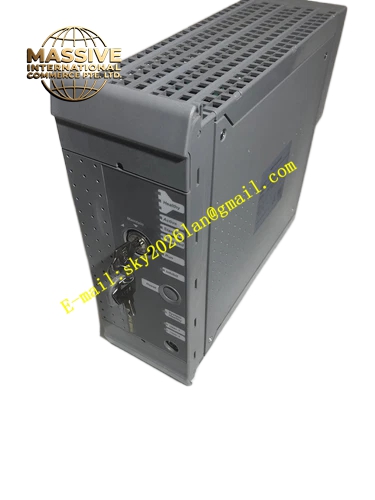
- Compact Module Design: Standard T8000 series form factor for rack installation
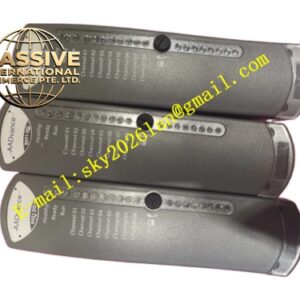
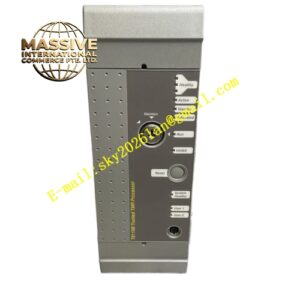
- Front-Panel Status Indicators: LED indicators for communication status, fault conditions, and module health
- Dual Ethernet Ports: Redundant network connections for fault-tolerant communication
- Mechanical Keying: Ensures correct orientation during installation
Working Principle
The T8433 module operates as the communication gateway within the T8000 safety system. Three independent communication processors manage network traffic in parallel. Outgoing data is validated through 2oo3 voting before transmission. Incoming data is checked for integrity and consistency across all three channels. The TSN capability ensures time-critical safety messages are delivered within strict deterministic time windows. The cybersecurity layer inspects all network traffic against configured firewall rules and encrypted communication protocols.
Installation Requirements
- Install in a T8000 series controller chassis
- Connect redundant Ethernet cables to independent network switches
- Ensure proper grounding of the chassis and cable shields
- Maintain environmental conditions within specified temperature and humidity ranges
- Configure firewall rules and security certificates before commissioning
Operating Precautions
- Monitor communication status LEDs for network fault indication
- Maintain redundant network paths to ensure fault tolerance
- Update security certificates and firmware according to manufacturer schedules
- Verify deterministic timing performance during commissioning and periodic testing
- Follow cybersecurity hardening guidelines for network configuration