


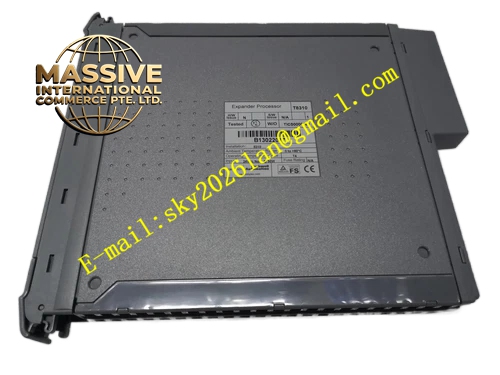
Description
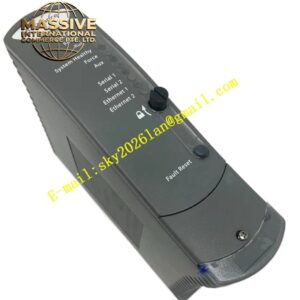
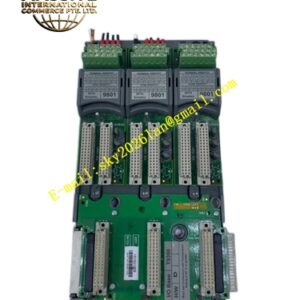
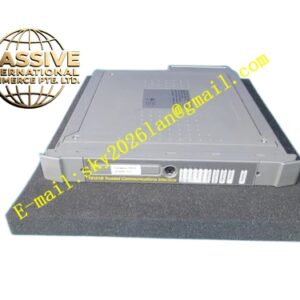
ICS Triplex T8310
Technical Specifications
- Architecture: Hardware Implemented Fault Tolerant Triple Modular Redundancy with 3-2-0 voting logic
- Bus Speed: 250 Mbps triplicated expander bus
- Power Supply: Dual redundant plus 24 VDC inputs
- Power Consumption: 25 Watts nominal
- Data Channels: Triplicated expander and Inter-Module Bus
- Maximum Expansion: Up to 8 expansion chassis per system
- Processor: Dual ARM Cortex-A9 processors with 2 GB DDR3 RAM
- Communication Interface: Expansion bus via UTP cables
- Operating Temperature: Minus 40 degrees Celsius to plus 70 degrees Celsius
- Storage Temperature: Minus 40 degrees Celsius to plus 70 degrees Celsius
- Dimensions: 266 millimeters by 31 millimeters by 198 millimeters
- Weight: Approximately 1.26 to 1.33 kilograms
- Safety Rating: TUV approved for SIL3 safety instrumented systems
Functional Features
- Fault-tolerant communication automatically isolating bus faults to prevent single expansion failure from affecting the main processor set
- Hot-swap support enabling module replacement while the safety system remains fully operational
- Synchronized bus timing ensuring precise data alignment and voting across all expansion I/O points
- Integrated health monitoring providing continuous background testing of the expansion bus and internal hardware
- Front panel diagnostic LEDs indicating Active, Standby, and Fault states
- Automatic or manual fault recovery capabilities
Application Scenarios
- Distributed I/O systems in oil and gas processing
- Chemical plant safety systems requiring chassis expansion
- Power generation turbine protection with distributed I/O
- Large-scale safety instrumented systems exceeding single chassis capacity
- Offshore platform control systems
Performance Parameters
- 250 Mbps triplicated data rate maintaining TMR integrity between distributed chassis
- Deterministic scan requirements met through synchronized bus timing
- Real-time fault reporting with continuous background diagnostics
- Seamless failover and repair without interrupting operation
Material Composition and Structure
- Industrial-grade steel and aluminum chassis
- Conformal coated circuit boards
- Heavy-duty connectors for UTP expansion bus cables
- Status LED indicators on front panel
- Modular design for hot-swap capability
Working Principle The T8310 inhabits the dedicated processor slot of an expansion chassis, managing data traffic between the main controller and expansion I/O modules. It extends the Inter-Module Bus across multiple racks using triplicated UTP cable links. The 3-2-0 voting logic processes data from three independent paths, isolating faults within the bus, chassis, or module to prevent system-wide failures. The dual ARM processors execute fault containment protocols ensuring localized failures do not propagate.
Installation Requirements
- Install in processor slot of expansion chassis only
- Connect to main controller via UTP expansion bus cables
- Configure chassis ID using onboard switches, controller chassis set to ID 1, expander chassis from 2 to 8
- Provide dual redundant 24 VDC power supplies
- Ensure proper cable shielding and termination
Operating Precautions
- Verify chassis ID configuration is unique within the system
- Monitor Active and Standby LED indicators for proper operation
- Do not remove module while actively processing safety-critical I/O without verifying redundancy status
- Maintain UTP cable integrity, checking for damage or loose connections regularly
- Replace faulted modules promptly to restore full TMR capability