


Description
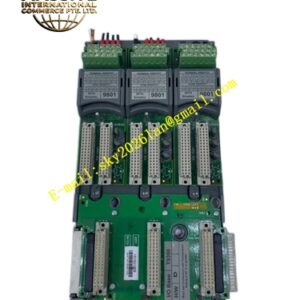
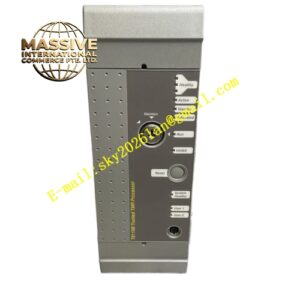
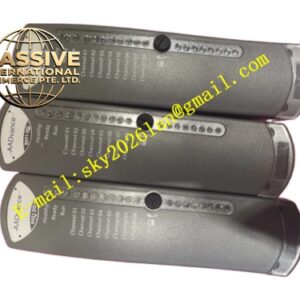
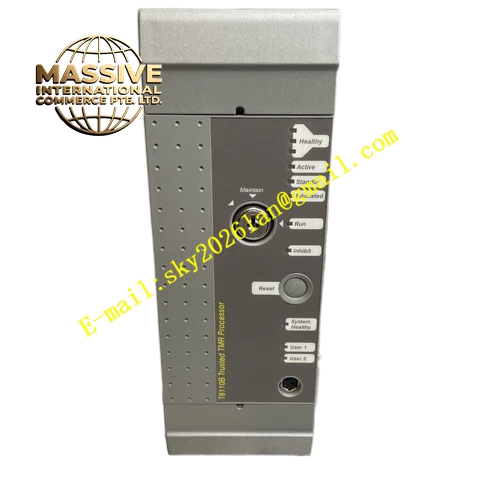
ICS Triplex T8110B
Technical Specifications:
- Architecture: Triple Modular Redundant (TMR), fault tolerant (3-2-0) operation
- Processor Performance: 100 MHz clock frequency, typically with 1 GB RAM and 8 GB Flash
- Power Supply Voltage: 20–32 V DC
- Operating Temperature: -40°C to +70°C
- Non-Operating Temperature: -25°C to +70°C
- Dimensions: Approximately 30.9 cm × 3.9 cm × 26.6 cm (L×W×H)
- Weight: Approximately 2.94 kg
- Communication Interfaces: Modbus TCP/IP, Ethernet, USB, UART, SPI, I2C, GPIO
- Safety Certification: TÜV Certified IEC 61508 SIL 3
- Programming: Full suite of IEC 61131-3 programming languages
Functional Features:
- Hardware Implemented Fault Tolerant (HIFT) architecture with dedicated hardware and software test regimes providing very fast fault recognition and response times
- Automatic fault handling without nuisance alarming
- Time-stamped fault historian for post-event analysis
- Hot replacement capability without the need to reload programs
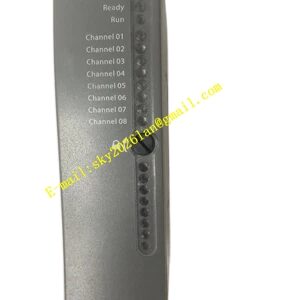
- Front panel indicators showing module health and status
- Front panel RS232 serial diagnostics port for system monitoring, configuration, and programming
- IRIG-B002 and 122 time synchronisation signals (available on T8110B only)
- Active and standby processor fault and failure contacts
- Two RS422/485 configurable 2 or 4 wire connections (available on T8110B only)
- One RS485 2 wire connection (available on T8110B only)
Application Scenarios:
- Emergency Shutdown Systems (ESD) in oil and gas facilities
- Fire and gas detection and suppression systems
- Process safety control in chemical and petrochemical plants
- Nuclear reactor protection systems
- Turbine control and protection
- Power generation safety systems
Performance Parameters:
- Fault Tolerance: 3-2-0 operation (tolerates one fault, degrades gracefully on second fault)
- Fault Recognition: Sub-millisecond detection through dedicated hardware test regimes
- Redundancy: Three independent processors running identical programs with majority voting
- Safety Integrity Level: SIL 3 per IEC 61508
Material Composition:
- Industrial-grade printed circuit boards with conformal coating
- High-reliability semiconductor components
- Aluminum chassis with precision-machined connectors
- Gold-plated backplane contact pins
Structural Features: The module is housed in a standard Trusted I/O chassis slot with mechanical keying to prevent incorrect insertion. The front panel features status LEDs for power, run, fault, and communication indicators, along with an RS232 diagnostic port. The module connects to the system through the Trusted TMR Inter-Module Communications Bus (IMB) on the backplane.
Working Principle: Three independent processor channels execute the same user program simultaneously. Each channel independently reads inputs, executes logic, and produces outputs. A hardware voter compares the outputs of all three channels and produces the final output based on majority agreement (2-out-of-3 voting). When a single channel develops a fault, the voter isolates it and continues operating with the remaining two healthy channels.
Installation Requirements:
- Install in a Trusted processor chassis with adequate backplane power supply
- Ensure proper grounding through the chassis mounting
- Maintain minimum clearance for airflow around the module
- Connect the RS232 diagnostic port for initial configuration
- Verify power supply voltage is within the 20–32 V DC range
Usage Precautions:
- Do not remove the module while the system is in active safety-critical service without following proper bypass procedures
- Use only IEC 61131-3 compliant programming tools for configuration
- Monitor front panel indicators regularly for fault conditions
- Maintain a time-stamped fault log for predictive maintenance
- Ensure the module firmware is kept current with the latest validated revisions
- Avoid exposure to conductive dust or corrosive atmospheres