


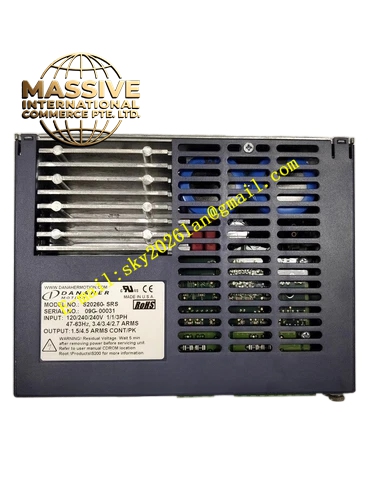
Description
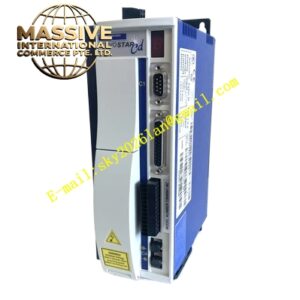
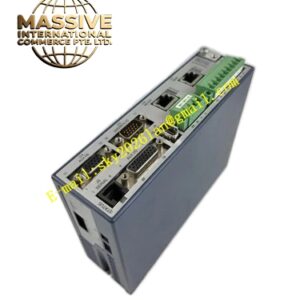
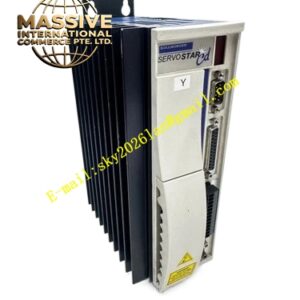
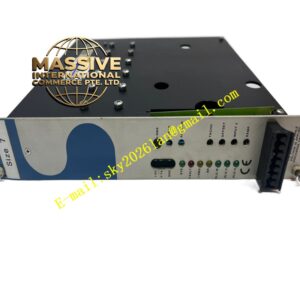
Kollmorgen S20260-SRS
Technical Specifications
- Input Voltage: 120 VAC to 240 VAC, single-phase or three-phase, 50/60 Hz
- Continuous Output Current: 1.5 Amps RMS
- Peak Output Current: 4.5 Amps RMS
- Velocity Loop Bandwidth: 800 Hz
- Communication Interface: SynqNet protocol via RJ45 connector
- Feedback Connector: FireWire (IEEE 1394) connector for motor feedback
- Discrete I/O: 15-pin D-Sub connector
- Serial Interface: RJ12/RJ11 connector
- Auxiliary I/O: 26-pin D-Sub connector
- Power Connections: Plug-in detachable screw terminal connectors
- Protection Rating: IP20
- Certifications: UL, CE, cUL, RoHS, EN50178, EN61800-3, SEMI F47
Functional Features
- Full digital servo control with torque, velocity, and position modes
- SynqNet network interface for real-time multi-axis synchronization
- High-resolution feedback processing with electronic motor nameplate recognition
- S-curve acceleration and deceleration profiling
- 256 motion tasks with linking and queuing capability
- 16 homing methods including limit switch and encoder index
- Electronic gearing and camming functions
- Adjustable following error windows and in-position signals
- Auto-tuning capability for velocity and position loop gains
Application Scenarios
- Semiconductor manufacturing equipment
- Small precision assembly robots
- Automated test and measurement systems
- Packaging machinery with networked servo axes
- Laboratory automation platforms
- Medical device manufacturing
Performance Parameters
- 800 Hz velocity loop bandwidth provides superior dynamic response and disturbance rejection
- 3:1 peak-to-continuous current ratio supports high acceleration of small inertias
- High-resolution feedback and high-performance current loop bandwidth ensure smooth motion
- SynqNet communication cycle supports deterministic multi-axis coordination
Structural Characteristics
- Compact industrial enclosure optimized for panel mounting
- Integrated heatsink with natural convection cooling
- FireWire feedback connector supports SFD, EnDat, and other intelligent feedback devices
- SynqNet RJ45 network connector with standard Ethernet cabling
- Status LEDs for power, fault, and network state indication
Working Principle The drive accepts 120 to 240 VAC input and rectifies it to an internal DC bus. Digital signal processors execute current, velocity, and position control algorithms at high update rates. Three-phase sinusoidal current is synthesized using space vector PWM techniques. The SynqNet interface exchanges real-time command setpoints and status data with a motion controller over a deterministic FireWire-based network. The intelligent feedback device with electronic motor nameplate enables plug-and-play commissioning by automatically configuring motor parameters.
Installation Requirements
- Mount in ventilated electrical enclosure with IP20 protection minimum
- Connect to 120/240 VAC supply with proper overcurrent protection
- Use shielded FireWire cables for motor feedback connections
- Install SynqNet network with proper termination at both ends
- Ensure adequate panel spacing for convective cooling
Operating Precautions
- Verify input voltage selector settings match local supply voltage
- Configure motor parameters to match connected motor rating plate
- Monitor SynqNet network integrity through status indicators
- Enable proper fault handling for overtravel and emergency stop conditions
- Maintain backup of drive parameter settings before network reconfiguration