


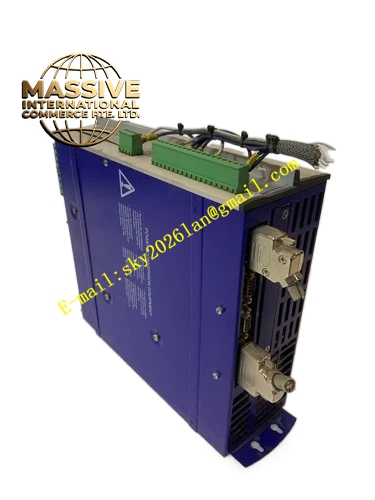
Description
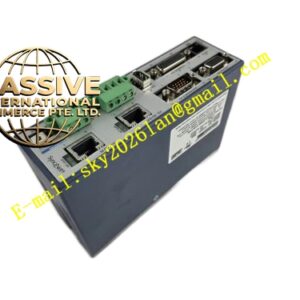
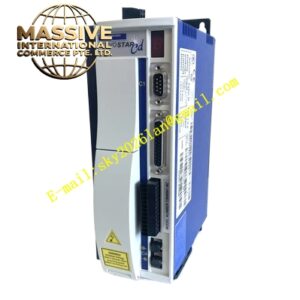
Kollmorgen S400443-M
- Technical Specifications:
- Supply Voltage: 3 × 230 V −10 % … 3 × 400 V +10 % AC, 50/60 Hz
- Rated DC Bus: 310–560 V DC
- Continuous Output Current: 3 A RMS/phase (±3 %)
- Peak Output Current: 9 A RMS for 5 s
- Rated Installed Power (S1): 12 kVA
- Internal Brake Resistor: 40 W continuous
- External Brake Resistor: 400 W continuous, 16 kW peak
- Auxiliary Supply: 24 V DC (externally isolated)
- Functional Features: Digital current controller (space-vector PWM, 62.5 µs), digital speed controller (62.5/250 µs), integrated position controller, DC-bus sharing across drives, RS232 programming, optional CANopen/PROFIBUS/SERCOS via expansion, Drive-OK relay.
- Application Scenarios: Multi-axis packaging machines, printing presses, textile machinery, CNC retrofit systems where one 400 V Master feeds 3 A/6 A Axis drives.
- Performance Parameters: Current-loop bandwidth > 1.2 kHz; PWM switching frequency 8 kHz (reduced current at 16 kHz); overvoltage trip ~ 560 V DC; master total parallel current ≤ 40 A.
- Material Composition: Aluminum heat sink chassis, FR-4 multilayer PCB with conformal coating, glass-fiber reinforced thermoplastic front cover, silver-alloy IGBT power terminals.
- Structural Features: 6U book-style housing, 100 mm wide (Master), 245 mm high, 225 mm deep (245 mm with connectors); front LEDs for Run/Fail/Bus; P1/P2 power terminals, X3 encoder, X4 motor, RS232 port.
- Working Principle: Rectifies 3-phase mains to DC bus, distributes DC link to own inverter and parallel Axis drives, generates PWM voltage vectors from torque/speed commands, closes digital current loop, returns regen energy to internal/external brake resistor.
- Installation Requirements: Vertical mount on grounded metal panel with ≥ 10 mm side clearance, forced air if ambient > 45 °C, 24 V DC aux isolated supply, DC-bus link cables sized for ≤ 40 A sum.
- Usage Precautions: Never connect Axis drive DC bus to a different mains group; disable bus before hot work; 24 V aux must be isolated; peak current limited to 5 s—repeated peaks cause thermal trip.