


Description
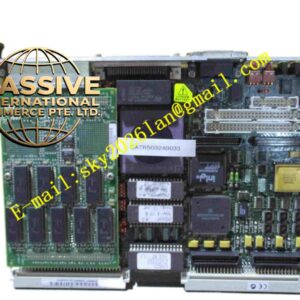
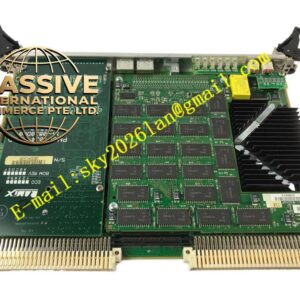
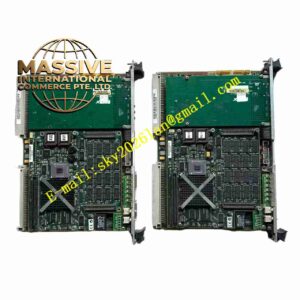
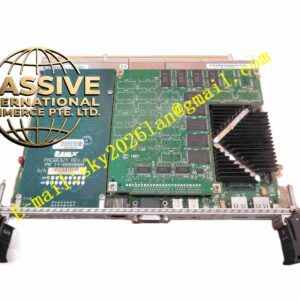
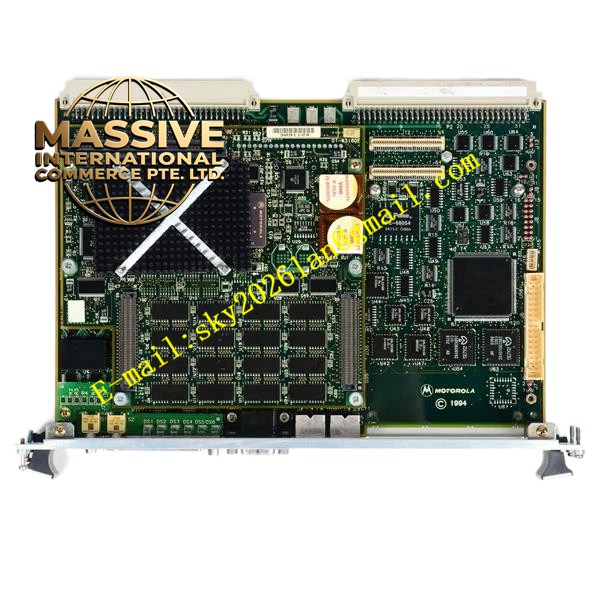
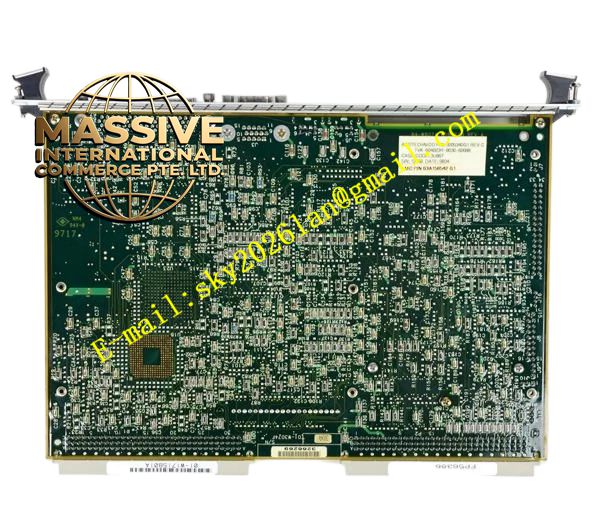
Motorola MVME1604
Technical Specifications
- Microprocessor: PowerPC 604 RISC processor.
- Cache: Optional Level 2 (L2) cache memory up to 256KB.
- Bus Interface: Complete VMEbus system controller and slave interface.
Functional Features
- Inherits all I/O features of the MVME1603 (serial, parallel, SCSI, Ethernet, floppy).
- Delivers higher integer and floating-point performance compared to the PowerPC 603.
- Supports efficient DMA data transfers across buses.
Application Scenarios
Ideal for complex industrial control, real-time data processing, and advanced motion control systems requiring higher computational density.
Performance Parameters
- Processor clock frequency and instruction throughput are significantly higher than the MVME1603.
- Supports A16/A24/A32 address spaces and D8/D16/D32 data widths.
Material Composition
Industrial-grade high-Tg PCB substrates combined with precision surface-mount components and protective conformal coatings.
Structural Characteristics
Standard 6U VME European card size, supporting PM604 processor mezzanine and RAM104 memory mezzanine expansion.
Working Principle
The PowerPC 604 processor utilizes its superscalar architecture to execute instructions in parallel, working synergistically with an optimized local bus architecture and VME interface chip to achieve high-speed data throughput and real-time control.
Installation Requirements
- Ensure cooling conditions meet the power dissipation requirements of the PowerPC 604.
- Correctly configure jumpers on the MVME1600-011 or MVME1600-001 base boards.
Usage Precautions
- Distinguish between MVME1603 and MVME1604 processor mezzanines; they are not interchangeable.
- Periodically check the Ethernet transceiver fuse (F2) status.