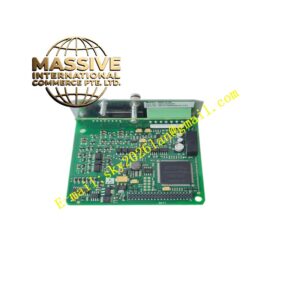




Description
SAM ELECTRONICS EMP2200
Technical Specifications
- Product Type: Marine monitoring system processor module
- Power Supply: 24 VDC marine power supply
- Communication Interfaces: Ethernet, RS485, CAN bus
- Internal Memory: Flash memory for program and alarm log storage
- Protection Rating: IP20
- Operating Temperature: -10 °C to +55 °C
- Certifications: DNV, LR, ABS marine classification society certification
- Mounting: 19 inch rack mounting
- Real-time Clock: RTC with backup battery for alarm timestamp
Functional Features
- Central data processing for ship engine room monitoring and alarm system.
- Multi-protocol communication to connect remote I/O modules and vessel HMI consoles.
- Configurable alarm threshold logic for temperature, pressure, level and vibration signals.
- Timestamped alarm event logging with non-volatile memory storage.
- Alarm priority classification and alarm suppression logic.
- Watchdog timer ensures safe system reset upon processor failure.
- Redundant communication port support for critical marine systems.
- Marine EMC compliance to resist onboard power system electromagnetic interference.
- Parameter backup and restore function for fast system recovery.
- Supports remote system diagnosis via network port.
Application Scenarios
- Cargo ship engine room alarm monitoring system
- Offshore vessel machinery condition monitoring
- Passenger ship auxiliary equipment monitoring
- Yacht vessel tank level and utility system monitoring
- Naval vessel machinery alarm and control systems
Material Composition
- Housing: Aluminum alloy 19-inch rack chassis
- Main PCB: FR4 high reliability marine grade PCB with heavy conformal coating
- Processor: Industrial grade microprocessor
- Communication transceivers: Ethernet and serial bus chips
- Backup battery: Lithium battery for RTC power backup
- Connectors: Nickel-plated industrial marine connectors
Structural Characteristics
- Standard 19-inch rack-mount metal chassis with front panel status LEDs.
- Front panel LED indicators show power, run, fault and network status.
- Rear panel fitted with multiple communication ports and 24VDC power connector.
- Internal PCB assembly fixed inside aluminum chassis with vibration-resistant fasteners.
- Metal chassis provides electromagnetic shielding for marine EMC requirement.
- Internal passive cooling design without cooling fan.
Working Principle The EMP2200 communicates with distributed remote I/O modules to collect analog and discrete sensor data from vessel machinery. The onboard processor compares measured values against preset alarm thresholds. When value exceeds threshold, the module generates timestamped alarm event and sends alarm signal to bridge and engine room HMI consoles. It stores alarm history in flash memory. The watchdog circuit monitors processor operation continuously and triggers system reset if program execution halts. All data is transmitted to upper monitoring network via Ethernet or serial bus.
Installation Requirements
- Install module inside air-conditioned marine control room 19-inch cabinet.
- Use marine-grade shielded cables for all communication wiring.
- Maintain low impedance protective earth connection to ship vessel earth.
- Keep communication cables separated from high power motor and generator cables.
- Configure network address and alarm parameters during vessel commissioning.
- Verify all classification society EMC and vibration requirements are satisfied.
- Test alarm logic simulation before vessel sea trial.
Usage Notes
- Replace RTC backup battery during scheduled ship dry dock maintenance.
- Keep cabinet clean and free from marine salt mist ingress.
- Do not open chassis when vessel critical monitoring system is online.
- Backup alarm configuration and log files periodically.
- Avoid mechanical shock during vessel maintenance and transportation.
- Disconnect power before removing or replacing module.
- Validate alarm function after software parameter modification.