


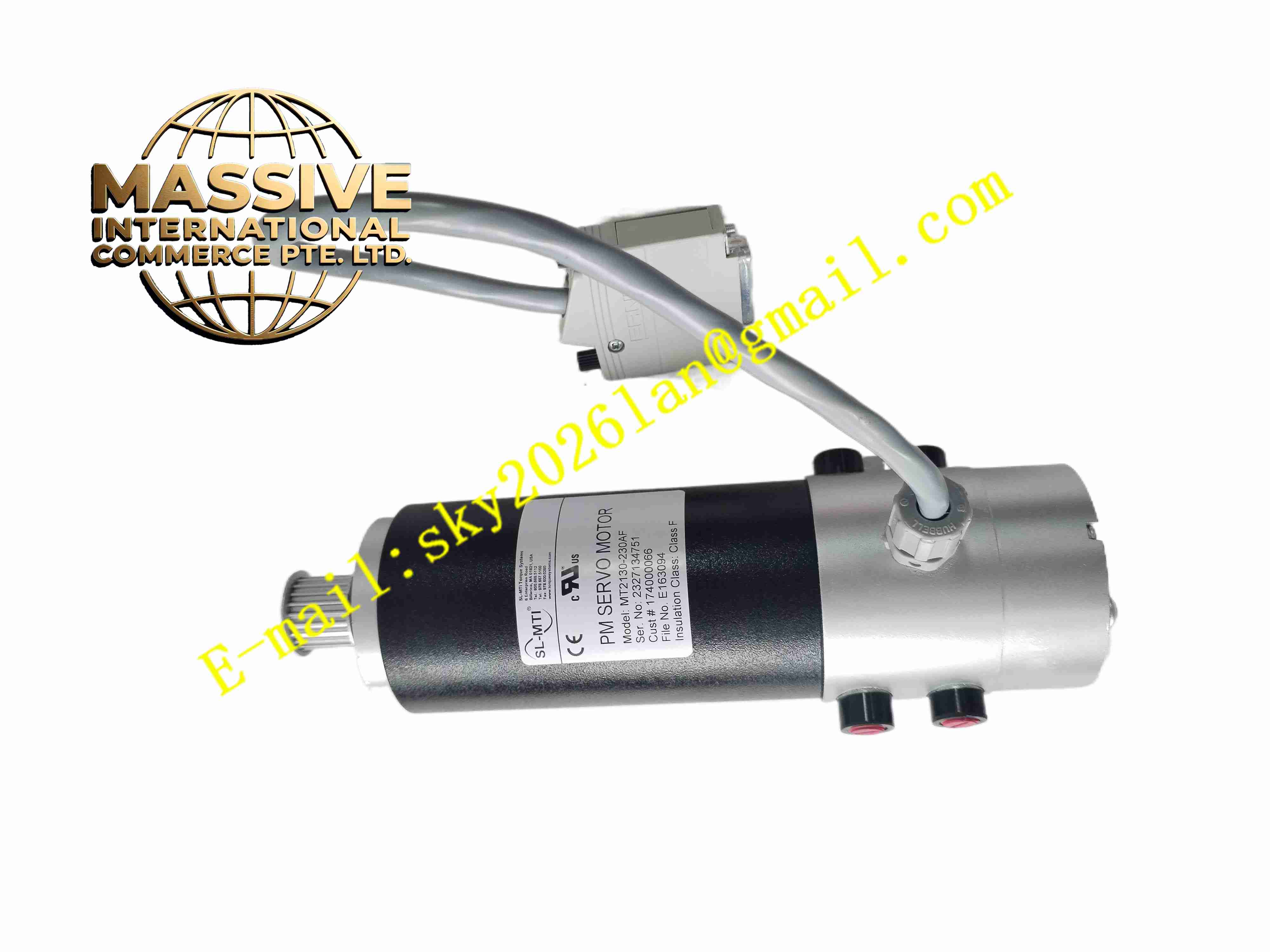
Description
SL-MTI TORQUE MT2130-230AF
Technical Specifications: Rated power supply: 230V DC Peak torque: 2.11 N·m Insulation class: Class F, maximum winding temperature 155℃ Net weight: 1.96 kg Protection grade: IP54 Operating ambient temperature: -20℃ ~ +70℃ Storage temperature: -40℃ ~ +85℃ Vibration standard: IEC 60034-14 Grade B Certification: CE, RoHS, UL winding insulation certification Bearing: Double ball bearing structure Shaft type: Solid single output shaft with keyway
Functional Features: High peak overload torque for rapid acceleration and impact load handling. Class F high temperature resistant winding for continuous long duty cycle operation. Standard rear mounting flange for incremental or absolute rotary encoder installation. Double ball bearing design to bear radial and axial mechanical loads. Low EMI winding design to reduce interference to nearby analog sensors. Modular terminal block for fast connection of power and feedback cables. Stable torque output under low rotating speed with low torque ripple.
Application Scenarios: Precision rotary positioning tables, testing equipment, winding machines, valve actuators, robot joint drives, material tension control systems, printing press roller drives and laboratory precision test benches.
Performance Parameters: Maximum allowable winding temperature: 155℃ Continuous torque output: Stable torque under continuous operation Shaft radial load capacity: Support rated radial force on output shaft Speed range: Wide adjustable low speed range Service life: Long service life under rated working condition
Material Composition: Motor housing: Cast aluminum alloy with anti-corrosion coating. Stator core: Silicon steel laminated sheet. Rotor: High-performance rare earth permanent magnet. Winding: Class F high temperature resistant enameled copper wire. Bearing: Chromium steel rolling bearing. Output shaft: Alloy steel with quenching treatment. Terminal housing: PA66 flame retardant plastic.
Structural Features: Cylindrical compact frame structure. Front end cap supports load shaft output. Rear flange reserved for encoder mounting. Internal double bearing layout for shaft support. Terminal wiring box on motor side. Integrated stator and rotor assembly inside sealed housing. Keyway on output shaft for coupling connection.
Working Principle: When DC voltage is applied to motor winding, the magnetic field generated by stator winding interacts with permanent magnet rotor magnetic field to produce electromagnetic torque to drive rotor rotation. The encoder mounted at rear end feeds back real-time rotor position and speed signal to servo drive. The drive adjusts armature current to control output torque, speed and rotation angle, realizing closed-loop torque and position control. Double ball bearings support rotor to reduce friction during rotation.
Installation Requirements: Mount the motor on rigid metal base to avoid resonance. Align the shaft centerline with driven load shaft to eliminate radial offset. Install encoder on rear flange with fixed torque on mounting screws. Use shielded cable for power and feedback wiring, separate from high power cable. Connect protective earth ground to motor housing terminal. Reserve ventilation space around motor housing for heat dissipation.
Usage Notes: Do not operate motor beyond peak torque rating for long duration. Keep motor surface clean, remove dust and debris regularly. Check bearing noise and temperature during regular inspection. Avoid liquid splash and corrosive gas exposure to motor. Disconnect power before encoder disassembly or wiring modification. Check coupling tightness periodically to prevent shaft misalignment.