


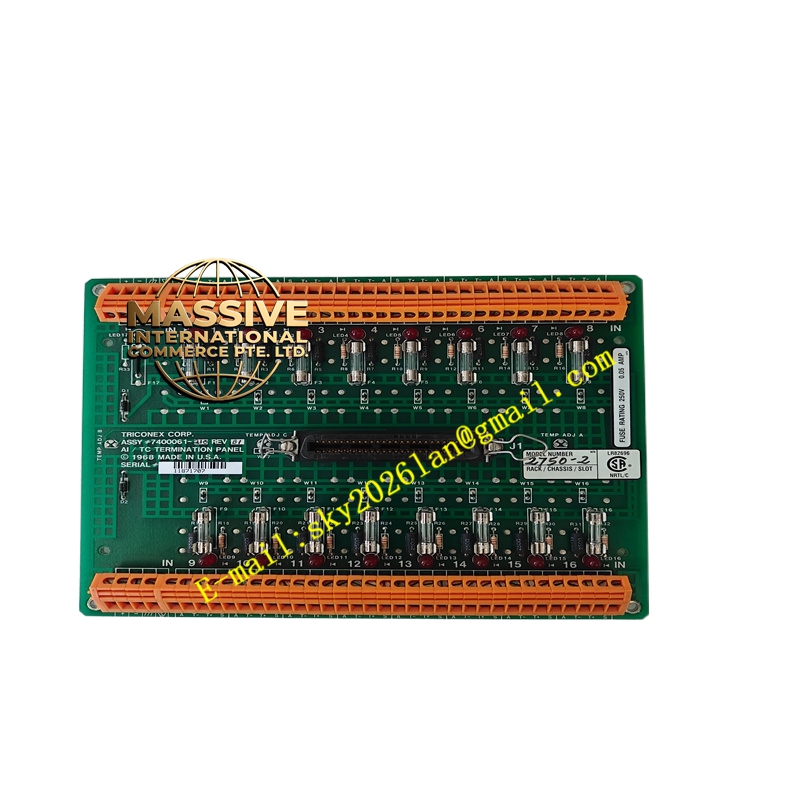
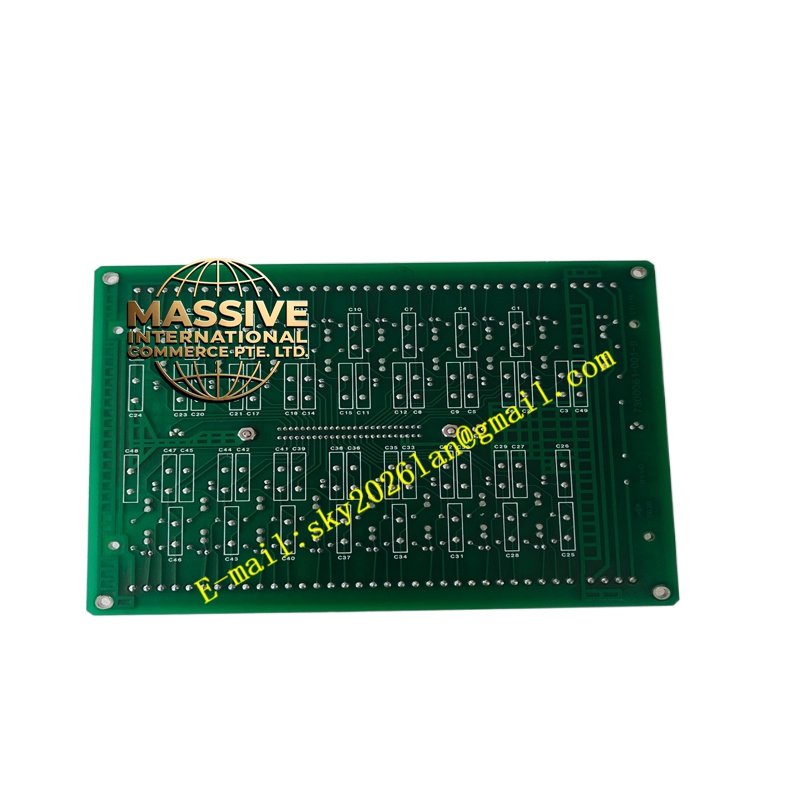
Description
Triconex 275-2 Technical Specifications:
- Communication Medium: Fiber optic or copper cabling (depending on configuration).
- Distance: Supports extended communication distances for distributed architectures.
- Redundancy: Dual-port redundant communication for maximum availability.
- Protocol: Proprietary Triconex remote I/O protocol.
Functional Features:
- Long-Distance Communication: Enables I/O placement up to several kilometers from the main controller.
- Redundant Paths: Automatic failover to backup communication path upon primary path failure.
- High-Speed Data Transfer: Deterministic communication for real-time safety and control.
- Diagnostic Monitoring: Continuous monitoring of link quality and communication integrity.
Application Scenarios:
- Distributed control in large refineries and petrochemical complexes.
- Remote wellhead and pipeline monitoring in oil and gas.
- Offshore platform topside and subsea I/O integration.
- Water and wastewater treatment facilities with geographically dispersed assets.
Performance Parameters:
- Latency: Deterministic, low-latency communication for safety applications.
- Availability: 99.999% communication availability with redundant paths.
- Bandwidth: Sufficient bandwidth for dense remote I/O configurations.
Material Composition & Structural Characteristics:
- Enclosure: Ruggedized industrial housing for harsh environments.
- Connectors: Industrial fiber optic or copper connectors with secure locking.
- PCB: Conformal-coated multi-layer board for environmental protection.
Working Principle: The 275-2 module converts TriBus data into a format suitable for long-distance transmission. It packages I/O data from remote chassis and transmits it over fiber or copper to the main controller. Redundant communication paths ensure continuous data flow even if one cable is damaged. The module continuously monitors link quality and automatically switches to the backup path upon fault detection.
Installation Requirements:
- Cable Routing: Follow proper fiber optic bending radius and copper cable separation guidelines.
- Termination: Properly terminate communication cables to prevent signal reflections.
- Redundancy: Install redundant communication paths for critical applications.
- Testing: Perform link loss testing and redundancy failover tests during commissioning.
Usage Precautions:
- Fiber Handling: Handle fiber optic cables with care to prevent micro-bends and breaks.
- Cleanliness: Keep fiber connectors clean and protected from dust.
- Redundancy Testing: Periodically test redundant path failover to ensure reliability.
- Environmental Protection: Protect outdoor installations from moisture and UV exposure.