


Description
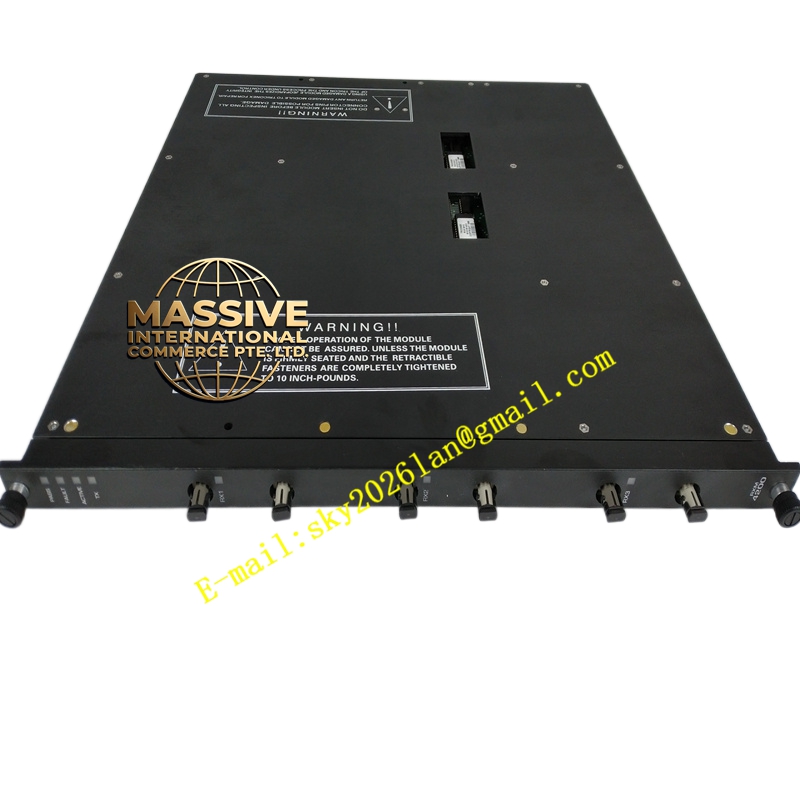
Triconex 4200
Technical Specifications:
- Type: Communication/remote I/O extender module
- Processor: 32-bit RISC
- Memory: 128 MB RAM; 2 GB storage
- Communication Interfaces: RS-232, RS-485, Ethernet, optional PROFIBUS
- Protocols: Modbus RTU/TCP, TCP/IP, UDP/IP, proprietary protocols
- Power: 24 VDC or 24 VAC; power consumption <20 W
- Operating Temperature: 40 °C to +70 °C
- Mounting: Tricon chassis slot; supports remote I/O extension
Functional Features:
- Extends Tricon I/O to remote cabinets while preserving TMR safety integrity
- Provides multiple communication paths for redundancy
- Supports integration with DCS, SCADA, and HMIs
- Hot-swappable and supports online module replacement
Application Scenarios:
- Remote I/O cabinets for ESD and F&G systems
- Data exchange with plant DCS and safety networks
- Large-scale facilities requiring geographically distributed I/O
Performance Parameters:
- High-speed communication with low latency for critical I/O
- Large memory for buffering and data logging
- Supports up to 32 Modbus masters/slaves (varies by configuration)
Material and Structural Characteristics:
- Industrial PCB with communication ports and isolation
- Metal front panel with status LEDs and keyed connector
Working Principle: The module interfaces with the Tricon backplane to exchange data with main processors. It serializes or packetizes data for transmission over Ethernet or serial networks, manages remote I/O nodes, and handles protocol conversion. Diagnostics monitor communication health and fault conditions. Installation Requirements:
- Install into Tricon chassis; verify correct slot assignment
- Connect Ethernet and serial cables to external networks and remote nodes
- Configure IP addresses, Modbus mappings, and redundancy using TriStation
- Ensure proper grounding and shielding for communication cables
Usage Notes:
- Configure redundant communication paths where possible
- Use shielded cables; avoid long runs without repeaters
- Monitor communication diagnostics; replace faulty modules online
- Maintain consistent firmware versions across redundant modules