


Description
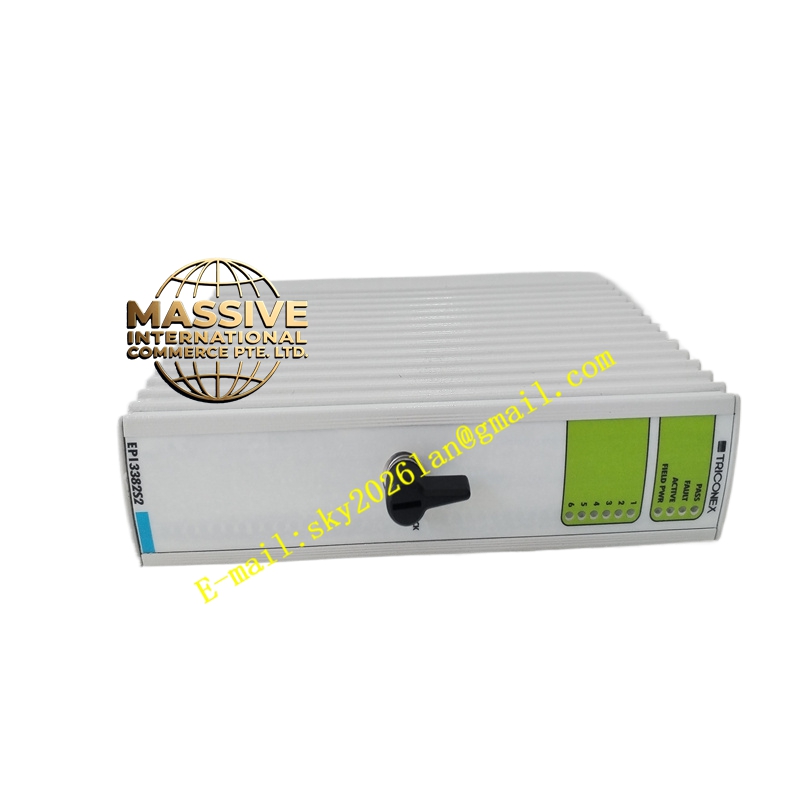
Triconex 3351S2
Technical Specifications:
- Type: Triple-redundant analog input module (32 channels, common reference)
- Input Signal: 4–20 mA nominal; operating range typically 2–22 mA
- Accuracy: High precision (per datasheet; typical <0.25% FSR)
- Diagnostic Coverage: Per-channel diagnostics for open/short and out-of-range
- Isolation: Channel-to-channel and channel-to-ground isolation
- Operating Temperature: 40 °C to +70 °C
- Mounting: Trident chassis slot with hot-swap capability
Functional Features:
- Three independent acquisition paths per channel with mid-value selection
- Continuous self-test and diagnostics for each channel
- Support for HART pass-through on selected variants (check model specifics)
- High common-mode noise rejection and accuracy
Application Scenarios:
- Process variable monitoring for safety trips (pressure, temperature, level, flow)
- High-integrity protection systems (HIPPS) analog measurements
- Critical control loops within SIS
Performance Parameters:
- 16-bit resolution or higher per channel
- Low drift and high accuracy across temperature range
Material and Structural Characteristics:
- Industrial-grade PCB with isolated analog front ends
- Trident front panel with status LEDs and keyed connector
- Rugged design conforming to Trident mechanical standards
Working Principle: Each analog input is sampled by three independent A/D converters. The module performs mid-value selection and voting to ensure valid measurement despite a single fault. Diagnostics continuously monitor input integrity and report faults. Installation Requirements:
- Insert into designated Trident I/O chassis slot
- Connect field devices to the corresponding field termination assembly
- Configure input ranges and alarms via TriStation software
- Verify calibration and wiring during commissioning
Usage Notes:
- Ensure field device compliance with loop power requirements
- Use twisted, shielded pair wiring for analog signals; avoid running signal cables near power cables
- Follow calibration and testing schedules to maintain SIL3 performance