


Description
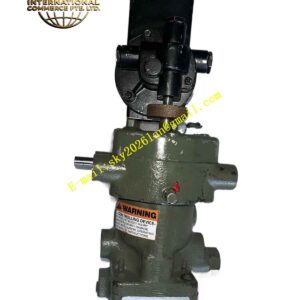
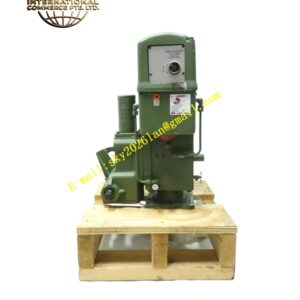
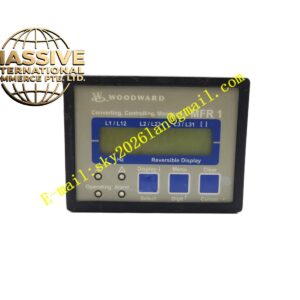
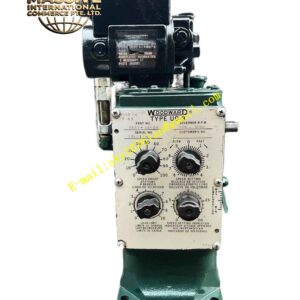
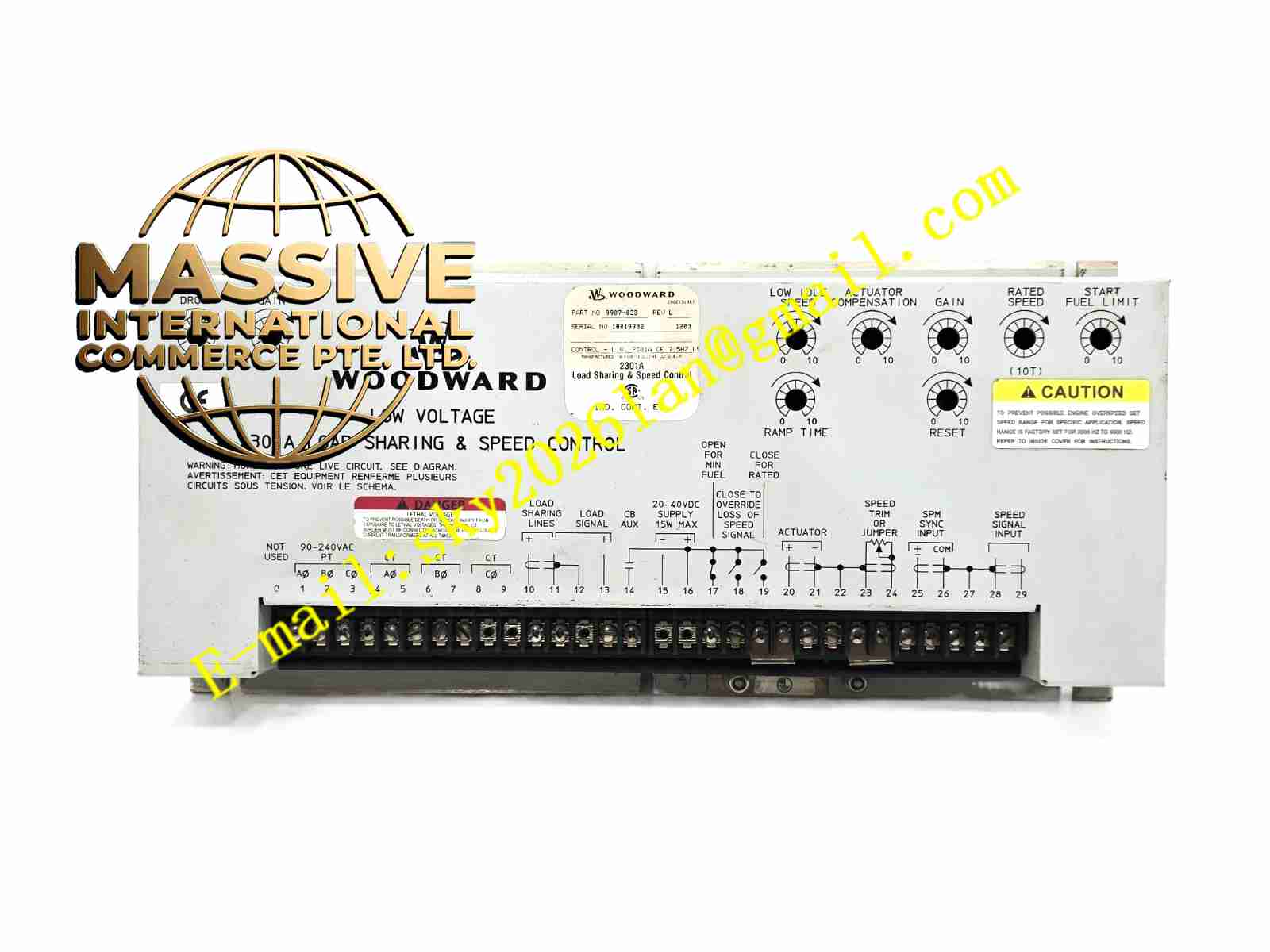
Woodward 9907-023
Technical Specifications
- Control Type: Microprocessor-based electronic speed and load control.
- Input Signal: Accepts signals from magnetic pickups (MPU) or other speed sensors.
- Output Signal: Provides a 4-20 mA or 0-10V DC analog output to drive electric or electro-hydraulic actuators.
- Power Supply: Operates on a standard 12/24 VDC or 85-265 VAC universal power supply.
- Adjustment Range: Speed setting range is fully adjustable from idle to rated speed.
Functional Features
- Isochronous & Droop Modes: Supports both isochronous (zero droop) for generator sets and droop control for mechanical drives or parallel operation.
- Load Sharing: Enables precise active load sharing among multiple generators operating in parallel.
- Ramp Control: Features programmable acceleration and deceleration ramps to prevent engine stalling or over-fueling.
- Self-Diagnostics: Includes continuous internal monitoring and fault indication for rapid troubleshooting.
Application Scenarios
Widely utilized in standby and prime power diesel generator sets, mechanical drive applications for pumps and compressors, and marine auxiliary engines.
Performance Parameters
- Speed Regulation: Achieves steady-state speed accuracy of ±0.25% or better under constant load.
- Transient Response: Rapid recovery to setpoint following sudden load application or rejection.
- Temperature Range: Reliable operation in ambient temperatures from -40°C to +85°C.
Material Composition
Housed in a ruggedized, die-cast aluminum enclosure that provides excellent electromagnetic interference (EMI) shielding and thermal dissipation. Internal circuit boards feature industrial-grade conformal coating.
Structural Characteristics
- Form Factor: Compact, panel-mount or DIN-rail compatible design.
- User Interface: Equipped with front-panel potentiometers for speed, gain, and stability adjustments, alongside LED status indicators.
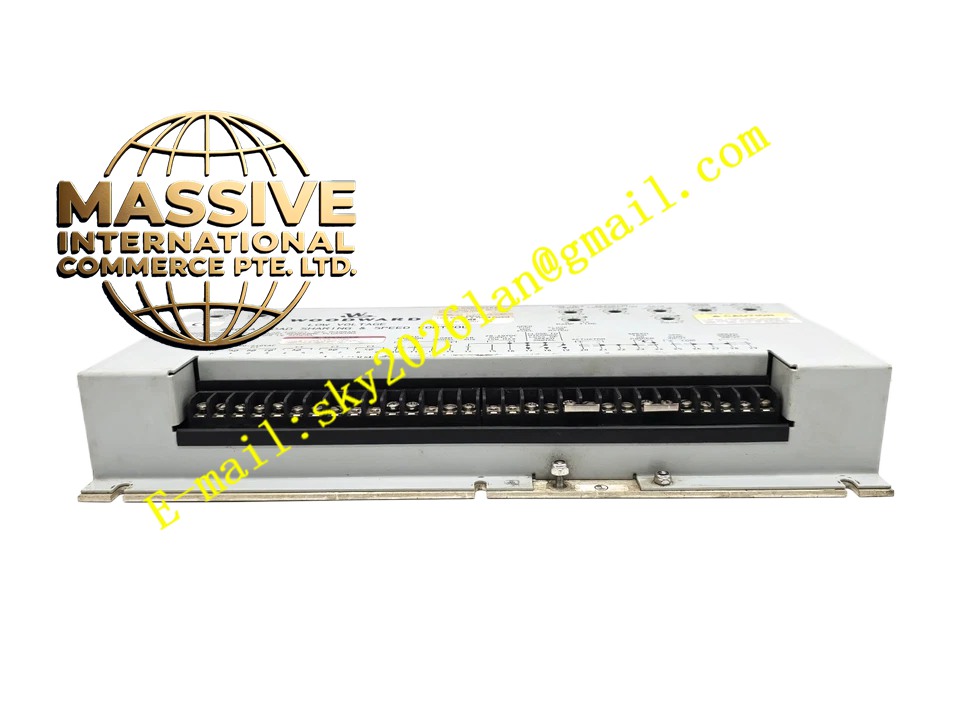
- Connectors: Utilizes secure, multi-pin industrial connectors for field wiring.
Working Principle
The module receives a frequency signal proportional to engine speed from the MPU. It compares this actual speed to the user-defined setpoint and calculates the error. Through advanced PID algorithms, it generates a proportional analog output signal that drives the fuel actuator, continuously adjusting fuel flow to eliminate the speed error.
Installation Requirements
- Mount in a location protected from excessive vibration, moisture, and direct heat.
- Route MPU cables using shielded twisted-pair wire, grounded at the governor end only.
- Ensure a clean, regulated power supply with appropriate fusing.
Usage Precautions
- Always perform actuator calibration and PID tuning after initial installation.
- Never operate the engine without verifying the overspeed protection circuit.
- Keep the front-panel adjustment potentiometers protected from accidental tampering.