


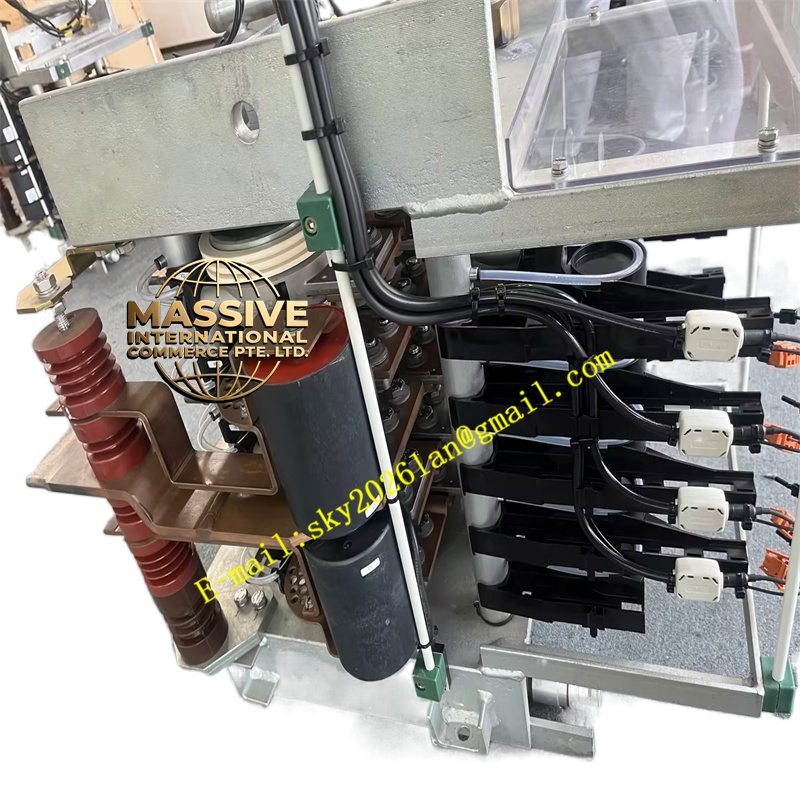
Description
ABB 3BHB009884R5211
Technical Specifications:
- Function: Signal routing, protocol conversion, and interface expansion.
- Compatibility: ABB ACS and DC drive platforms.
- I/O Expansion: Provides additional digital and analog I/O points.
- Communication: Supports PROFIBUS, PROFINET, EtherNet/IP, and Modbus.
- Power: Internally powered from the drive control supply.
Functional Features:
- Signal Conditioning: Isolates and scales analog signals for accurate measurement.
- Protocol Bridging: Translates between different industrial network protocols.
- Custom Logic: Supports programmable function blocks for application-specific needs.
- Status Monitoring: Real-time reporting of drive and interface health.
Application Scenarios:
- Integration of ABB drives into third-party PLC systems.
- Remote operator panel connectivity.
- Multi-drive synchronized control systems.
- Retrofit projects upgrading legacy drive controls.
Performance Parameters:
- Data Integrity: Error-free communication with CRC checking and retransmission.
- Update Rate: Fast cyclic data exchange for responsive control.
- Isolation: Galvanic isolation on all external I/O and communication ports.
- Reliability: Industrial-grade components for long service life.
Material Composition & Structural Characteristics:
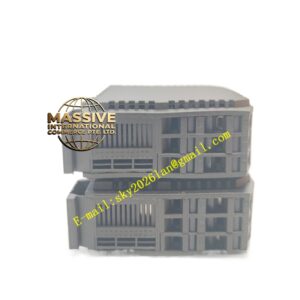
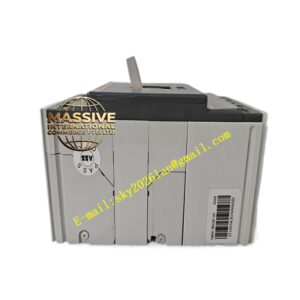
- Enclosure: Compact, ruggedized module housing.
- Terminals: Pluggable terminal blocks for easy field wiring.
- Indicators: Comprehensive LED status display.
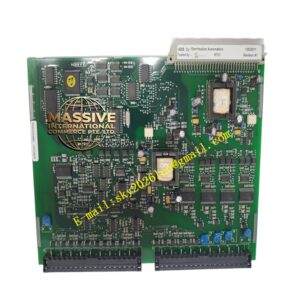
- PCB: High-quality multi-layer board with conformal coating.
Working Principle:
The module receives data from the main drive controller and external networks, performing necessary protocol translation and signal conditioning. It routes control commands to appropriate outputs and sends field feedback back to the controller. Programmable logic allows for local decision-making to reduce network traffic.
Installation Requirements:
- Network Configuration: Properly terminate and bias communication networks.
- Addressing: Set unique node addresses to prevent network conflicts.
- Wiring: Use shielded cables for all communication and analog signals.
- Testing: Perform comprehensive loop checks and communication tests.
Usage Precautions:
- Network Load: Avoid exceeding the maximum network utilization to prevent communication timeouts.
- Grounding: Ensure proper grounding of communication shields at one end only.
- Configuration: Document all network addresses and parameter settings.
- Maintenance: Regularly inspect connectors and cables for wear or damage.