


Description
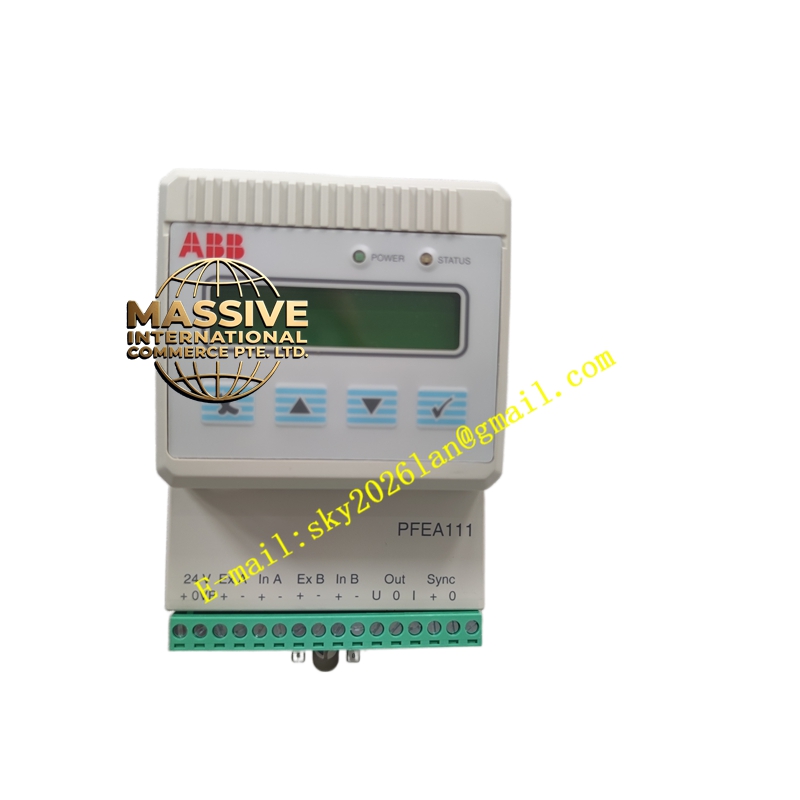
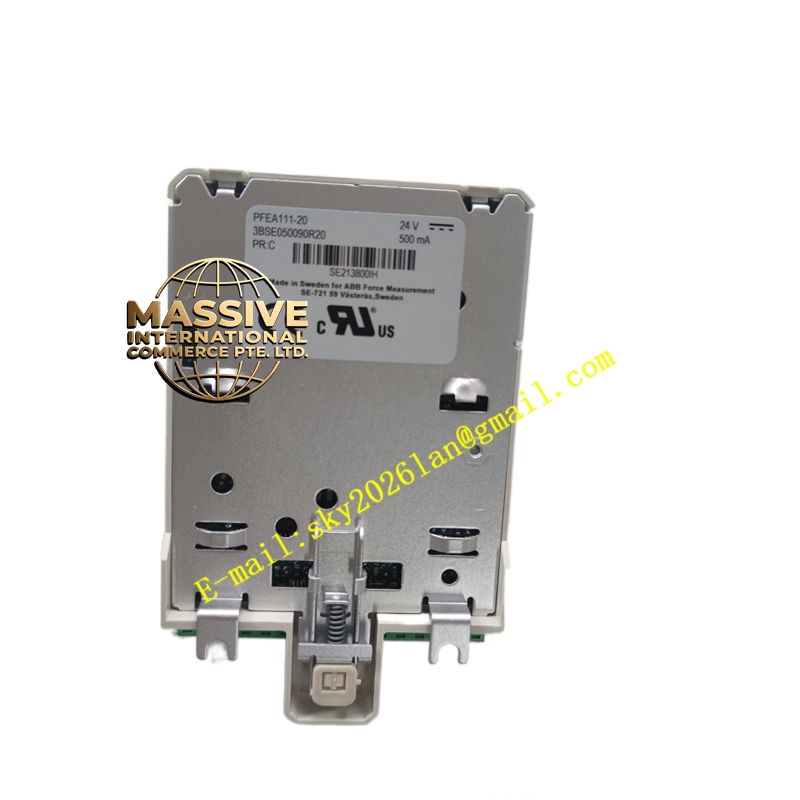
ABB PFEA111-20 3BSE028140R0020
Technical Specifications:
- Measurement Type: Web or Wire Tension.
- Output Signal: Standard industrial analog output (typically 4-20 mA or 0-10 V).
- Accuracy Class: High-precision measurement with minimal hysteresis.
- Excitation Voltage: Internal or external regulated excitation for load cells.
- Electrical Rating: 20 indicates specific voltage/current rating variant.
Functional Features:
- True Tension Calculation: Compensates for wrap angle and roller geometry to calculate true web tension.
- Signal Conditioning: Built-in filtering and amplification to eliminate mechanical noise and vibration.
- Overload Protection: Internal circuitry protects against electrical surges and mechanical shock.
- Diagnostics: Output signal indicates sensor health and wire break conditions.
Application Scenarios:
- Paper and pulp converting machinery.
- Textile weaving and finishing processes.
- Metal foil and plastic film extrusion lines.
- Wire drawing and stranding machines.
Performance Parameters:
- Response Time: Fast dynamic response for high-speed web handling.
- Temperature Stability: Low thermal drift ensures consistent measurements across varying ambient temperatures.
- Resolution: High-resolution output for precise tension regulation at low tension levels.
Material Composition & Structural Characteristics:
- Housing: Robust, IP-rated enclosure resistant to industrial dust and moisture.
- Internal Circuitry: Precision operational amplifiers and temperature-compensated resistors.
- Connectors: Industrial-grade multi-pin connectors for secure field wiring.
Working Principle:
The transducer receives raw millivolt signals from external load cells or force sensors. It amplifies this signal, applies mathematical compensation for roller geometry, and filters out high-frequency mechanical noise. The processed signal is then converted to a standard analog output that represents the exact tension value, which is fed to a PLC or dedicated tension controller.
Installation Requirements:
- Sensor Wiring: Use shielded cables for load cell connections to prevent electromagnetic interference.
- Grounding: Ground the transducer chassis to the machine frame to ensure a clean reference point.
- Calibration: Perform zero and span calibration after installation using known weights or calibrated tension meters.
Usage Precautions:
- Load Limits: Never exceed the maximum rated input signal or mechanical load capacity.
- Environmental Protection: Protect the transducer from direct exposure to extreme heat, corrosive chemicals, or high-pressure washdowns.
- Maintenance: Periodically verify calibration and inspect wiring for insulation degradation.