


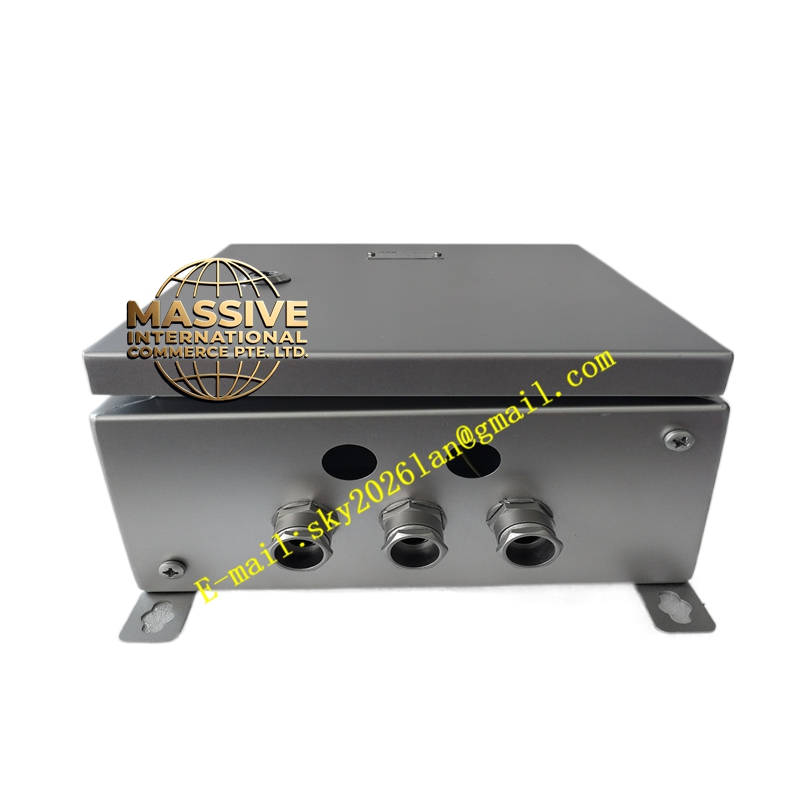
Description
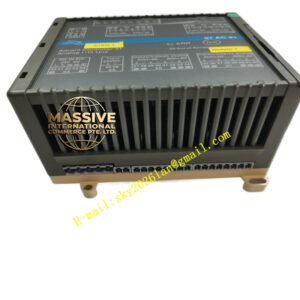
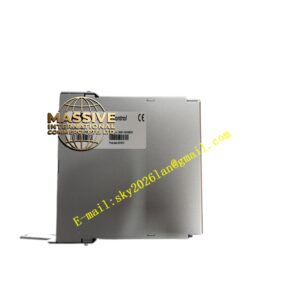
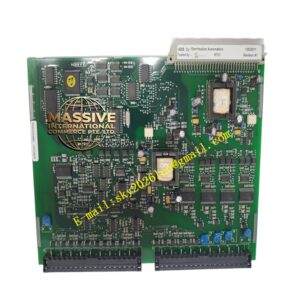
ABB PFVO142
- Technical Specifications (typical):
- Inputs:
- Tension Feedback: 0–10 V / 4–20 mA (from tension amp)
- Tension Setpoint: 0–10 V (internal pot or external reference from PLC/HMI)
- Line Speed / Diameter feedback (optional — from encoder or diameter module PFVI/PFVC)
- Output: ±10 V (bipolar for reversible drives) or 0–10 V / 4–20 mA (unidirectional) — selectable
- Control Algorithm: PI / PID with anti-windup; gain scheduling vs. diameter or speed
- Taper Tension: Programmable linear taper (e.g., 100 % @ full core → 50 % @ empty reel)
- Inertia / Acceleration Comp: Feed-forward term proportional to dω/dt (requires speed signal)
- Operating Mode: Constant Tension, Constant Elongation (with strain gauge / extensometer), Dancer-Assist
- Power: 24 V DC or 100–240 V AC (model dep.)
- Indicators: Power, Reg Enabled, Saturation, Error LEDs
- Mounting: DIN rail or panel in tension control cubicle
- Dimensions: ≈45 mm (W) × 110 mm (H) × 130 mm (D)
- Inputs:
- Functional Features:
- Bumpless transfer between Manual (open-loop) and Auto (closed-loop) modes
- Diameter computation for winding rolls (using line speed + drive rpm or via ultrasonic/encoder diameter sensor)
- Jog / Thread mode — open-loop fixed reference for threading web
- Watchdog — if tension feedback lost (sensor break) → output clamps to safe value or faults per configuration
- Compatible with ABB drive analog input (ACS800/ACS880 AI as speed ref) or with dancer-position inner loop
- Application Scenarios:
- Unwind stand — maintain constant web tension as roll diameter decreases (taper tension)
- Rewind stand — maintain constant tension as roll builds up
- Intermediate tension zone (S-wrap / nip) — constant tension between sections of a multi-section line
- Retrofit of older mechanical tension regulator — PFVO142 + PFRL + PFTL301E replaces analog PI card
- Material & Structure / Working Principle / Installation / Precautions:
- Mount near drive; connect tension feedback from PFTL301E/PFSA140; connect setpoint from HMI or front pot; connect output to drive AI (speed reference)
- During commissioning: set P & I gains starting low → increase until stable w/o oscillation; enable taper & diameter calc if winding
- For unwind/rewind: verify diameter source — if using calculated diameter, check initial core diameter & full roll diameter entries; perform diameter re-zero at roll change
- Precautions:
- Incorrect P/I tuning causes tension oscillation (too high gain) or sluggish response (too low) — tune with web running at low speed first
- Ensure output polarity matches drive expectation (bipolar ±10 V for reversible unwind brake/regenerative drive; 0–10 V for unwind torque ref on some DC drives)
- In thread/jog mode ensure output is limited to safe low value — prevents sudden acceleration during web threading
- Sensor break (open circuit on tension input) should cause defined safe action — configure watchdog to fault or go to last value per machine risk assessment