


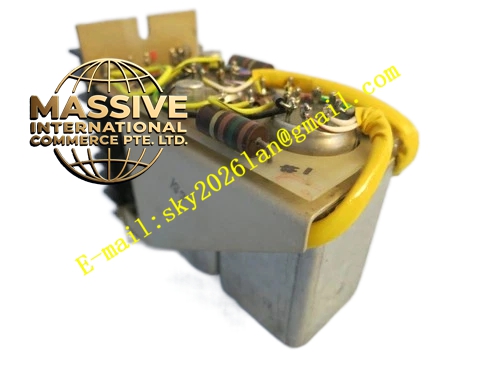
Description
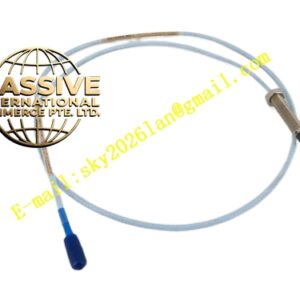
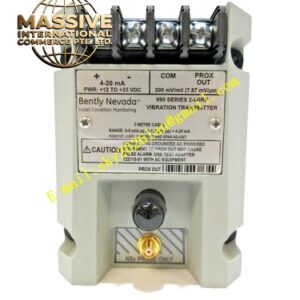
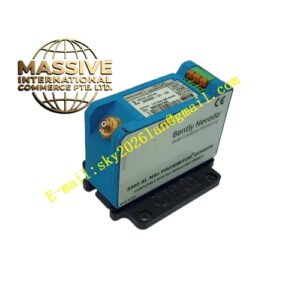
Bently Nevada 3300/16-02-01-01-00-00-00
Technical Specifications:
- Probe Diameter: 8mm
- Linear Range: 2mm (80 mils)
- Sensitivity: 7.87 V/mm (200 mV/mil) ±5%
- Frequency Response: 0–10 kHz
- Power Supply: -17.5 VDC to -26 VDC, maximum 12 mA
- Recommended Gap Setting: 1.27mm (50 mils)
- Output Impedance: 50 ohms
- Probe Operating Temperature (Standard): -52°C to +177°C
- Probe Operating Temperature (High Temp): -52°C to +218°C
- Extension Cable Temperature (Standard): -52°C to +177°C
- Extension Cable Temperature (High Temp): -52°C to +260°C
- Proximitor Operating Temperature: -52°C to +100°C
- Recommended Minimum Shaft Diameter: 76.2mm (3 inches)
- Maximum Field Wiring Length: 305 meters from Proximitor to monitor
Functional Features:
- Complete non-contacting measurement of static displacement and dynamic vibration
- Full interchangeability of probe, extension cable, and Proximitor — no individual matching or bench calibration required
- CableLoc design provides 330N (75 lb) pull strength on cable-to-probe connection
- ClickLoc gold-plated brass connectors lock into place preventing connection loosening
- TipLoc patented molding ensures robust bond between probe tip and body
- FluidLoc cable option prevents oil or liquid leakage through cable interior
- Strong RFI/EMI immunity meeting European CE electromagnetic compatibility standards
- Compliant with API 670 standard for petroleum, chemical, and gas industry services
Application Scenarios:
- Radial shaft vibration monitoring on turbines, compressors, pumps, and fans
- Axial (thrust) position measurement
- Keyphasor and speed measurement
- Power generation, petrochemical, metallurgical, and water treatment industries
- Any rotating machinery with fluid film bearings requiring continuous vibration protection
Performance Parameters:
- Measurement accuracy: ±5% of full scale
- Resolution: Sub-micron level (0.1 µm)
- Temperature stability: Maintains accuracy across full operating temperature range
- Signal-to-noise ratio: High, with built-in anti-interference design
- Dynamic range: Covers 0–10 kHz frequency band
Material Composition:
- Probe housing: AISI 304 stainless steel
- Probe tip: PPS (polyphenylene sulfide) material
- Connector: Gold-plated brass ClickLoc connectors
- Cable: Shielded coaxial construction with optional FluidLoc sealing
Structural Features:
- Compact 8mm probe diameter for standard bearing applications
- Available in armored and unarmored versions
- Thread options: 3/8-24 UNF and M10×1
- Proximitor available in DIN-rail mount or panel mount configurations
- SpringLoc terminal strips on Proximitor for tool-free field wiring
Working Principle:
The Proximitor generates a high-frequency oscillating current (1–2 MHz) through the probe coil, creating an alternating electromagnetic field at the probe tip. When a conductive metal target (shaft surface) enters this field, eddy currents are induced on the target surface. These eddy currents generate a counter magnetic field that changes the effective impedance of the probe coil. The impedance change is directly proportional to the gap distance between the probe tip and the target surface. The Proximitor demodulates this impedance change and outputs a DC voltage signal linearly proportional to the gap, enabling precise non-contact displacement and vibration measurement.
Installation Requirements:
- Mount probe using appropriate threaded housing with locknut and safety wire
- Set initial gap to 1.27mm (50 mils) using micrometer or dial indicator
- Verify Proximitor output voltage at midpoint of linear range (-10 VDC nominal)
- Use extension cable length matching Proximitor system length designation
- Route signal cables at least 30 cm away from power cables
- Apply connector protectors or self-fusing silicone tape on all probe-to-cable connections
- Ground cable shield at one end only to prevent ground loops
Usage Notes:
- All three components (probe, cable, Proximitor) must be from the same 3300 XL 8mm system family
- Verify target material is ferromagnetic steel (AISI 4140 calibration standard)
- Do not use self-fusing silicone tape in turbine oil environments
- Perform gap verification every 6 months or after major maintenance
- Proximitor output voltage must remain within -2V to -18V linear range
- For hazardous area installations, select the appropriate agency approval option