


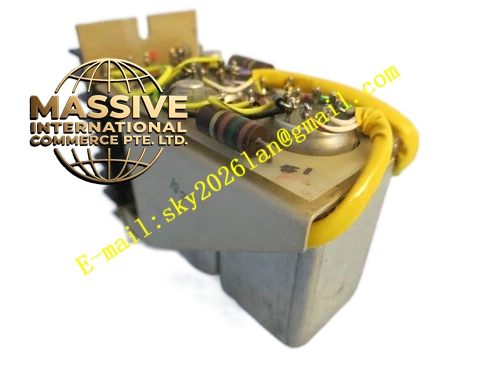
Description
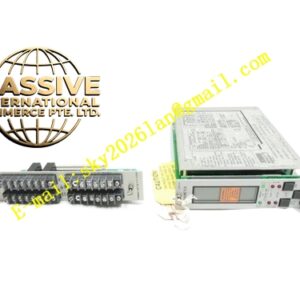
Bently Nevada 3300/50-02-01-00-00
Technical Specifications:
- Product Type: Tachometer Monitor Module
- Series: 3300/50
- Inputs: Two proximity probe transducer signals with voting logic
- Outputs: Proportional voltage or current outputs and relay contacts for alert status
- Speed Range: 1 to 99,999 rpm
- Operating Voltage: 24 V DC typical
- Operating Temperature: -35°C to +70°C (standard industrial range)
Functional Features:
- Zero speed monitoring provides reliable detection of shaft stop conditions for safety and control
- Accurate speed and acceleration measurement ensures high-precision monitoring for rotating machinery
- Dual transducer inputs with channel redundancy enhance data integrity and reliability
- Versatile outputs include proportional voltage or current outputs and relay contacts for alert status
- Wide speed range measures from 1 to 99,999 rpm for broad application coverage
- Compact, low-power design consumes minimal power while saving valuable panel space
- Supports eddy current probe and magnetic sensor inputs
- Configurable for zero speed or rotor acceleration monitoring
Application Scenarios:
- Turbine and generator systems for speed and zero-speed guard monitoring
- Compressors and pumps ensuring correct operating speeds and preventing overspeed conditions
- Machinery protection systems integrated into alarm/trip logic via proportional outputs and relay contacts
- Plant DCS/PLC systems providing actionable speed/acceleration feedback for process control and safety interlocks
- Steam turbine turning gear monitoring during low-speed rotation
- Controlled startup and shutdown speed ramp monitoring
Performance Parameters:
- Speed measurement accuracy: High precision across full range
- Resolution: 0.1 RPM
- Response time: Fast signal processing suitable for real-time monitoring
- Redundancy: Dual channel with voting logic for fault tolerance
Material Composition:
- Industrial-grade electronic components in compact module housing
- Rugged construction for harsh industrial environments
- Metal enclosure with sealed connectors
Structural Features:
- Compact industrial form factor suitable for panel or rack mounting
- Modular design for easy installation and maintenance
- LED status indicators for operational monitoring
- Standard industrial connector interfaces
Working Principle:
The tachometer module receives pulse signals from proximity probes or magnetic sensors mounted near the rotating shaft. As the shaft rotates, each passing tooth, keyway, or target feature generates a pulse. The module counts these pulses over time to calculate rotational speed in RPM. The dual-input voting logic compares signals from two independent probes, ensuring accurate speed measurement even if one probe fails. Zero-speed detection is achieved by monitoring the absence of pulses over a defined time period.
Installation Requirements:
- Mount module in standard 3300 series rack or panel
- Connect two proximity probe transducer inputs from shaft-mounted sensors
- Configure speed range and alarm setpoints per application requirements
- Connect proportional outputs to DCS/PLC for speed indication
- Connect relay outputs to alarm/trip logic circuits
- Verify 24 V DC power supply is stable and within tolerance
Usage Notes:
- Ensure probe mounting provides adequate signal amplitude for reliable pulse detection
- Configure voting logic appropriately for single or dual probe operation
- Verify speed range settings match application requirements
- Test zero-speed detection function during commissioning
- Monitor LED status indicators for operational health
- Perform periodic calibration using known speed reference