


Description
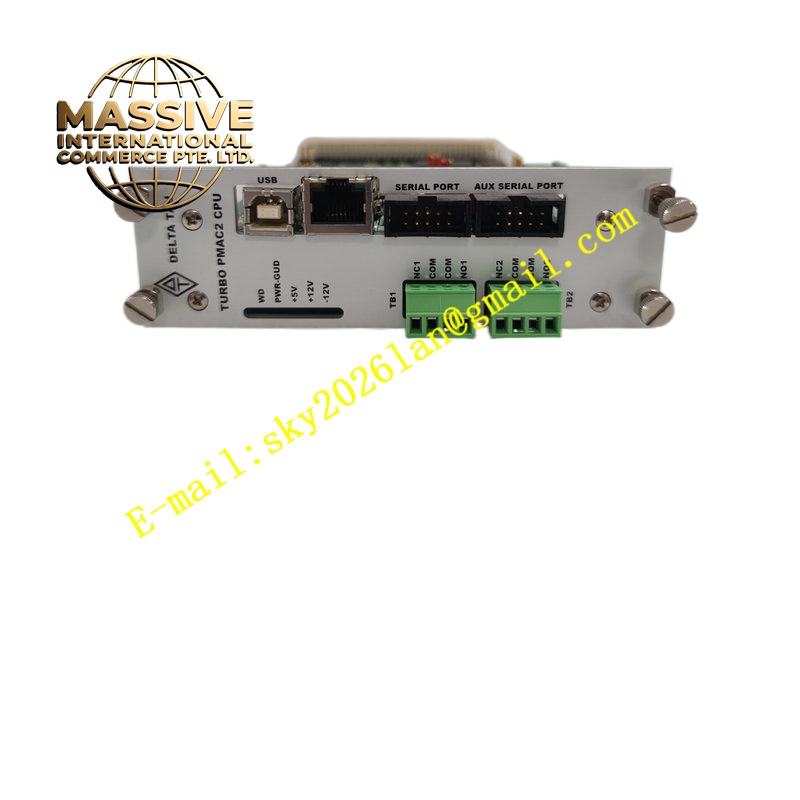
Delta Tau PMAC2A-ETH 603871-106
Technical Specifications
Brand: Delta Tau (Omron)
Product Model: PMAC2A-ETH 603871-106
Product Type: Programmable Multi-Axis Motion Controller
Processing Core: 80 MHz DSP56303 Turbo PMAC CPU
Memory: 256k x 24 user SRAM, 1M x 8 flash memory for user backup and firmware
Communication Interfaces: 100 Mbps Ethernet, RS-232 serial interface
Axis Control: Up to 32 axes of servo or stepper control
Digital I/O: 32 general-purpose TTL-level I/O points
Encoder Inputs: 3-channel differential/single-ended encoder input per axis channel
Analog Output: 12-bit +10V analog output per axis channel
Digital Output: Pulse-and-direction digital outputs per axis channel
Hall Inputs: UVW TTL-level hall sensor inputs per axis channel
Power Supply: 5V, +/-12V, GND (via 4-pin Molex connector; +/-12V only required for analog outputs or inputs)
Warranty: 1 year from date of shipment
Functional Features
High-Performance DSP Processing: 80 MHz DSP56303 delivers fast servo update rates and complex trajectory planning
Multi-Axis Coordination: Supports up to 32 axes of synchronized servo or stepper motor control
Built-in Communication: Standard 100 Mbps Ethernet and RS-232 interfaces for easy integration
Comprehensive I/O: 32 digital I/O points with direction-selectable byte configuration
Advanced Servo Algorithms: PID, notch filter, and feedforward servo algorithms for precise motion control
Encoder Interface: 3-channel differential/single-ended encoder inputs per axis for accurate position feedback
Handwheel Support: Dedicated handwheel port with quadrature encoder inputs and pulse output pairs
Flexible Configuration: Compatible with Delta Tau I/O accessories and Opto-22-style modules
Firmware Upgradability: Flash memory allows firmware updates for enhanced functionality
Cost-Effective Design: Full Turbo PMAC2 functionality in a compact, budget-friendly package
Application Scenarios
CNC Machining: Multi-axis milling, turning, and grinding machines requiring precise coordinated motion
Robotics: Industrial robot joint control, SCARA robots, and Cartesian coordinate robots
Semiconductor Manufacturing: Wafer handling, die bonding, and precision positioning systems
Laser Processing: Laser cutting, welding, and marking systems requiring high-speed coordinated motion
Packaging Machinery: High-speed pick-and-place, filling, and labeling equipment
Textile Machinery: Weaving, knitting, and fabric handling automation
Medical Equipment: Surgical robots, diagnostic imaging systems, and laboratory automation
Test and Measurement: Precision positioning stages, material testing machines, and inspection systems
Performance Parameters
CPU Speed: 80 MHz DSP56303
SRAM: 256k x 24 user SRAM
Flash Memory: 1M x 8 for firmware and user backup
Servo Update Rate: Microsecond-level servo cycle time (dependent on axis count and algorithm complexity)
Axis Resolution: High-resolution encoder feedback processing
Analog Output Resolution: 12-bit +/-10V
Communication Speed: 100 Mbps Ethernet, standard RS-232 baud rates
I/O Response Time: Fast TTL-level I/O switching
Interpolator: Supports linear, circular, spline, and PVT interpolation with S-curve acceleration/deceleration
Material Composition
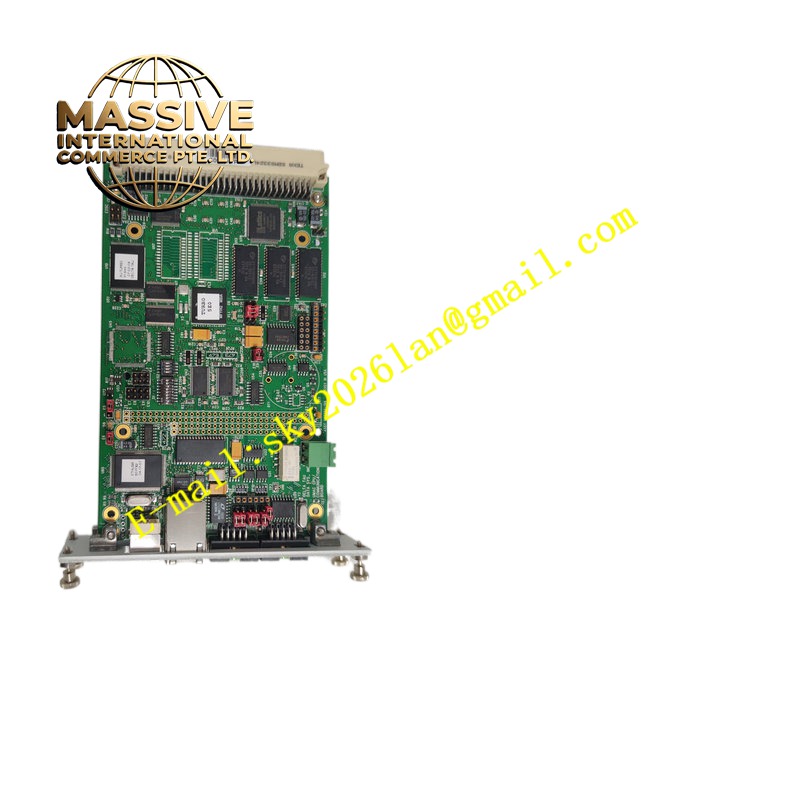
Industrial-grade multi-layer PCB, surface-mounted high-performance DSP and memory components, metal shielding for EMI protection, standardized IDC and Molex connectors, compliant with CE, UL, and RoHS standards
Structural Features
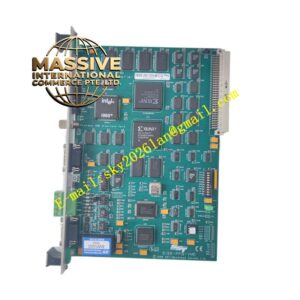
Compact PCB form factor, 50-pin IDC header for amplifier/encoder interface, 34-pin IDC header for flag interface, 4-pin Molex power connector, status LEDs for power and communication, handwheel port connector, modular design for integration into custom enclosures or OEM equipment, optimized thermal layout for continuous operation
Working Principle
The PMAC2A-ETH receives motion commands from a host computer via Ethernet or RS-232, or executes pre-loaded motion programs from its internal memory. The 80 MHz DSP processes trajectory planning, interpolating multi-axis motion paths (linear, circular, spline, or PVT) with S-curve acceleration/deceleration profiles. For each axis, the controller reads encoder feedback, computes position/velocity errors, and applies PID, notch filter, and feedforward algorithms to generate precise control outputs (analog voltage or pulse/direction signals) to motor amplifiers. Digital I/O handles discrete events such as limit switches, homing signals, and interlocks. The handwheel port allows manual jog operation. Real-time servo updates occur at microsecond intervals, ensuring smooth and accurate motion. Communication with the host enables parameter tuning, status monitoring, and dynamic command updates.
Installation Requirements
Mount the controller board securely in a suitable enclosure or OEM equipment chassis with adequate ventilation
Connect power supply (5V, +/-12V if analog I/O is used) via the 4-pin Molex connector, verifying correct polarity
Wire axis interfaces (amplifier outputs, encoder inputs, hall sensors) via the 50-pin IDC header following Delta Tau pinout specifications
Connect digital I/O signals via the 34-pin IDC header for flags and general-purpose I/O
Use shielded cables for encoder and analog signals, grounding shields properly to minimize noise
Establish Ethernet or RS-232 communication with the host computer for programming and monitoring
Install Delta Tau configuration software (e.g., PMAC Executive) on the host computer for setup and调试
Ensure proper grounding of the controller and associated equipment to prevent ground loops and EMI
Usage Precautions
Verify power supply voltage and polarity before energizing the controller to prevent damage
Use proper shielded cabling and grounding practices for encoder and analog signals to ensure signal integrity
Do not hot-swap encoder or amplifier connections while the system is powered
Configure servo parameters (PID gains, feedforward, notch filters) carefully to match motor and load characteristics; use auto-tuning tools if available
Monitor encoder feedback quality; noisy or lost encoder signals can cause unstable motion or faults
Implement proper homing procedures and limit switch configurations for safe axis operation
Back up controller programs and parameters regularly to prevent data loss
Refer to Delta Tau PMAC2 documentation for detailed programming, troubleshooting, and alarm code interpretation
Ensure adequate cooling; the DSP and power components generate heat during continuous operation
Do not exceed the specified I/O voltage and current ratings to avoid damaging internal circuits