


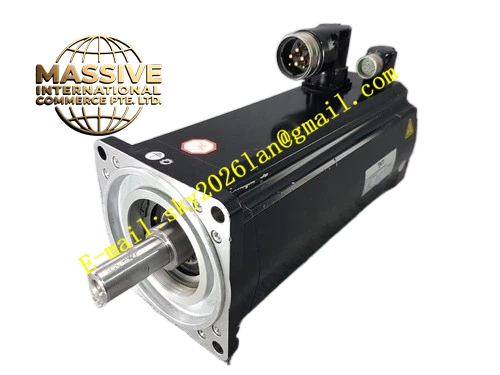
Description
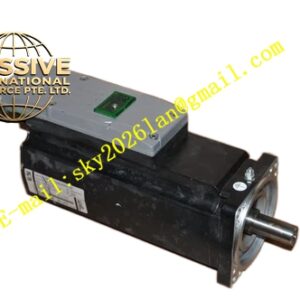
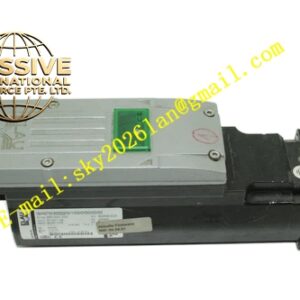
ELAU SH070‑60020‑0‑0‑00‑00‑10‑11‑00
Technical Specifications: Rated supply voltage 400 VAC, flange dimension 70 mm, rated speed 6000 rpm, maximum mechanical speed 7000 rpm, continuous stall torque 2.0 Nm, peak torque 6.0 Nm, continuous current 4.8 A, peak current 11.2 A, multi‑turn Hiperface absolute encoder, shaft diameter 16 mm, insulation class F, IP65 housing and shaft‑end protection rating, built‑in electromagnetic holding brake, side‑mount rotatable circular connectors.
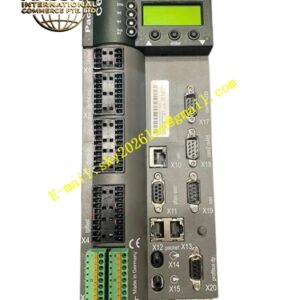
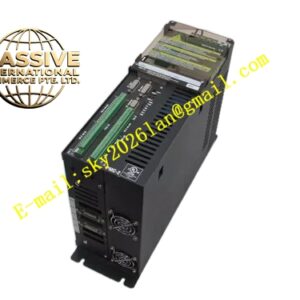
Functional Features: Salient‑pole winding technology realizes compact small‑size structure, low‑rotor‑inertia rotor obtains fast acceleration and deceleration dynamic response, multi‑turn absolute encoder retains full‑range position data after power‑loss, built‑in electromagnetic holding‑brake locks shaft under power‑loss condition, embedded PT100 thermal sensor monitors winding temperature, low cogging‑torque ensures stable high‑speed and low‑speed running, full‑hardware compatibility with PacDrive drive series.
Application Scenarios: High‑speed auxiliary axes of compact packaging machinery, electronic product automated assembly equipment, small‑size robotic joint axes, printing converting high‑speed positioning axes, textile light‑load high‑speed processing axes.
Performance Parameters: Rotor inertia 2.4 kg·cm², torque ripple lower than 2.2 %, multi‑turn encoder measuring range 4096 revolutions, brake holding torque 6 Nm, brake release voltage 24 VDC, thermal time constant 28 minutes, operating ambient temperature range ‑20 °C to +40 °C.
Material Composition: Compact die‑cast aluminum alloy fin‑cooled housing, stacked silicon‑steel sheet stator core, neodymium‑iron‑boron permanent magnet rotor, quenched alloy steel output shaft, brake assembly adopts high‑friction wear‑resistant friction disc, glass‑fiber‑reinforced flame‑retardant plastic connector housing.
Structural Characteristics: Fully‑enclosed compact fin‑cooled housing, IM B5 flange‑mount installation structure, keyway‑equipped output shaft, side‑mount rotatable circular power and feedback dual‑connectors, built‑in electromagnetic holding‑brake assembly, PT100 thermal sensor embedded in stator windings, internal multi‑layer dust‑proof and oil‑proof sealing structure.
Working Principle: Stator three‑phase sinusoidal‑current generates rotating magnetic‑field and drives permanent‑magnet rotor synchronous rotation. Multi‑turn Hiperface absolute encoder feeds back rotor absolute position and rotating‑speed signal to matched servo drive. Servo drive executes current‑speed‑position closed‑loop cascade control. Built‑in electromagnetic holding‑brake realizes shaft locking function when control power supply is cut‑off. Thermal sensor continuously monitors winding temperature to trigger over‑temperature protection action.
Installation Requirements: Fasten motor flange with specified‑torque metric bolts; coupling coaxial alignment tolerance ≤ 0.05 mm; reserve sufficient surrounding space for natural convection heat dissipation; holding‑brake control wiring must connect independent 24 VDC power‑supply; lock connector locking ring completely to resist vibration‑caused loosening; separate high‑power motor‑cable and weak‑signal feedback‑cable routing paths.
Usage Notes: Prohibit mechanical impact to motor output shaft during installation and handling; confirm encoder parameter configuration on matched servo drive; do not apply external torque load on shaft while brake is engaged; avoid long‑time continuous running at peak‑torque working state; prevent oil mist and corrosive gas from eroding shaft lip‑seal; implement ESD anti‑static protection during wiring maintenance; regularly inspect holding‑brake working performance under frequent start‑stop operation.