


Description
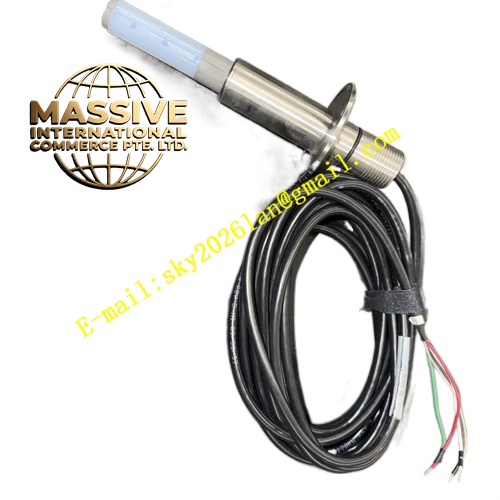
Foxboro 871EC-TF2-V
Technical Specifications
- Product Type: High-Temperature/High-Concentration Conductivity Sensor.
- Cell Constant: 2.31 cm⁻¹.
- Specialized Application: Fuming and concentrated sulfuric acid.
- Hygienic Option: Available with sanitary fittings for food and pharmaceutical use.
Functional Features
- Extreme Chemical Resistance: Capable of withstanding the most aggressive chemical environments.
- High-Temperature Capability: Engineered to operate reliably in elevated temperature processes.
- Robust Construction: Built to survive in abrasive and highly corrosive conditions.
- Versatility: Can be configured with sanitary fittings for hygienic processes.
Application Scenarios
Critical for monitoring in sulfuric acid production, chemical synthesis involving strong acids, and high-temperature industrial processes where standard sensors would be destroyed.
Performance Parameters
- Measurement Range: Wide range suitable for high conductivity.
- Temperature Rating: Extended high-temperature operating range.
- Stability: Excellent long-term stability in harsh media.
Material Composition
Constructed from specialized, high-grade materials capable of resisting attack by fuming acids. The encapsulation is designed to withstand thermal cycling and chemical penetration.
Structural Characteristics
Similar toroidal design to the LB series but reinforced for extreme duty. The housing is streamlined to minimize process buildup and withstand high flow velocities.
Working Principle
Utilizes the same electromagnetic induction principle as other electrodeless sensors but is optimized with a higher cell constant (2.31) to accurately measure high-conductivity fluids without signal saturation.
Installation Requirements
Ensure the sensor is installed in a location where it will not be subjected to mechanical damage. For high-temperature applications, consider thermal expansion of the piping. Use appropriate high-temperature gaskets.
Usage Precautions
- Strictly adhere to the temperature and concentration limits.
- Inspect the sensor housing regularly for signs of chemical attack or wear.
- Handle with care to avoid damaging the internal toroid assembly.