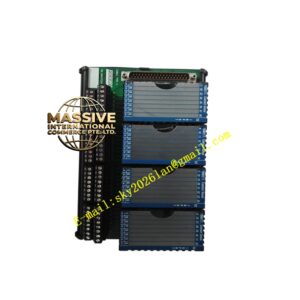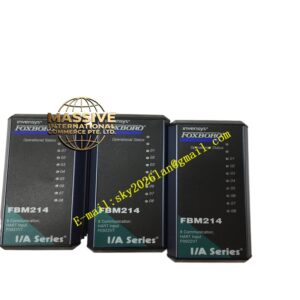



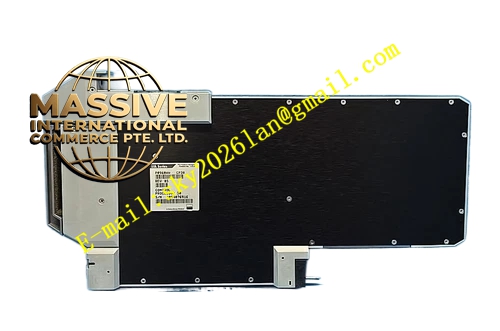
Description
Foxboro CP30
Technical Specifications
- Model Number: CP30
- System: Foxboro I/A Series
- Role: Primary Process Controller
- Architecture: Fault-tolerant processing unit
Functional Features
- Logic Execution: Processes ladder logic, function blocks, and sequential control strategies.
- I/O Management: Scans and updates hundreds of field I/O points deterministically.
- Redundancy Support: Capable of operating in a 1:1 redundant pair for zero-bump failover.
Application Scenarios
Ideal for continuous and batch process control in oil and gas, power generation, and water treatment facilities.
Performance Parameters
- Scan Time: Millisecond-level logic execution for tight closed-loop control.
- Memory Capacity: Sufficient RAM and non-volatile memory for complex control strategies and historical data buffering.
Material Composition
Industrial-grade microprocessors and memory modules housed in a robust metal enclosure for thermal and EMI protection.
Structural Characteristics
- Backplane Integration: Plugs directly into the I/A Series node bus backplane.
- Status Indicators: Front-panel LEDs displaying Run, Fault, Primary/Secondary status, and network activity.
Working Principle
The CP30 continuously reads input data from the fieldbus, executes the user-defined control algorithm, and writes output commands back to the field devices, all synchronized by a precise internal clock.
Installation Requirements
Install in the primary processor slot on the backplane. Ensure the redundant partner (if applicable) is installed in the designated secondary slot and linked via the sync cable.
Usage Precautions
Never remove the primary processor without first transferring control to the secondary unit. Keep firmware versions identical between redundant processors to prevent synchronization faults.