


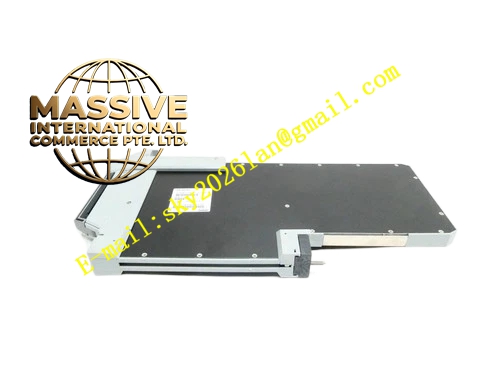
Description
Foxboro CP30B
Technical Specifications
- Processor: High-speed 32-bit RISC architecture.
- Memory: Ample RAM and Flash storage for extensive control strategies and historical data logging.
- Communication: Supports dual Ethernet, ControlNet, and DeviceNet.
- Power: 24V DC via backplane, consuming less than 15W.
Functional Features
- High Availability: Seamless redundancy with bit-and-bit matching technology to validate data consistency.
- Scalability: Supports connection to dozens of Fieldbus Modules (FBM) for massive I/O expansion.
- Real-Time Operation: Guarantees deterministic response for critical safety and control interlocks.
- Online Modification: Allows for control logic changes and downloads without stopping the process.
Application Scenarios
Refineries, chemical processing plants, and pharmaceutical manufacturing where precise temperature, pressure, and flow control are essential for product quality and safety.
Performance Parameters
- Scan Cycle: Millisecond-level execution for high-speed loops.
- Data Integrity: Advanced error-checking mechanisms to prevent corrupted data transmission.
- Environmental: Operates reliably in temperatures from 0°C to +60°C.
Material Composition
Robust industrial materials with anti-corrosion treatment. Connectors are gold-plated to ensure low-resistance connections over thousands of mating cycles.
Structural Characteristics
Compact module with a secure locking mechanism for backplane retention. Front panel provides visual feedback for power, battery status, and network activity.
Working Principle
The CP30B continuously scans the control database, executing logic blocks based on priority. It manages I/O data transfers, handles communication traffic, and maintains synchronization with its redundant pair to provide bumpless transfer during faults.
Installation Requirements
Ensure the backplane power supply is adequately sized for the total module load. Install in a clean, dry environment free from conductive dust.
Usage Precautions
- Always verify the redundancy status before performing maintenance on the primary processor.
- Keep firmware versions consistent across redundant processors.
- Do not block the ventilation areas on the module or cabinet.