


Description
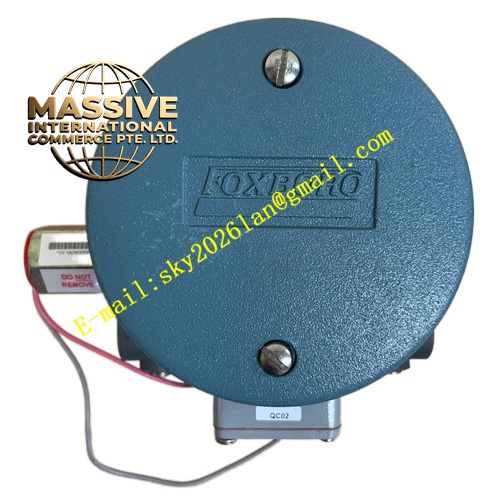
Foxboro E69F-B12-S
Technical Specifications
- Product Type: Electro-Pneumatic Transducer (I/P).
- Input Signal: 4-20 mA DC.
- Output Signal: 3-15 psi (0.2-1.0 bar).
- Supply Pressure: 20-30 psi.
Functional Features
- High Accuracy: Precise conversion with minimal hysteresis and linearity error.
- Vibration Resistance: Designed to operate reliably in high-vibration environments.
- Fast Response: Quick response to input signal changes for tight control.
- Rugged Construction: Built to withstand harsh industrial environments.
Application Scenarios
Used in process control loops to drive pneumatic control valves, actuators, and dampers in refineries, chemical plants, and power generation facilities.
Performance Parameters
- Linearity: ±0.5% of span.
- Repeatability: Excellent repeatability for consistent control.
- Air Consumption: Low standby consumption.
Material Composition
Housing is cast aluminum or stainless steel. Internal components include precision-machined brass, stainless steel, and synthetic elastomer diaphragms.
Structural Characteristics
Compact, cylindrical or rectangular housing with NPT or metric pipe connections. Features adjustment screws for zero and span, protected by a cover. Includes a local pressure gauge port.
Working Principle
The input current flows through a coil, creating a magnetic field that interacts with a permanent magnet. This force moves a flapper relative to a nozzle, modulating the pneumatic output pressure. A feedback bellows ensures linearity and stability.
Installation Requirements
Mount securely to prevent vibration-induced errors. Connect the air supply through a filter-regulator. Use clean, dry instrument air. Ensure proper electrical connections.
Usage Precautions
- Always use clean, dry, oil-free instrument air.
- Do not exceed the maximum supply pressure.
- Perform regular zero and span checks to maintain accuracy.