


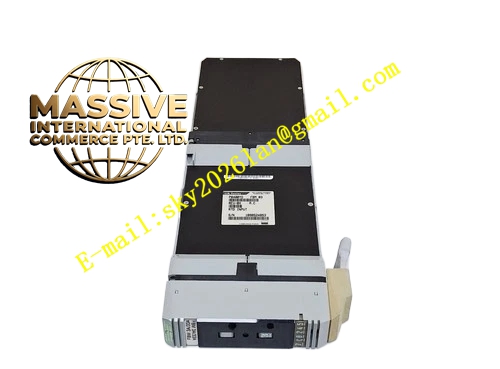
Description
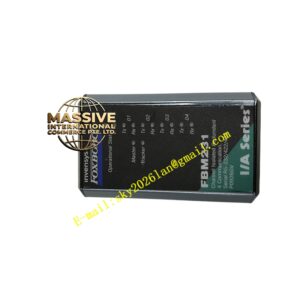
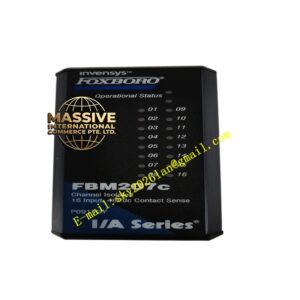
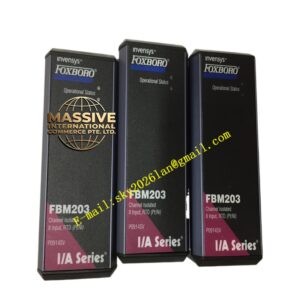
Foxboro FBM03 PM400YD
Technical Specifications
- Hardware Code: PM400YD
- Input Type: RTD (Resistance Temperature Detector)
- Input Channels: 8 independent channels
- Communication Protocol: Redundant 2 Mbps Module Fieldbus
Key Features
- Precision RTD Measurement: Supports various RTD types (e.g., Platinum, Nickel, Copper) with high accuracy.
- Lead Wire Compensation: Designed to eliminate errors caused by lead wire resistance in 3-wire and 4-wire configurations.
- Hot-Swappable Maintenance: Allows for safe, online module replacement.
- Integrated Diagnostics: Features comprehensive channel diagnostics for open/short circuit detection.
Application Scenarios
Extensively used in pharmaceuticals, food and beverage, and chemical industries for accurate mid-to-low temperature process monitoring and control.
Performance Parameters
- Operating Temperature: 0°C to 60°C
- Storage Temperature: -40°C to 85°C
- Power Supply: 24 VDC via backplane
- Protection Rating: IP20
Material Composition
Constructed with durable, flame-retardant industrial plastics and conformal-coated electronics for maximum environmental protection.
Structural Characteristics
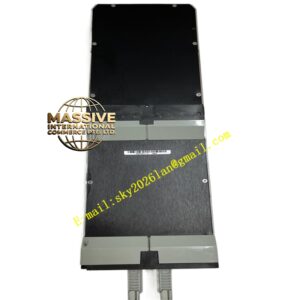
Single-width 200 Series FBM form factor. Interfaces with the backplane via precision pins and connects to field RTDs through a specific Terminal Assembly.
Operating Principle
Supplies a constant excitation current to the RTD, measures the resulting voltage drop, calculates the resistance, compensates for lead wire resistance, and converts the value to a temperature reading transmitted over the Module Fieldbus.
Installation Requirements
Mount on a compatible 200 Series baseplate. Ensure the control cabinet is well-ventilated and properly grounded. Use shielded cables for RTD wiring to prevent noise interference.
Usage Precautions
Ensure the RTD type and wiring configuration (2-wire, 3-wire, or 4-wire) are correctly defined in the system configuration. Avoid routing RTD cables parallel to high-voltage power lines.