


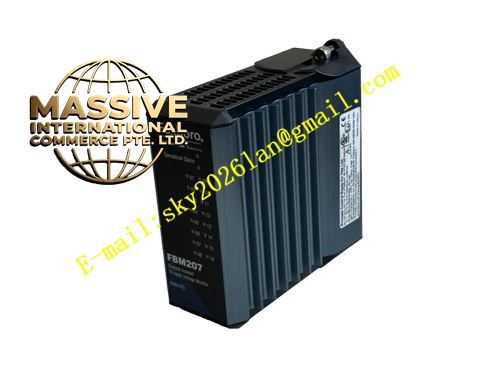
Description
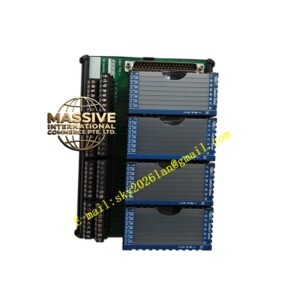
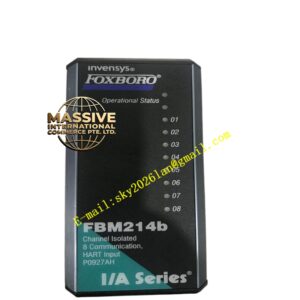
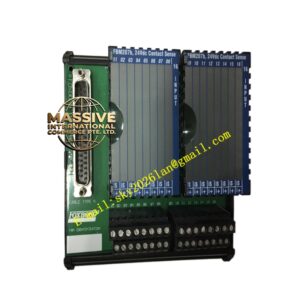
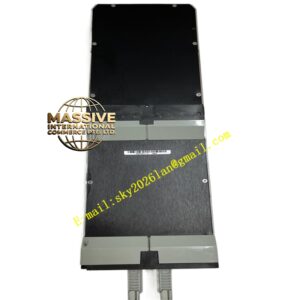
Foxboro FBM14
Technical Specifications
- Product Type: Analog Input Module.
- Channels: 8 or 16 isolated analog input channels.
- Signal Types: 4-20mA, 0-10V, RTD, Thermocouple.
- Resolution: 16-bit A/D conversion.
Functional Features
- High Accuracy: Precision signal conditioning and factory calibration.
- Channel Isolation: Galvanic isolation between channels to prevent cross-talk.
- Diagnostics: Open wire detection, over-range, and under-range alarms.
- Linearization: Built-in tables for common sensor types.
Application Scenarios
Core measurement loops in any continuous process industry, providing essential feedback for PID control and operator monitoring.
Performance Parameters
- Accuracy: ±0.1% of span or better.
- Input Impedance: High impedance for current loops.
- CMRR: High common-mode rejection ratio for noisy environments.
Material Composition
Precision resistors and low-drift operational amplifiers. Conformal-coated PCB for environmental protection. Gold-plated backplane connectors for reliable data transmission.
Structural Characteristics
Standard I/A Series module size. Front panel features channel status LEDs and screw terminals or high-density connectors for field wiring.
Working Principle
The module conditions the incoming analog signal (filtering, amplifying), converts it to a digital value via a high-resolution ADC, applies linearization and scaling, and transmits the engineering unit value to the controller via the backplane.
Installation Requirements
Use shielded twisted-pair wiring for analog signals. Ground the shield at the module end only. Keep analog wiring separate from digital and power wiring.
Usage Precautions
- Verify signal type and range match the field transmitter.
- Perform periodic calibration using a precision signal source.
- Check for proper grounding to minimize noise pickup.