


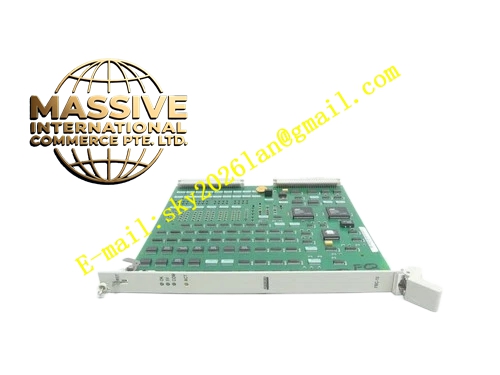
Description
Foxboro P0914YMFCM10E
Technical Specifications
- Part Number: P0914YMFCM10E.
- Function: Fieldbus Communication Management.
- Protocol: Foxboro HDLC Fieldbus (2 Mbps / 268 Kbps).
- Redundancy: Supports redundant fieldbus paths for high availability.
Functional Features
- High-Speed Data Transfer: Manages rapid polling and data exchange with multiple FBMs on the bus segment.
- Bus Management: Handles token passing, error detection, and automatic retransmission to ensure data integrity.
- Redundant Communication: Seamlessly switches between primary and secondary bus paths in the event of a cable or connector failure.
- Diagnostic Capabilities: Reports bus health, error counts, and device status to the host controller.
Application Scenarios
Critical component in large-scale distributed I/O systems where communication reliability is paramount, such as in safety-critical process units or geographically dispersed control applications.
Performance Parameters
- Bus Utilization: Efficient bandwidth management to support high I/O densities.
- Failover Time: Sub-millisecond switching for redundant bus paths.
- Latency: Deterministic and predictable communication cycles.
Material Composition
High-reliability electronic components with robust EMI shielding. Conformal-coated PCB for environmental protection.
Structural Characteristics
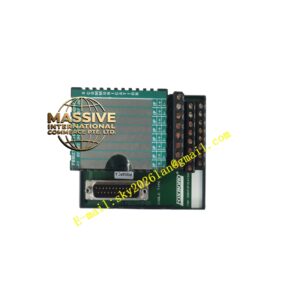
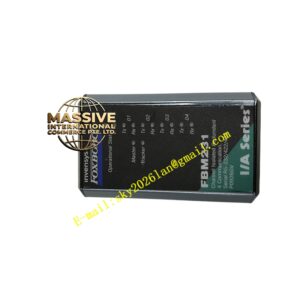
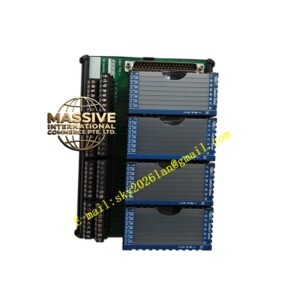
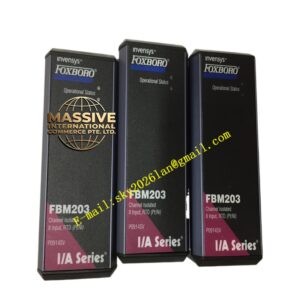
Standard modular form factor with dedicated fieldbus connectors (typically fiber optic or shielded copper). Status LEDs indicate bus activity, redundancy state, and fault conditions.
Working Principle
Acts as the master or repeater on the fieldbus segment, orchestrating data traffic, validating message integrity, and managing redundancy switching to ensure uninterrupted communication between the controller and field devices.
Installation Requirements
Connect to redundant fieldbus cables with proper termination. Ensure fiber optic cables (if used) are not bent beyond the minimum radius. Verify bus address and redundancy configuration.
Usage Precautions
Never disconnect fieldbus cables while the system is powered unless the module is explicitly designed for hot-swapping. Monitor bus error diagnostics regularly to identify potential cabling or connector issues.