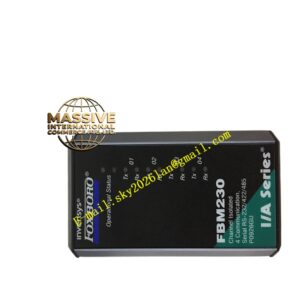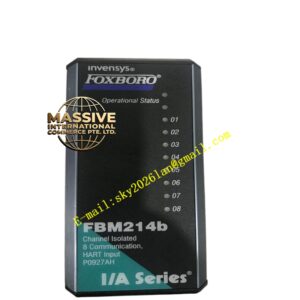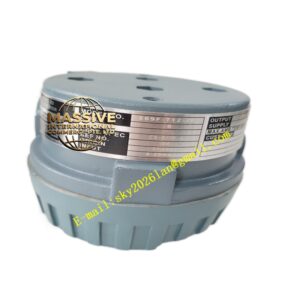



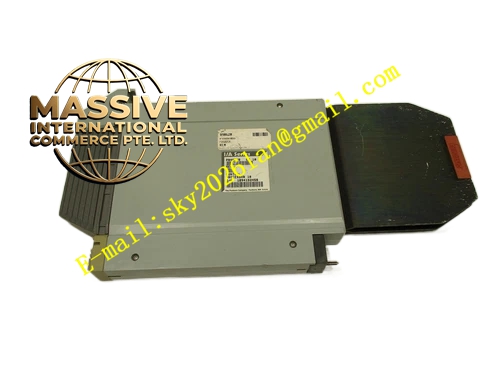
Description
Foxboro PO903ZQ
Technical Specifications
- Function: Signal Isolation, Filtering, and Amplification.
- Input/Output: Configurable for various analog and digital signals.
- Accuracy: High-precision signal conversion.
- Power: 24VDC isolated supply.
Functional Features
- Galvanic Isolation: Protects the control system from high-voltage transients and ground potential differences.
- Noise Filtering: Removes high-frequency electrical noise from field signals.
- Signal Conversion: Converts non-standard signals to standard 4-20mA or 0-10V ranges.
- Burnout Protection: Safely handles sensor wire breaks.
Application Scenarios
Used in harsh industrial environments where electrical noise is prevalent, or when interfacing with high-voltage or intrinsically safe field instruments.
Performance Parameters
- Isolation Voltage: High dielectric strength between input, output, and power.
- Response Time: Fast response with adjustable filtering.
- Temperature Drift: Low drift over the operating temperature range.
Material Composition
Precision electronic components with low-tolerance resistors and high-quality isolation transformers. Housed in a durable, flame-retardant plastic or metal case.
Structural Characteristics
Slim, modular design for high-density mounting. Features screw terminals or plug-in connectors for easy wiring, with clear silk-screened labels.
Working Principle
The module receives a raw signal, passes it through an isolation barrier (optical or magnetic), applies necessary amplification or attenuation, and filters out unwanted frequencies before outputting a clean, standardized signal to the I/O module.
Installation Requirements
Mount on standard DIN rails or backplanes. Ensure wiring is kept short and away from noise sources. Verify power supply polarity before connection.
Usage Precautions
- Do not exceed the maximum input voltage rating.
- Ensure the load impedance matches the module’s output specifications.
- Periodically calibrate the module to maintain accuracy.