


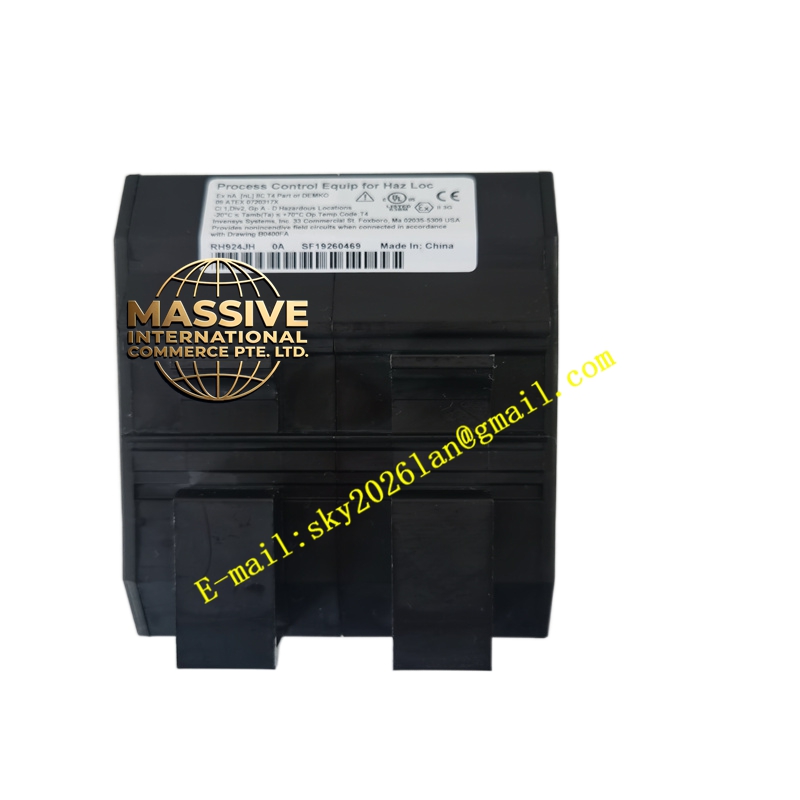
Description
Foxboro RH917HX
Technical Specifications:
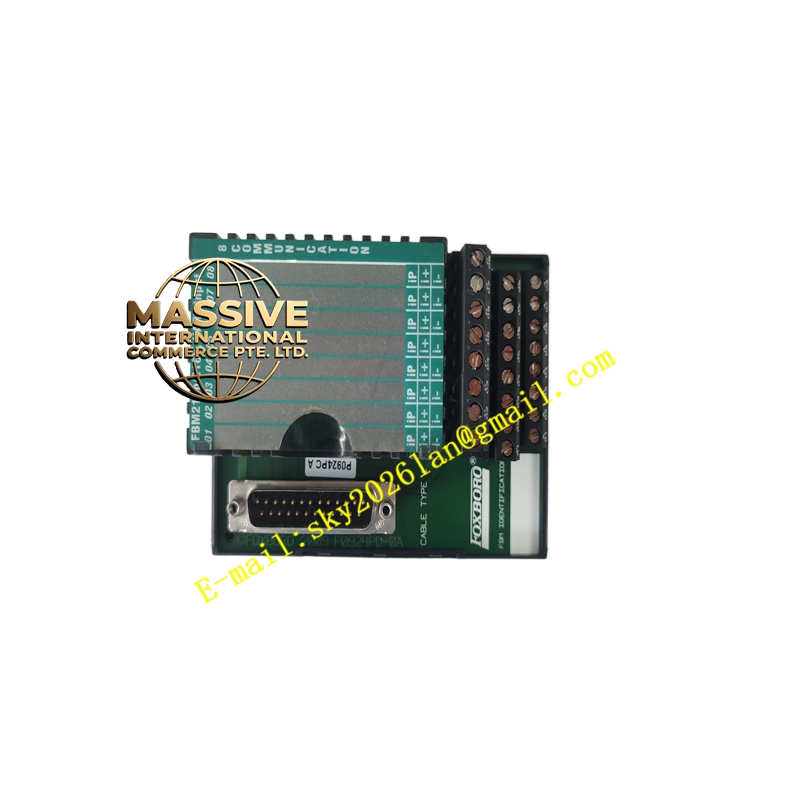
- Type: 32-Channel Digital Input Assembly
- Associated Module: FBM217
- Input Voltage: 24 V DC (nominal)
- Input Impedance: High (minimizing load on sense circuits)
- Termination: Screw terminals (high density)
- Environmental Rating: G3
- Operating Temperature: -40 °C to +70 °C
Functional Features:
- High channel density (32 points) for space efficiency
- Group-isolated inputs for flexibility in wiring
- Voltage monitoring capability for field wiring integrity
- LED status indicators for groups or individual channels
- Robust ESD protection on all inputs
Application Scenarios:
- Monitoring multiple status points on large machinery
- Aggregating limit switch signals from packaging lines
- General plant status monitoring (pumps, fans, conveyors)
Performance Parameters:
- Fast input response suitable for high-speed counting or sequencing
- High noise rejection via optical isolation
- Low power consumption per input channel
Material and Structural Characteristics:
- Compact, rugged plastic enclosure
- High-density terminal blocks to save space
- Integrated backplane connectors for system communication
Working Principle:
The assembly continuously scans the state of the connected field switches. When a switch closes, it completes a circuit, allowing current to flow through the input optocoupler. The optocoupler converts the electrical signal into a logic signal for the processor.
Installation Requirements:
- Use appropriate wire gauges for the terminals to prevent breakage
- Label wiring clearly due to the high density of channels
- Apply consistent torque to all screws for reliability
Usage Notes:
- Keep the voltage source for the inputs well-regulated
- Check for cross-wiring during commissioning
- Utilize the diagnostic features to detect failed sensors or broken wires