


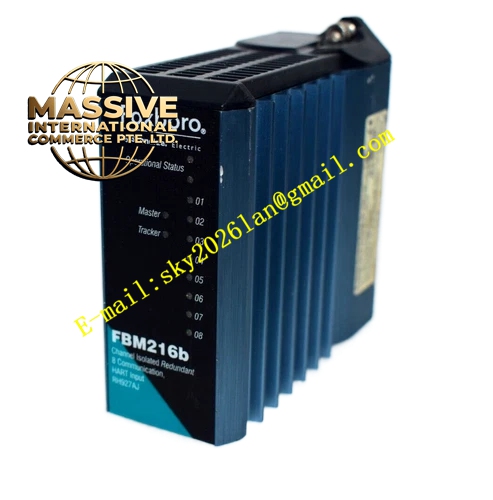
Description
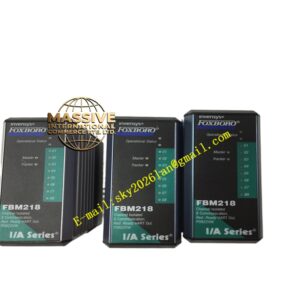
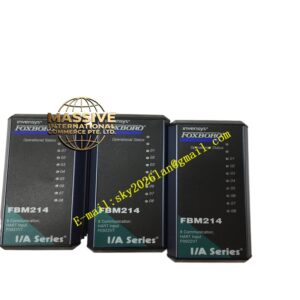
Foxboro RH927AHFBM214B
Technical Specifications
- Module Type: 16-Channel Discrete Input.
- Input Signal: 24 VDC dry contact or voltage source.
- Channel Isolation: Channel-to-channel and channel-to-bus galvanic isolation.
- Bus Interface: 2 Mbps Redundant Fieldbus.
Functional Features
- High Channel Density: 16 inputs in a single module footprint, reducing cabinet space and wiring complexity.
- Robust Noise Immunity: Designed to operate reliably in electrically noisy environments like MCC rooms.
- Diagnostics: LED indicators for channel status and module health; supports wire-break and short-circuit detection.
- Flexible Termination: Compatible with standard Foxboro Termination Assemblies (TAs).
Application Scenarios
Widely used for monitoring valve limit switches, pump run/status, motor starter auxiliaries, and safety permissives across refining, petrochemical, and power generation facilities.
Performance Parameters
- Input Impedance: High impedance to minimize loading.
- Response Time: Configurable filtering to debounce noisy signals.
- Operating Temperature: 0°C to 60°C.
Material Composition
Industrial-grade PCB with conformal coating. Rugged enclosure with high-quality screw or spring-clamp terminals.
Structural Characteristics
Standard FBM form factor with front-panel LEDs for each channel. Clear silkscreen labeling for wiring identification.
Working Principle
Each channel contains an optocoupler that electrically isolates the field signal from the internal logic. When a 24 VDC signal is applied, the optocoupler activates, and the microprocessor reads the state, packaging it for transmission over the fieldbus to the FCP.
Installation Requirements
Plug into a compatible RH916 series baseplate. Connect field wiring via the appropriate Termination Assembly. Ensure proper grounding of the TA shield.
Usage Precautions
Verify input voltage rating (24 VDC) before connecting. Do not connect AC voltage to discrete input channels. Configure input filtering in software to match field device characteristics.