



Description
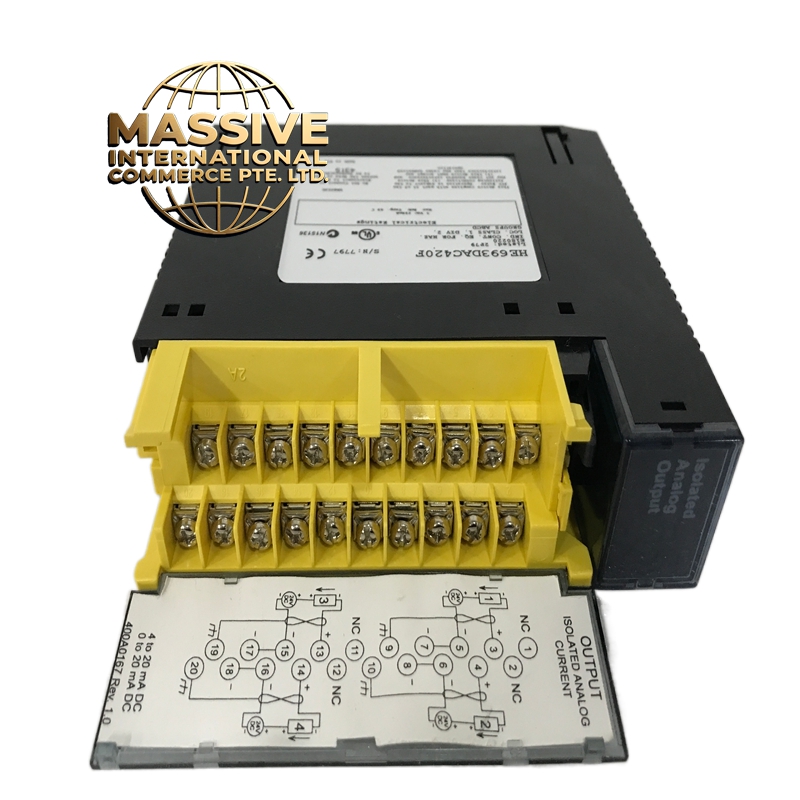
GE HE693DAC420
Technical Specifications:
- Number of Channels: 8 independent outputs
- Output Types: 4–20 mA (2-wire), 0–20 mA, 0–10 V, 1–5 V
- Resolution: 16-bit D/A converter
- Accuracy: ±0.1% of full scale
- Update Rate: 10 Hz per channel
- Isolation: 1500 VDC output-to-bus
- Load Capability: Up to 600 Ω for current outputs, 10 kΩ minimum for voltage outputs
- Power: ~4 W
- Operating Temp: 0°C to 60°C
Functional Features:
- Independent per-channel configuration
- Output hold-on-failure (last value or zero) selectable
- LED status per channel (Active, Fault, Force)
- Supports bumpless transfer between manual and automatic modes
- Fail-safe output configuration available
Application Scenarios:
- Turbine fuel valve position control
- Steam temperature control via attemperator spray valves
- Boiler feedwater flow control
- Damper and valve positioning in HVAC systems
Material Composition:
- PCB: 4-layer FR-4 with ground plane
- Output Drivers: Precision operational amplifiers with current limiting
- Connectors: Gold-plated Eurocard terminals
- Enclosure: EMI-shielded aluminum housing
Working Principle: The CPU sends a 16-bit digital value via the backplane. The module’s D/A converter translates this into an analog voltage, which is then conditioned by an output driver circuit to produce the final current or voltage signal. Output hold circuits maintain the last value during communication loss. Installation Requirements:
- Shielded twisted pair wiring for current outputs
- For 4–20 mA: ensure loop power supply is within 12–36 VDC
- Terminate unused channels with recommended jumpers
Usage Precautions:
- Do not short-circuit voltage outputs
- Verify output range matches field device requirements
- Test each channel individually during commissioning