


Description
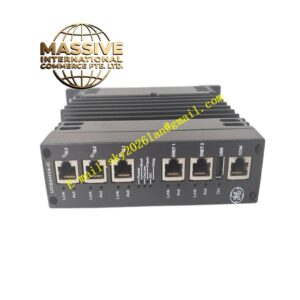
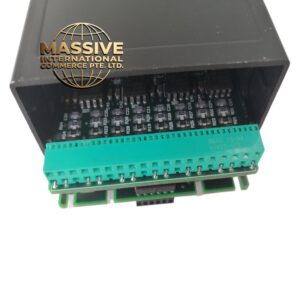
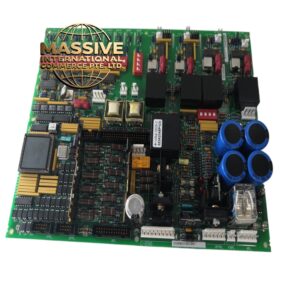
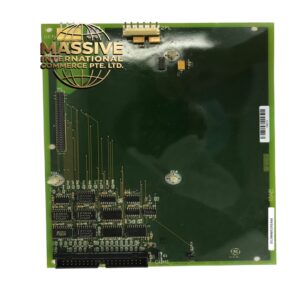
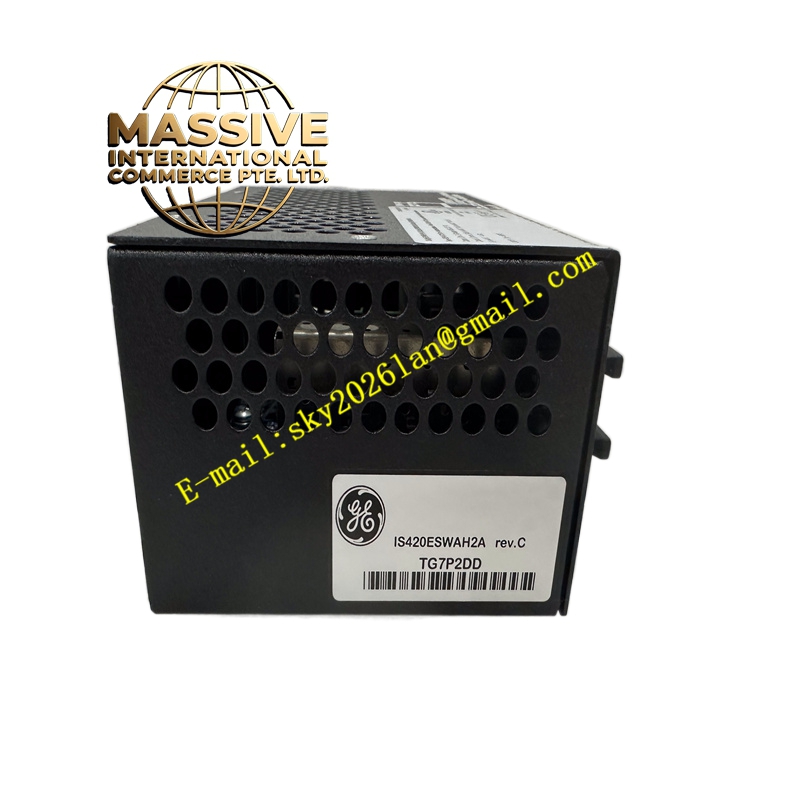
GE IS420ESWAH2A
Technical Specifications:
- Series: GE Mark VIe / Mark VIeS
- Product Type: Unmanaged IONet/Industrial Ethernet Switch (ESWA series)
- Copper Ports: 8 × 10/100Base-TX RJ45
- Fiber Ports: 2 × 100Base-FX multimode, LC-type connectors
- Standards: IEEE 802.3, 802.3u, 802.3x
- Auto-Negotiation: 10/100 base copper, full/half duplex
- FX Uplink: 100 Mbps
- HP-MDIX: Auto-sensing
- Buffer: Minimum 256 KB
- MAC Addresses: 4K
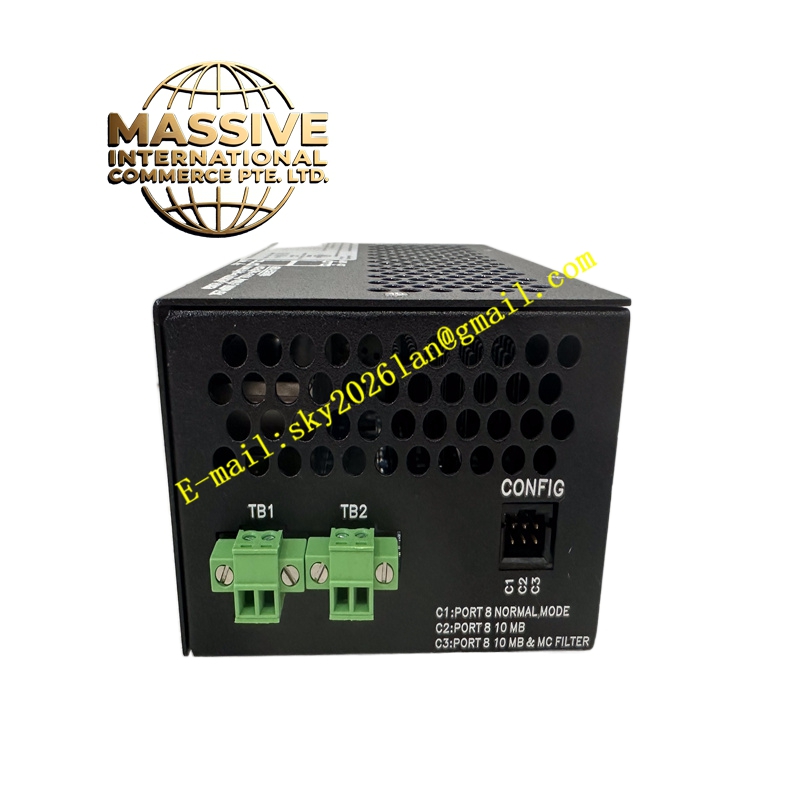
- Power Input: 24/28 V DC, redundant dual power input (diode OR’d)
- Operating Temperature: -40 °C to +70 °C
- Cooling: Convection (no fan)
- Installation: DIN rail or panel mount
- Weight: Approximately 1.1–1.6 kg
- RJ45 Insertion Cycles: Up to 200
Functional Features:
- Buffers multicast and broadcast packet streams with per-port buffering
- Soft-start inrush current limited to less than 200% of normal operating current
- Redundant dual power inputs for high availability
- LED indicators for link, activity, duplex, and speed per port (two-color LEDs)
- Dedicated power status LED
- Supports simplex, dual, and TMR controller redundant configurations
- HP-MDIX auto-sensing eliminates crossover cable requirements
Application Scenarios:
- Mark VIe and Mark VIeS IONet network infrastructure for gas/steam turbine control
- Power plant control system networking requiring fiber uplinks for EMI immunity
- Industrial automation environments needing rugged, fanless Ethernet switching
- Redundant network topologies in safety-critical control systems
Performance Parameters:
- Wire-speed forwarding on all ports
- Low switch latency suitable for real-time control
- Robust buffering for multicast-heavy IONet traffic
- Industrial-grade reliability with redundant power and wide temperature range
Material and Structural Characteristics:
- Industrial-grade metal housing with convection cooling fins
- DIN-rail or panel-mount enclosure with seven panel-mount screw holes
- RJ45 connectors rated for 200 insertion/removal cycles
- LC-type fiber connectors for multimode fiber
- Dimensions consistent with ESWA series form factor
Working Principle: The switch operates as a Layer 1 Ethernet switch, buffering and forwarding packets between connected IONet devices. It automatically negotiates speed and duplex on copper ports, supports fiber uplinks for long-distance or EMI-immune connections, and uses HP-MDIX to auto-configure cable orientation. Redundant power inputs ensure continuous operation during power supply failures. Installation Requirements:
- Mount on DIN rail using appropriate clips (259B2451BVP1 for horizontal, 259B2451BVP4 for vertical) or panel-mount using seven screw holes
- Connect 24/28 V DC to redundant power inputs
- Wire copper ports using Cat 5e or better UTP cabling with RJ45 connectors
- Connect fiber ports using multimode fiber with LC connectors
- Observe maximum 200 insertion/removal cycles for RJ45 connectors
- Ensure adequate ventilation for convection cooling
Usage Notes:
- Use only LC-type connectors for the multimode fiber ports
- Avoid applying torsional stress or cable-weight tension on connectors
- Confirm power supply polarity and voltage before energizing
- Monitor LED indicators for link status, activity, and power
- Replace with identical ESWA series models to maintain network configuration